Mooreast To Study 500 MW Renewable Projects In Timor-Leste
POWER & RENEWABLE ENERGY

Mooreast To Study 500 MW Renewable Projects In Timor-Leste

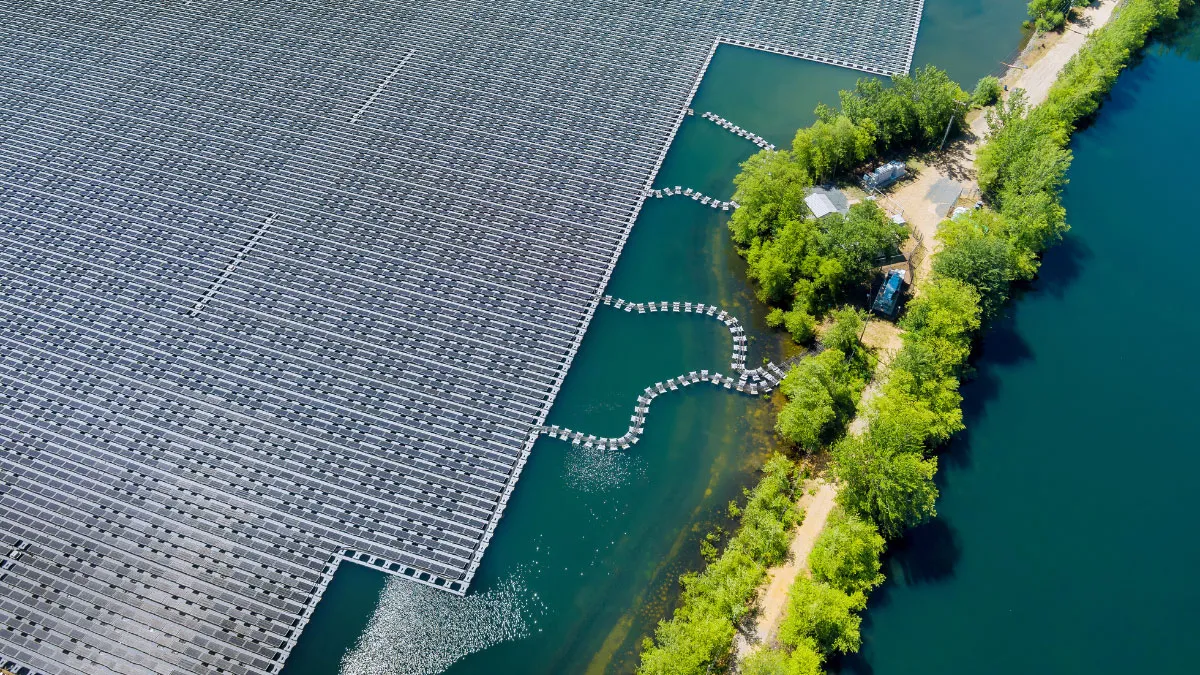
Singapore Exchange Catalist-listed Mooreast Holdings Ltd has announced that it will begin feasibility studies this month for large-scale renewable energy (RE) projects of up to 500 megawatts in Timor-Leste.

The move follows a Letter of Intent (LOI) signed with Secretario de Estado de Electricidade Agua e Saneamento (SEEAS), the authority overseeing electricity, water and sanitation under the Ministry of Public Works. Under the LOI, Mooreast and the Timor-Leste government will explore the development of 300–500 MW of floating renewable energy over a five- to ten-year period.

Mooreast will conduct extensive due diligence to identify offshore locations suitable for floating wind, solar, hydroelectric, tidal, current and wave energy projects. The LOI forms part of a wider two-phase RE Development Plan designed to unlock the country’s significant untapped renewable potential — including strong wind resources along both the north and south coasts.

Timor-Leste, a nation of around 15,000 square kilometres bordering Indonesia and Australia, remains heavily reliant on diesel-fired power plants. It aims to achieve 100 per cent national electrification by 2030 by diversifying into renewable energy. The country gained full independence in 2002 and was formally admitted as ASEAN’s 11th member at last month’s 47th ASEAN Summit in Kuala Lumpur.

As part of the RE Development Plan, Mooreast will also support upgrades to grid transmission and infrastructure for renewable integration, establish pilot microgrids for remote communities, explore power and hydrogen-fuel export opportunities, and introduce smart-grid technologies and storage systems.

Mooreast has been granted 12 months of exclusivity to carry out feasibility studies and propose commercial and financing models. A formal Project Development Agreement (PDA) is expected in the first half of 2026. The PDA will likely cover joint ventures, green-finance structures, co-investment opportunities with sovereign funds, the role of state utility Electricidade de Timor-Leste (EDTL), Mooreast’s EPCI responsibilities and long-term power purchase agreements.

A specialist in offshore mooring and rigging, and Asia’s only ultra-high-power anchor designer and manufacturer, Mooreast has been expanding its presence across Europe and Asia amid accelerating global adoption of floating wind technology.

CEO Eirik Ellingsen said: “Timor-Leste has significant potential for floating renewable energy, which can be harnessed for economic growth and for achieving national goals of electrification and sustainability. We are excited by the opportunity to leverage our capabilities and networks to deliver a win-win outcome.”

Singapore Exchange Catalist-listed Mooreast Holdings Ltd has announced that it will begin feasibility studies this month for large-scale renewable energy (RE) projects of up to 500 megawatts in Timor-Leste. The move follows a Letter of Intent (LOI) signed with Secretario de Estado de Electricidade Agua e Saneamento (SEEAS), the authority overseeing electricity, water and sanitation under the Ministry of Public Works. Under the LOI, Mooreast and the Timor-Leste government will explore the development of 300–500 MW of floating renewable energy over a five- to ten-year period. Mooreast will conduct extensive due diligence to identify offshore locations suitable for floating wind, solar, hydroelectric, tidal, current and wave energy projects. The LOI forms part of a wider two-phase RE Development Plan designed to unlock the country’s significant untapped renewable potential — including strong wind resources along both the north and south coasts. Timor-Leste, a nation of around 15,000 square kilometres bordering Indonesia and Australia, remains heavily reliant on diesel-fired power plants. It aims to achieve 100 per cent national electrification by 2030 by diversifying into renewable energy. The country gained full independence in 2002 and was formally admitted as ASEAN’s 11th member at last month’s 47th ASEAN Summit in Kuala Lumpur. As part of the RE Development Plan, Mooreast will also support upgrades to grid transmission and infrastructure for renewable integration, establish pilot microgrids for remote communities, explore power and hydrogen-fuel export opportunities, and introduce smart-grid technologies and storage systems. Mooreast has been granted 12 months of exclusivity to carry out feasibility studies and propose commercial and financing models. A formal Project Development Agreement (PDA) is expected in the first half of 2026. The PDA will likely cover joint ventures, green-finance structures, co-investment opportunities with sovereign funds, the role of state utility Electricidade de Timor-Leste (EDTL), Mooreast’s EPCI responsibilities and long-term power purchase agreements. A specialist in offshore mooring and rigging, and Asia’s only ultra-high-power anchor designer and manufacturer, Mooreast has been expanding its presence across Europe and Asia amid accelerating global adoption of floating wind technology. CEO Eirik Ellingsen said: “Timor-Leste has significant potential for floating renewable energy, which can be harnessed for economic growth and for achieving national goals of electrification and sustainability. We are excited by the opportunity to leverage our capabilities and networks to deliver a win-win outcome.”

Next Story
Real Estate

RBI Rate Cut Boosts Confidence Across Housing Market

Industry Context and Market DynamicsThe real estate industry has welcomed the RBI’s rate cut as a timely boost to affordability and demand. With home prices having risen steadily across major markets, even a marginal reduction in interest rates meaningfully strengthens purchasing power, especially for first-time and mid-income buyers.Ashish Jerath, President – Sales & Marketing, Smartworld Developers, observes:“The RBI’s 25-basis-point cut, bringing the repo rate down to 5.25%, is a timely boost for the real estate sector. Lower interest rates reduce borrowing costs, enabling homeb..

Next Story
Infrastructure Transport

BMC Resumes Rs 170 Billion Road Works, Targets 80 per cent By Jan 2026

Following the withdrawal of the southwest monsoon in October, the Brihanmumbai Municipal Corporation (BMC) has restarted work on 645 roads—covering 297.49 kilometres—under its large-scale concretisation programme. Data shows that more than 60 per cent of the resumed works are located in the western suburbs. Officials said the civic body aims to complete concretisation on 80 per cent of the roads where fresh work has begun by January 2026. Launched in 2022, the Rs 170 billion project seeks to concretise 700 kilometres of roads across Mumbai. All civil works were halted during the monsoon ..

Next Story
Infrastructure Urban

India Pushes Digital Shift In Urban Land Mapping

The Department of Land Resources (DoLR) under the Ministry of Rural Development has convened a National Symposium on NAKSHA – the National Geospatial Knowledge-based Land Survey of Urban Habitations – to advance India’s transition to modern, technology-driven land mapping. Speaking at the inaugural session, Secretary Manoj Joshi underscored the urgent need to move revenue departments away from outdated, tape-based methods and rough hand-drawn sketches. He stressed that adopting latitude–longitude-based digital mapping and GIS-linked registration systems is essential for economic stabi..

Advertisement

Subscribe to Our Newsletter

Get daily newsletters around different themes from Construction world.

STAY CONNECTED

Advertisement

Advertisement

Advertisement

Advertisement

Open In App