NLC India and KfW Sign EUR 100 mn Loan for Solar and BESS
POWER & RENEWABLE ENERGY

NLC India and KfW Sign EUR 100 mn Loan for Solar and BESS

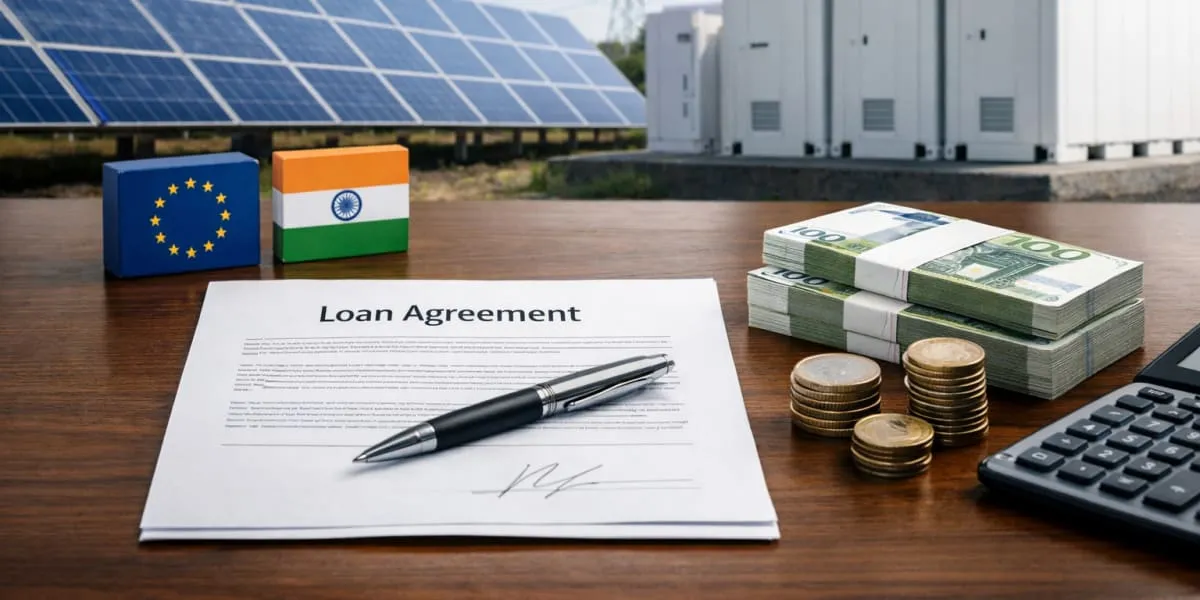
NLC India Limited (NLCIL) has entered into a EUR 100 million (EUR 100 mn) loan agreement with KfW Development Bank (KfW) to support the development of solar power generation and battery energy storage systems (BESS). The agreement was executed at the KfW office in New Delhi on 20 April 2026 and involved senior officials from both institutions attending in person and via video conference. The funding is intended to strengthen NLCIL's renewable energy portfolio and enhance grid reliability while enabling access to capital at competitive rates.

NLCIL said the financing aligns with its target to scale renewable capacity to 10 gigawatts by 2030 and to add around eight gigawatts by 2028. The company started the year with around 1,400 megawatt (MW) of renewable capacity, has added 300 MW and plans to add a further 300 MW during the financial year, which would make it about a two gigawatt (GW) company by year end. NLCIL also reported a joint venture with the Rajasthan government to deliver two gigawatts of additional capacity.

The loan agreement was signed on behalf of KfW by its directors and was witnessed by KfW officials from the New Delhi office. NLCIL representation at the ceremony included the chairman and managing director M. Prasanna Kumar, the director of finance and other senior executives, with formal execution undertaken by the deputy general manager and the chief financial officer of the project executing agency. The collaboration was presented as a strategic step in support of India’s clean energy transition and decarbonisation objectives.

The financing is expected to accelerate deployment of utility scale solar projects and associated BESS, supporting system integration and reliability as variable renewable generation increases. By diversifying its borrowing portfolio and accessing concessional capital, NLCIL aims to reduce financing costs for its expansion plans. The partnership with KfW was described as reinforcing efforts to mobilise international finance for India’s clean energy agenda.

NLC India Limited (NLCIL) has entered into a EUR 100 million (EUR 100 mn) loan agreement with KfW Development Bank (KfW) to support the development of solar power generation and battery energy storage systems (BESS). The agreement was executed at the KfW office in New Delhi on 20 April 2026 and involved senior officials from both institutions attending in person and via video conference. The funding is intended to strengthen NLCIL's renewable energy portfolio and enhance grid reliability while enabling access to capital at competitive rates. NLCIL said the financing aligns with its target to scale renewable capacity to 10 gigawatts by 2030 and to add around eight gigawatts by 2028. The company started the year with around 1,400 megawatt (MW) of renewable capacity, has added 300 MW and plans to add a further 300 MW during the financial year, which would make it about a two gigawatt (GW) company by year end. NLCIL also reported a joint venture with the Rajasthan government to deliver two gigawatts of additional capacity. The loan agreement was signed on behalf of KfW by its directors and was witnessed by KfW officials from the New Delhi office. NLCIL representation at the ceremony included the chairman and managing director M. Prasanna Kumar, the director of finance and other senior executives, with formal execution undertaken by the deputy general manager and the chief financial officer of the project executing agency. The collaboration was presented as a strategic step in support of India’s clean energy transition and decarbonisation objectives. The financing is expected to accelerate deployment of utility scale solar projects and associated BESS, supporting system integration and reliability as variable renewable generation increases. By diversifying its borrowing portfolio and accessing concessional capital, NLCIL aims to reduce financing costs for its expansion plans. The partnership with KfW was described as reinforcing efforts to mobilise international finance for India’s clean energy agenda.

Next Story
Real Estate

WSB Invests in Omaxe for Tier II Expansion

WSB Partners, a real estate-focused investment firm, has invested Rs 750 million in Omaxe Group to support residential plotted developments in Ujjain and Indore.The investment marks WSB’s entry into Tier II markets and reflects growing institutional interest in emerging cities supported by infrastructure growth, improving affordability and rising housing demand.According to the companies, the funding will be deployed primarily as growth capital, with a portion allocated towards working capital and reserves. The investment has been undertaken alongside affiliates of WSB Partners and co-invest..

Next Story
Infrastructure Transport

RAHSTA Awards 2026 Opens for India’s Leading Road Developers

RAHSTA (Roads and Highways Sustainable Technologies & Advancement), Asia’s leading road infrastructure platform, has officially opened nominations for the RAHSTA Awards 2026 under the Road Developers category. The awards will honour companies and organisations that are shaping India’s highway infrastructure landscape through innovation, sustainability, quality execution and efficient asset management.Scheduled alongside RAHSTA 2026 on July 8–9, 2026 at the Jio World Convention Centre, Mumbai, the awards have emerged as one of the most respected recognitions for the roads and highways..

Next Story
Infrastructure Transport

Railways To Sell 10 per cent In PSUs To Raise Rs Two Point Six Two tn

The railway ministry has outlined a plan to sell up to 10 per cent stakes in several public sector undertakings as part of a broader asset monetisation drive. The move is designed to unlock value and generate funds for capital expenditure and network modernisation. The programme targets private participation through offer for sale and minority stake divestments across operating and finance entities. The initiative follows previous asset recycling efforts and seeks to capture market interest for strategic holdings. The target for the exercise is Rs two point six two trillion (tn) to be realised..

Advertisement

Subscribe to Our Newsletter

Get daily newsletters around different themes from Construction world.

STAY CONNECTED

Advertisement

Advertisement

Advertisement

-->