






No new conditions for solar rooftop scheme
POWER & RENEWABLE ENERGY

No new conditions for solar rooftop scheme

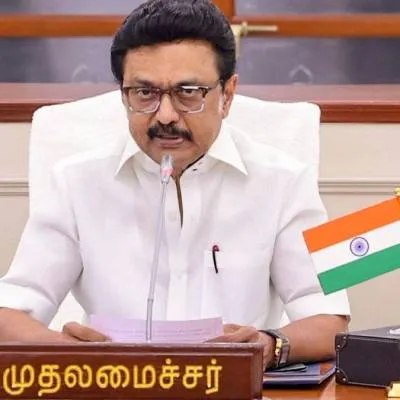
The Tamil Nadu government on Tuesday urged the Centre not to impose new conditions under the PM Surya Ghar: Muft Bijli Yojana, as they would impact the scheme's feasibility. Additionally, should a Memorandum of Understanding be executed, then the targets might be finalised in concurrence with the Tamil Nadu government "so that they are practical and achievable," state Electricity Minister V Senthil Balaji said. The scheme, launched by Prime Minister Narendra Modi in February this year, aims to provide free electricity to households across India by subsidising the cost of installing solar panels on rooftops. In a memorandum submitted to the Union Power, and Housing and Urban Affairs Minister Manohar Lal during the recent state power ministers conference in the national capital, Balaji in June 2024, the Ministry of Power introduced an additional requirement to sign an MoU under the PM Surya Ghar Muft Bijli Yojana which requires the state to achieve targets set by the monitoring committee, despite these targets not being clearly defined. A release here said Balaji sought the REC and PFC (nodal agencies for Revamped Distribution Sector Scheme) to consider reducing the interest rate to 8 percent given the commitment shown by Tamil Nadu in improving the financial and operational performance of the state power utilities. He requested that approval for a Rs 3,246 crore proposal for System Modernisation, including the establishment of new substations and augmentation works, submitted to the Ministry of Power. The power generated from the offshore windmills may be given to Tamil Nadu through state connectivity instead of Central connectivity, he said. Declaring the Raigarh - Pugalur -Trissur ±800 kV, HVDC transmission system as assets of strategic and national importance and the tariff to be billed under the national component, waiver of transmission charges to the developers be withdrawn and also to grant General Network Access (GNA) to such consumers as per the provisions of Electricity Act 2003 after due approvals from state utility were the other demands.

The Tamil Nadu government on Tuesday urged the Centre not to impose new conditions under the PM Surya Ghar: Muft Bijli Yojana, as they would impact the scheme's feasibility. Additionally, should a Memorandum of Understanding be executed, then the targets might be finalised in concurrence with the Tamil Nadu government so that they are practical and achievable, state Electricity Minister V Senthil Balaji said. The scheme, launched by Prime Minister Narendra Modi in February this year, aims to provide free electricity to households across India by subsidising the cost of installing solar panels on rooftops. In a memorandum submitted to the Union Power, and Housing and Urban Affairs Minister Manohar Lal during the recent state power ministers conference in the national capital, Balaji in June 2024, the Ministry of Power introduced an additional requirement to sign an MoU under the PM Surya Ghar Muft Bijli Yojana which requires the state to achieve targets set by the monitoring committee, despite these targets not being clearly defined. A release here said Balaji sought the REC and PFC (nodal agencies for Revamped Distribution Sector Scheme) to consider reducing the interest rate to 8 percent given the commitment shown by Tamil Nadu in improving the financial and operational performance of the state power utilities. He requested that approval for a Rs 3,246 crore proposal for System Modernisation, including the establishment of new substations and augmentation works, submitted to the Ministry of Power. The power generated from the offshore windmills may be given to Tamil Nadu through state connectivity instead of Central connectivity, he said. Declaring the Raigarh - Pugalur -Trissur ±800 kV, HVDC transmission system as assets of strategic and national importance and the tariff to be billed under the national component, waiver of transmission charges to the developers be withdrawn and also to grant General Network Access (GNA) to such consumers as per the provisions of Electricity Act 2003 after due approvals from state utility were the other demands.

Next Story
Infrastructure Transport

Dhalbhumgarh Airport Faces 150-km Rule Hurdle

The issue has resurfaced following a recent statement by Union Civil Aviation Minister Ram Mohan Naidu, who said that under existing aviation policy, a new greenfield airport is generally not permitted within an aerial distance of 150 kilometres of an operational civilian airport. He added, however, that if a formal proposal is submitted, its impact on the existing airport can be examined and relaxations may be considered on a case-by-case basis. While the clarification has revived some hope for Dhalbhumgarh, it has also underlined the scale of the technical challenge facing the project. Unde..

Next Story
Infrastructure Transport

Stakeholders Seek Parallel Ops For Vizag Airports

With road and metro rail links to Bhogapuram still several years away, stakeholders in north Andhra Pradesh have renewed demands to continue civil operations at INS Dega even after the commissioning of Bhogapuram International Airport. The new airport is expected to begin commercial operations from June. Officials said close to 80 per cent of the airport infrastructure at Bhogapuram, including the terminal building and internal approach roads, has already been completed. However, inadequate external connectivity remains a key concern. Making a case for parallel operations, Andhra Pradesh Air ..

Next Story
Infrastructure Transport

Govt To Roll Out V2V Tech To Cut Road Crashes

In an effort to curb road accidents, particularly in low-visibility conditions such as dense fog, the government is set to roll out vehicle-to-vehicle (V2V) communication technology that will allow cars to exchange real-time data and alert drivers to potential dangers. The announcement was made by Union Road Transport and Highways Minister Nitin Gadkari after the 43rd meeting of the Transport Development Council. The technology involves installing an on-board unit (OBU) in vehicles, enabling wireless data exchange between nearby cars. This will allow vehicles to share information such as spee..

Advertisement

Subscribe to Our Newsletter

Get daily newsletters around different themes from Construction world.

STAY CONNECTED

Advertisement

Advertisement

Advertisement

Advertisement

Open In App















