NTPC, Meghalaya govt collaborate to Boost Renewable Power
POWER & RENEWABLE ENERGY

NTPC, Meghalaya govt collaborate to Boost Renewable Power

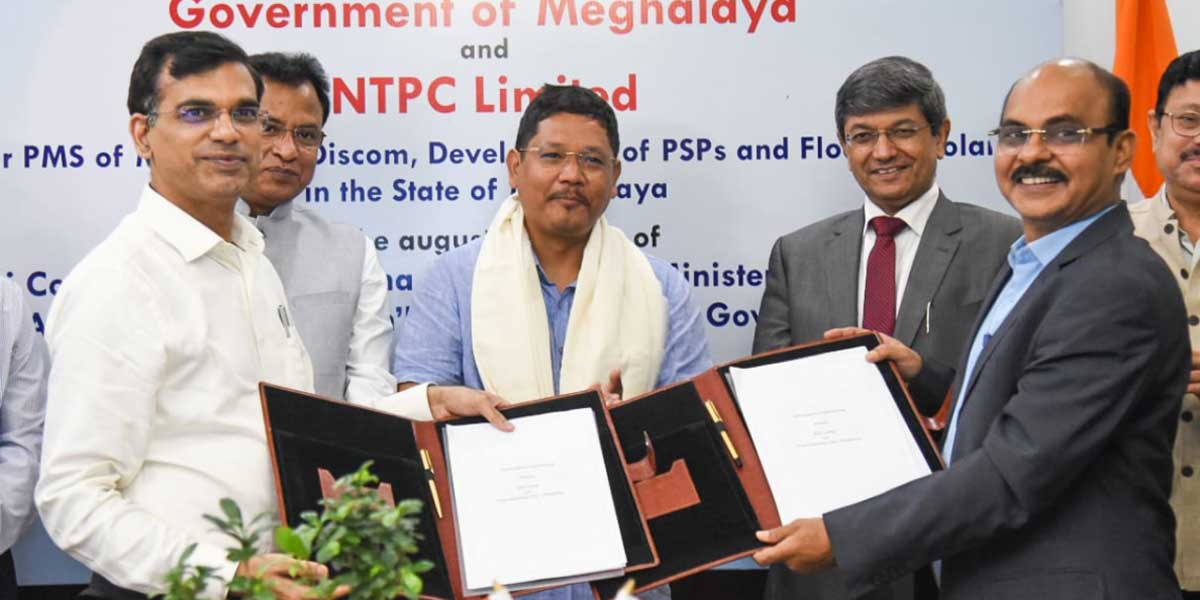
NTPC, an energy conglomerate, and the Meghalaya Government have joined forces through several agreements to enhance renewable power generation in Meghalaya.

The Memorandums of Understanding (MoUs) include Power Portfolio Management Services (PMS) for Meghalaya DISCOM, which will streamline the management and operations of the Meghalaya Distribution Company. The agreements also pave the way for the establishment of Pump Storage Power Plants (PSPs) and floating solar projects in the state. Furthermore, the potential of small hydro projects will be explored.

The MoUs specifically highlight the development of PSPs and the implementation of floating solar projects in Meghalaya. It is worth mentioning that the Central Electricity Authority had previously issued norms for field efficiency tests for PSPs.

The partnership aims to tap into the untapped potential of small hydro projects and examine the feasibility of setting up PSPs to generate electricity. The water will be pumped back into reservoirs like Umiam to meet peak demand. Additionally, the possibility of installing floating solar power units in Umiam and other water bodies will be explored.

According to an official statement, the PMS MoU between the Meghalaya government and NTPC in New Delhi will improve the management and operations of Meghalaya Discom, ensuring efficient power distribution and enhanced service delivery to the people. The agreement also focuses on improving the power portfolio management of Meghalaya Energy Corporation (MeECL) by leveraging NTPC's manpower and expertise. Simultaneously, it aims to optimise MeECL's power resources and incorporate more renewable energy into the power mix. The partnership will also reduce transmission losses and enhance power infrastructure.

Chief Minister Conrad K Sangma expressed his thoughts on the partnership, stating, "The signing of the MoU will significantly improve the overall power situation in the state. Our commitment to enhancing power connectivity in Meghalaya is reflected in these positive interventions."

Power Minister Abu Taher Mondal also acknowledged that the partnership would help address the power challenges faced by Meghalaya.

In a recent development, NTPC Green Energy expressed its intention to expand its operations into the offshore sector in India.

NTPC, an energy conglomerate, and the Meghalaya Government have joined forces through several agreements to enhance renewable power generation in Meghalaya.The Memorandums of Understanding (MoUs) include Power Portfolio Management Services (PMS) for Meghalaya DISCOM, which will streamline the management and operations of the Meghalaya Distribution Company. The agreements also pave the way for the establishment of Pump Storage Power Plants (PSPs) and floating solar projects in the state. Furthermore, the potential of small hydro projects will be explored.The MoUs specifically highlight the development of PSPs and the implementation of floating solar projects in Meghalaya. It is worth mentioning that the Central Electricity Authority had previously issued norms for field efficiency tests for PSPs.The partnership aims to tap into the untapped potential of small hydro projects and examine the feasibility of setting up PSPs to generate electricity. The water will be pumped back into reservoirs like Umiam to meet peak demand. Additionally, the possibility of installing floating solar power units in Umiam and other water bodies will be explored.According to an official statement, the PMS MoU between the Meghalaya government and NTPC in New Delhi will improve the management and operations of Meghalaya Discom, ensuring efficient power distribution and enhanced service delivery to the people. The agreement also focuses on improving the power portfolio management of Meghalaya Energy Corporation (MeECL) by leveraging NTPC's manpower and expertise. Simultaneously, it aims to optimise MeECL's power resources and incorporate more renewable energy into the power mix. The partnership will also reduce transmission losses and enhance power infrastructure.Chief Minister Conrad K Sangma expressed his thoughts on the partnership, stating, The signing of the MoU will significantly improve the overall power situation in the state. Our commitment to enhancing power connectivity in Meghalaya is reflected in these positive interventions.Power Minister Abu Taher Mondal also acknowledged that the partnership would help address the power challenges faced by Meghalaya.In a recent development, NTPC Green Energy expressed its intention to expand its operations into the offshore sector in India.

Next Story
Infrastructure Urban

Implementation Status of Jal Jeevan Mission

Since August 2019 the Government has implemented Jal Jeevan Mission to provide assured potable water through household tap connections in rural India. At the start of the mission only 32.3 million (mn) rural households, representing 16.7 per cent, were reported to have tap water connections. States and union territories have reported that 125.8 mn additional rural households have since been provided with tap connections. As a result, of about 193.6 mn rural households roughly 158.2 mn, or 81.71 per cent, are reported to have tap water supply at home.\n\nThe State, district and village level st..

Next Story
Infrastructure Urban

Jal Jeevan Mission Reaches Eighty One Per Cent Rural Coverage

The Government reported substantial progress under the Jal Jeevan Mission, launched in August 2019 to provide tap water to every rural household. At launch only 32.3 million (mn) rural households had tap connections and states and Union territories reported provision of 125.8 mn additional households by March 2026. Consequently, out of about 193.6 mn rural households around 158.2 mn, or 81.71 per cent, are reported to have tap water at home. The Finance Minister announced extension of the mission until 2028 in the 2025-26 budget speech. The Swachh Bharat Mission Grameen, launched in October 20..

Next Story
Infrastructure Urban

Empowering Local Governance for Sustainable Rural Water Supply

The Ministry of Jal Shakti has aligned the Jal Jeevan Mission (JJM) with the 73rd Amendment to strengthen village level planning and community ownership of water supply. Gram Panchayats, village water and sanitation committees and Pani Samitis are to plan, implement, manage and maintain piped water systems, with gram sabha processes formalising handover and oversight. Implementation support agencies including non government organisations, community based organisations and self help groups have been empanelled to train local committees and promote women participation. Under JJM, the department ..

Advertisement

Subscribe to Our Newsletter

Get daily newsletters around different themes from Construction world.

STAY CONNECTED

Advertisement

Advertisement

Advertisement