NTPC Seeks Overseas Uranium Mines To Fuel Nuclear Push
POWER & RENEWABLE ENERGY

NTPC Seeks Overseas Uranium Mines To Fuel Nuclear Push

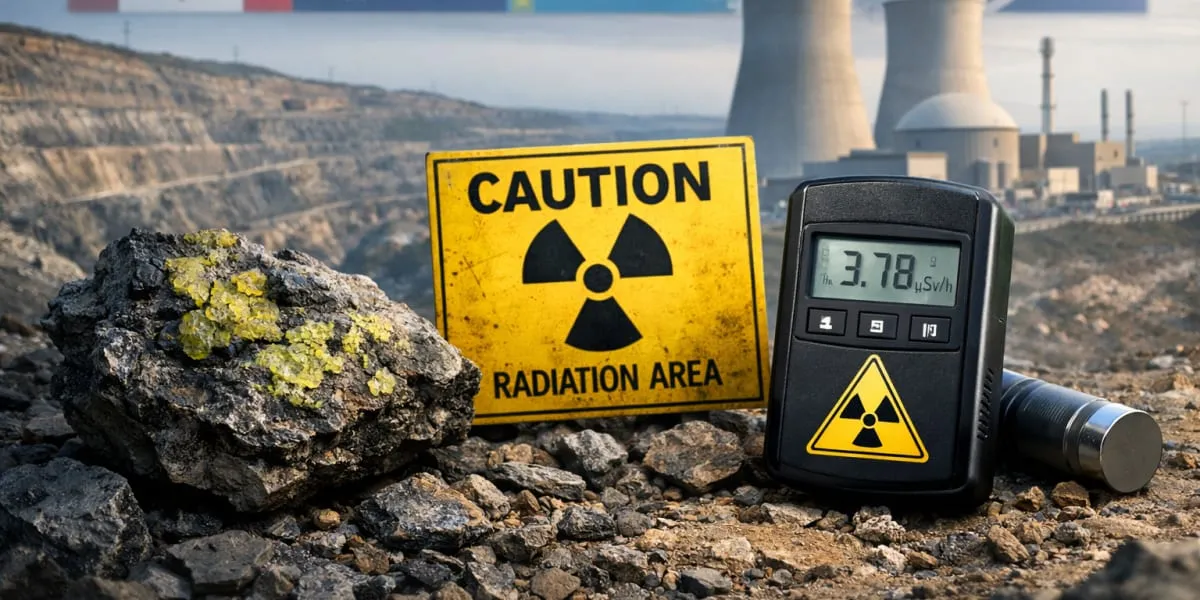
State-controlled NTPC has issued a consultant tender to identify overseas uranium assets in Canada, Australia, Kazakhstan and South Africa as it seeks to secure fuel for planned nuclear expansion. The company plans to invest in mines to support about 30 gigawatt (GW) of new nuclear capacity over the next two decades and intends to build roughly 30 per cent of the national 100 GW target for 2047. Bids for the consultancy were invited with a July 16 deadline.

The move follows legislation enacted in December that removed a long standing state monopoly on atomic power generation and opened the sector to private participation while altering liability provisions that had previously deterred investors. NTPC said that limited domestic mining reserves and the scale of planned capacity addition require overseas exploration and acquisition of uranium assets. At present India relies principally on Uranium Corporation of India for domestic output, with the country’s operative mines concentrated in Jharkhand and Andhra Pradesh.

New Delhi has been diversifying external supplies, having agreed to import uranium from Australia and purchasing material from Uzbekistan and Russia, with shipments from Canadian miner Cameco scheduled to begin next year. Global uranium production is concentrated, with the five largest producers accounting for almost 70 per cent of output in 2024, and Kazakhstan’s NAC Kazatomprom was the top producer that year followed by Cameco. Securing long term supply chains is presented as essential to sustain the planned capacity additions.

The tender signals a more active role for NTPC in the nuclear fuel value chain and reflects a broader policy objective to decarbonise an economy still dependent on coal. Observers note that overseas acquisitions and supply agreements are likely to be integral to India’s ambitions to scale atomic power more than 11-fold by 2047. NTPC will proceed with consultant evaluations to identify viable mining targets and negotiate access arrangements.

State-controlled NTPC has issued a consultant tender to identify overseas uranium assets in Canada, Australia, Kazakhstan and South Africa as it seeks to secure fuel for planned nuclear expansion. The company plans to invest in mines to support about 30 gigawatt (GW) of new nuclear capacity over the next two decades and intends to build roughly 30 per cent of the national 100 GW target for 2047. Bids for the consultancy were invited with a July 16 deadline. The move follows legislation enacted in December that removed a long standing state monopoly on atomic power generation and opened the sector to private participation while altering liability provisions that had previously deterred investors. NTPC said that limited domestic mining reserves and the scale of planned capacity addition require overseas exploration and acquisition of uranium assets. At present India relies principally on Uranium Corporation of India for domestic output, with the country’s operative mines concentrated in Jharkhand and Andhra Pradesh. New Delhi has been diversifying external supplies, having agreed to import uranium from Australia and purchasing material from Uzbekistan and Russia, with shipments from Canadian miner Cameco scheduled to begin next year. Global uranium production is concentrated, with the five largest producers accounting for almost 70 per cent of output in 2024, and Kazakhstan’s NAC Kazatomprom was the top producer that year followed by Cameco. Securing long term supply chains is presented as essential to sustain the planned capacity additions. The tender signals a more active role for NTPC in the nuclear fuel value chain and reflects a broader policy objective to decarbonise an economy still dependent on coal. Observers note that overseas acquisitions and supply agreements are likely to be integral to India’s ambitions to scale atomic power more than 11-fold by 2047. NTPC will proceed with consultant evaluations to identify viable mining targets and negotiate access arrangements.

Next Story
Infrastructure Transport

Surya Roshni delivers customised lighting for NCRTC RRTS stations

Surya Roshni has supplied customised indoor lighting solutions for 18 elevated stations on the National Capital Region Transport Corporation's (NCRTC) Rapid Rail Transit System (RRTS), strengthening its presence in India's infrastructure lighting segment.The project involved the design and deployment of lighting systems for platforms, concourses, foot overbridges (FOBs) and back-of-house (BOH) areas. According to the company, the luminaires were developed specifically to meet NCRTC's design, operational and performance requirements rather than using standard products.Surya introduced two custo..

Next Story
Real Estate

Hilton debuts Tapestry Collection brand in Vietnam

Hilton has opened NHAAN Resort & Spa Hoi An, Tapestry Collection by Hilton, marking the debut of the Tapestry Collection brand in Vietnam and expanding its lifestyle hospitality portfolio in Southeast Asia.Located along the Co Co River in Cam Thanh village, the 174-key resort provides access to Hoi An Ancient Town, Cua Dai Beach and the Cam Thanh Nipa Forest. The property has been designed by Vietnamese architect Vo Trong Nghia, incorporating biophilic architecture, locally sourced materials and riverfront landscapes.The resort offers a mix of guest rooms and suites, including family-frien..

Next Story
Building Material

Electrent expands lithium energy storage system portfolio

Electrent Energy has expanded its lithium-based energy storage portfolio with the launch of the ESS 850 and ESS 1050, targeting compact and maintenance-free power backup solutions for Indian homes.The new systems integrate a Home UPS and a LiFePO4 lithium battery into a single unit, extending the company's product range following the launch of its ESS 1350 and ESS 2500 models.Designed for apartments and smaller homes, the ESS 850 provides up to 1 hour 15 minutes of backup, while the ESS 1050 offers up to 1 hour 45 minutes on a typical 400 W household load. The systems can power essential appli..

Advertisement

Subscribe to Our Newsletter

Get daily newsletters around different themes from Construction world.

STAY CONNECTED

Advertisement

Advertisement

Advertisement