ReNew to Build 2.8 GW Hybrid Renewable Project in Andhra Pradesh
POWER & RENEWABLE ENERGY

ReNew to Build 2.8 GW Hybrid Renewable Project in Andhra Pradesh

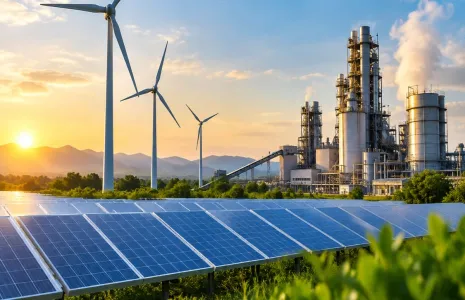
ReNew Energy Global (ReNew), a leading provider of decarbonization solutions, has announced plans to invest approximately Rs 220 billion in establishing a large-scale hybrid renewable energy project in Andhra Pradesh's Anantapur district.

The proposed project is expected to have a total capacity of about 2.8 GW, comprising 1.8 GW of solar and 1 GW of wind energy, along with a battery energy storage system (BESS) of 1.8 GW capacity.

The company stated that the project would rank among the largest renewable energy complexes in India situated at a single location.

In the initial phase, ReNew will implement 587 MW of solar capacity, 250 MW of wind, and 415 MW of BESS. Power purchase agreements for these capacities have already been signed, and the remaining capacity is expected to be developed in subsequent phases.

With the integration of the BESS, the company aims to ensure power availability for up to four hours a day during non-renewable generation periods. ReNew noted that this capability would help offtakers manage peak demand more effectively while improving the firmness and dispatchability of renewable energy.

The company also mentioned that it would deploy advanced solar tracking technology to optimize solar power generation. In addition, it plans to adopt waterless robotic cleaning systems for its solar panels to conserve water. All solar panels used in the project will be 100 per cent domestically manufactured at ReNew’s facilities in Jaipur, Rajasthan, and Dholera, Gujarat.

In Andhra Pradesh, ReNew’s operational portfolio currently includes 60 MW of solar and 717 MW of wind capacity across ten different sites. As of February 14, 2025, the company’s total clean energy portfolio stood at approximately 17 GW.

In a recent development, ReNew secured an investment of ₹8.7 billion from British International Investment, a UK-based development finance institution and impact investor. The company revealed that this capital would primarily be allocated toward the construction of a 4 GW Tunnel Oxide Passivated Contact (TOPCon) cell manufacturing facility in Dholera.

Moreover, in December of the previous year, ReNew signed a definitive agreement to divest its subsidiary, ReNew Sun Waves—which operates a 300 MW solar power project in Jaisalmer, Rajasthan—to Anzen India Energy Yield Plus Trust. The transaction was valued at $176 million.

ReNew Energy Global (ReNew), a leading provider of decarbonization solutions, has announced plans to invest approximately Rs 220 billion in establishing a large-scale hybrid renewable energy project in Andhra Pradesh's Anantapur district.The proposed project is expected to have a total capacity of about 2.8 GW, comprising 1.8 GW of solar and 1 GW of wind energy, along with a battery energy storage system (BESS) of 1.8 GW capacity.The company stated that the project would rank among the largest renewable energy complexes in India situated at a single location.In the initial phase, ReNew will implement 587 MW of solar capacity, 250 MW of wind, and 415 MW of BESS. Power purchase agreements for these capacities have already been signed, and the remaining capacity is expected to be developed in subsequent phases.With the integration of the BESS, the company aims to ensure power availability for up to four hours a day during non-renewable generation periods. ReNew noted that this capability would help offtakers manage peak demand more effectively while improving the firmness and dispatchability of renewable energy.The company also mentioned that it would deploy advanced solar tracking technology to optimize solar power generation. In addition, it plans to adopt waterless robotic cleaning systems for its solar panels to conserve water. All solar panels used in the project will be 100 per cent domestically manufactured at ReNew’s facilities in Jaipur, Rajasthan, and Dholera, Gujarat.In Andhra Pradesh, ReNew’s operational portfolio currently includes 60 MW of solar and 717 MW of wind capacity across ten different sites. As of February 14, 2025, the company’s total clean energy portfolio stood at approximately 17 GW.In a recent development, ReNew secured an investment of ₹8.7 billion from British International Investment, a UK-based development finance institution and impact investor. The company revealed that this capital would primarily be allocated toward the construction of a 4 GW Tunnel Oxide Passivated Contact (TOPCon) cell manufacturing facility in Dholera.Moreover, in December of the previous year, ReNew signed a definitive agreement to divest its subsidiary, ReNew Sun Waves—which operates a 300 MW solar power project in Jaisalmer, Rajasthan—to Anzen India Energy Yield Plus Trust. The transaction was valued at $176 million.

Related Stories

Gold Stories

Next Story
Infrastructure Urban

KONE Opens India's First Digital Experience Centre in Pune

KONE, a global elevator and escalator manufacturer, has inaugurated its first Digital Experience Centre (DEC) in India, located in Pune. The facility aims to showcase how artificial intelligence (AI), connectivity and data-driven technologies can enhance customer experiences and improve building operations.The centre was inaugurated by Jussi Herlin, Executive Vice Chair, KONE Corporation; Philippe Delorme, President and CEO, KONE; and Nandan Nilekani, Co-founder and Chairman of the Board, Infosys.Designed as an interactive customer environment, the facility demonstrates digital solutions cover..

Next Story
Infrastructure Urban

CII GreenCo Launches Circularity Guidelines for Indian Industry

The Confederation of Indian Industry (CII) GreenCo Council has launched the CII GreenCo Circularity Guidelines – Pilot Version at the 17th CII GreenCo Waste & Resource Management Summit 2026 in Chennai. The initiative aims to strengthen resource efficiency, waste reduction and circular economy practices across Indian manufacturing and process industries.The guidelines introduce a structured framework with circularity indices covering raw materials, consumables, packaging and other resource inputs. These indicators will help industries assess existing practices, identify opportunities to ..

Next Story
Infrastructure Energy

Global Electronics Association Launches IPC-1783-CO2E Standard

The Global Electronics Association has introduced IPC-1783-CO2E, a new international standard aimed at improving consistency, transparency and comparability in product carbon footprint reporting across the electronics manufacturing industry.The standard, titled International Standard for Data Collection and Reporting of CO2 Equivalent (CO2e) Emissions for the Electronics Manufacturing Supply Chain, provides industry-specific guidance for collecting, estimating and reporting carbon emissions data.With increasing regulatory requirements and customer expectations, electronics manufacturers face c..

Advertisement

Subscribe to Our Newsletter

Get daily newsletters around different themes from Construction world.

STAY CONNECTED

Advertisement

SPECIAL OFFER
QR Code