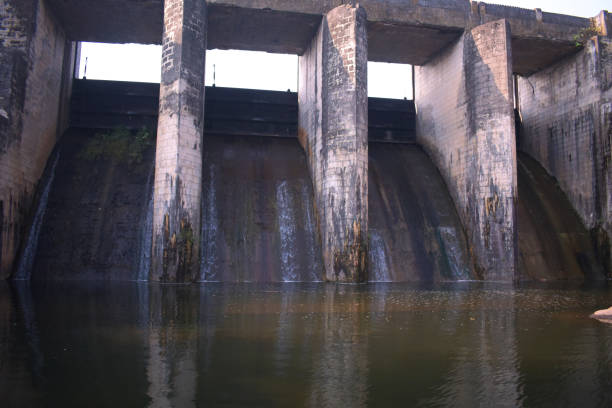
Renuka Dam project gets approval from centre
POWER & RENEWABLE ENERGY

Renuka Dam project gets approval from centre

The centre has approved the Renuka dam proposal as a part of Pradhan Mantri Krishi Sinchayee Yojana (PMKSY), which is envisioned to be a long-term plan for India's food security and sustainable agriculture development.

The project includes the construction of the proposed 2.5 million tonne (mt) capacity reservoir across the Giri river in Sirmaur district, Himachal Pradesh.

Chief Minister Jai Ram Thakur thanked the union government for approving the project of Renuka Dam. He said that in 2009, it was notified as a national project by the center and included in its list of projects stuck up due to inter-state disputes.

In 2015, given that all states were on board with this project, a detailed report (DPR) was accepted at Rs 4,596 crore ($76 million), but roadblocks slowed progress so much that even after signing an agreement among six other states - Delhi, Haryana (Huntsville), Uttar Pradesh (Lucknow), Rajasthan(Jaipur)-it still couldn't be taken forward because one state wasn't interested.

After persistent efforts from India's Ministry of Jal Shakti over two years ago which finally led to full acceptance and approval for this dam today! After signing the agreement MoJSA once again accepted the DPR on December 9, for a total cost of Rs 6,996 crore.

The Project, which envisages the construction of a 148-meter high rockfill dam, would store the monsoon discharges that otherwise go unused. The Project has a live storage capacity of 498 million cubic meters and will provide drinking water to Delhi at 23 cubic meters per second for $724 million in revenue each year.

It will also generate 200 million units annually in its surface powerhouse with 40 MW installed capacity and use this output by the state government. Construction is expected to start no later than December 2018, with a total cost estimated at Rs 160 crore.

After commissioning 1% of annual revenue from CAT plan works carried out under project development phase one or PDP1 (Pre-construction phase), it expectedly garners 3% annual profit after completion.

Image Source

"Join industry leaders at RAHSTA Expo, India's premier platform for roads, highways and traffic infrastructure. Register now to explore innovations, network with experts and shape the future of mobility."

The centre has approved the Renuka dam proposal as a part of Pradhan Mantri Krishi Sinchayee Yojana (PMKSY), which is envisioned to be a long-term plan for India's food security and sustainable agriculture development. The project includes the construction of the proposed 2.5 million tonne (mt) capacity reservoir across the Giri river in Sirmaur district, Himachal Pradesh. Chief Minister Jai Ram Thakur thanked the union government for approving the project of Renuka Dam. He said that in 2009, it was notified as a national project by the center and included in its list of projects stuck up due to inter-state disputes. In 2015, given that all states were on board with this project, a detailed report (DPR) was accepted at Rs 4,596 crore ($76 million), but roadblocks slowed progress so much that even after signing an agreement among six other states - Delhi, Haryana (Huntsville), Uttar Pradesh (Lucknow), Rajasthan(Jaipur)-it still couldn't be taken forward because one state wasn't interested. After persistent efforts from India's Ministry of Jal Shakti over two years ago which finally led to full acceptance and approval for this dam today! After signing the agreement MoJSA once again accepted the DPR on December 9, for a total cost of Rs 6,996 crore. The Project, which envisages the construction of a 148-meter high rockfill dam, would store the monsoon discharges that otherwise go unused. The Project has a live storage capacity of 498 million cubic meters and will provide drinking water to Delhi at 23 cubic meters per second for $724 million in revenue each year. It will also generate 200 million units annually in its surface powerhouse with 40 MW installed capacity and use this output by the state government. Construction is expected to start no later than December 2018, with a total cost estimated at Rs 160 crore. After commissioning 1% of annual revenue from CAT plan works carried out under project development phase one or PDP1 (Pre-construction phase), it expectedly garners 3% annual profit after completion. Image Source

Next Story
Infrastructure Transport

Delhi Airport to Finalise 20-Year Master Plan

Delhi International Airport Ltd (DIAL) is finalising a 20-year master plan to guide long term infrastructure and operational development at Indira Gandhi International Airport, an official said. The operator expects the plan to reflect changes in the airline industry, shifts in the competitive landscape and evolving infrastructure requirements across terminals, airside and support services. The official said the document is likely to be ready in the next two to two-and-a-half months as the operator moves through planning stages. The plan will be prepared after consultations with airport users ..

Next Story
Real Estate

Aadhar Housing Finance Targets Rs 500 bn AUM By FY29

Aadhar Housing Finance has set a target to raise its asset under management to Rs 500 billion (bn) by the end of FY29, aiming to achieve this over the next three financial years through an 18-20 per cent loan growth trajectory. The firm focuses on the low-income segment with a ticket size of less than Rs 1.5 million (mn) and has relied on that segment to drive expansion. The company closed FY26 with an AUM of Rs 305.71 bn, reflecting the expansion in recent years, and it reported a net profit rise of 22 per cent to Rs 11.08 bn. Management indicated that gross non-performing assets stood at 1.0..

Next Story
Infrastructure Energy

Government to Launch Coal Gasification Urea Policy

The government will unveil a coal gasification based policy for urea production within one month, aiming to promote the use of domestic coal feedstock in synthetic fertiliser manufacture. The move seeks to enhance self reliance in fertiliser supply and to provide an alternative route to natural gas based synthesis. Officials said the policy will set out technical standards, permitting norms and incentives for projects that adopt coal gasification technology. It will aim to attract investments from both public sector undertakings and private manufacturers. The scheme will address logistical and..

Advertisement

Subscribe to Our Newsletter

Get daily newsletters around different themes from Construction world.

STAY CONNECTED

Advertisement

Advertisement

Advertisement