Rooftop Solar scheme renamed with Rs 750 billion allocation
POWER & RENEWABLE ENERGY

Rooftop Solar scheme renamed with Rs 750 billion allocation

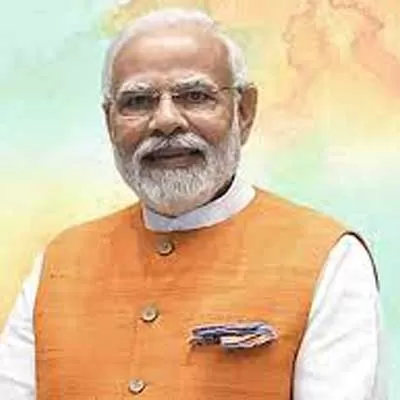
Prime Minister Narendra Modi declared the rooftop solar scheme, PM Surya Ghar Muft Bijli Yojana, with an investment exceeding Rs 750 billion. PM Modi stated on the microblogging platform X that, "In order to further sustainable development and people's well-being, the PM Surya Ghar: Muft Bijli Yojana is being launched."

The scheme, initially introduced on January 22 by the Prime Minister as Pradhan Mantri Suryodaya Yojana, aims to illuminate 10 million households, providing them with free electricity of up to 300 units monthly. It envisions substantial subsidies directly credited to the bank accounts of consumers and heavily concessional bank loans. He stated, "The central government will ensure that there is no cost burden on the people. All stakeholders will be integrated into a National Online Portal, which will further enhance convenience."

The interim budget had also proposed the rooftop solar segment, stating that 10 million households would receive up to 300 units of free electricity every month under the scheme initially proposed as Pradhan Mantri Suryodaya Yojana, with an outlay of Rs 100 billion. To promote the scheme, urban local bodies and panchayats will be encouraged to endorse rooftop solar installations in their jurisdictions, as per the Prime Minister's announcement.

Modi mentioned that the scheme would result in increased income, reduced power bills, and employment generation. Following the PM's announcement of the scheme in January, Power Minister RK Singh had stated that the Centre was aiming to raise the subsidy for rooftop solar projects for households to 60% of the capital cost from the current 40%, targeting the lower and lower-middle class. Singh also noted that all power public sector undertakings (PSUs) would implement the program by forming special purpose vehicles.

Prime Minister Narendra Modi declared the rooftop solar scheme, PM Surya Ghar Muft Bijli Yojana, with an investment exceeding Rs 750 billion. PM Modi stated on the microblogging platform X that, In order to further sustainable development and people's well-being, the PM Surya Ghar: Muft Bijli Yojana is being launched. The scheme, initially introduced on January 22 by the Prime Minister as Pradhan Mantri Suryodaya Yojana, aims to illuminate 10 million households, providing them with free electricity of up to 300 units monthly. It envisions substantial subsidies directly credited to the bank accounts of consumers and heavily concessional bank loans. He stated, The central government will ensure that there is no cost burden on the people. All stakeholders will be integrated into a National Online Portal, which will further enhance convenience. The interim budget had also proposed the rooftop solar segment, stating that 10 million households would receive up to 300 units of free electricity every month under the scheme initially proposed as Pradhan Mantri Suryodaya Yojana, with an outlay of Rs 100 billion. To promote the scheme, urban local bodies and panchayats will be encouraged to endorse rooftop solar installations in their jurisdictions, as per the Prime Minister's announcement. Modi mentioned that the scheme would result in increased income, reduced power bills, and employment generation. Following the PM's announcement of the scheme in January, Power Minister RK Singh had stated that the Centre was aiming to raise the subsidy for rooftop solar projects for households to 60% of the capital cost from the current 40%, targeting the lower and lower-middle class. Singh also noted that all power public sector undertakings (PSUs) would implement the program by forming special purpose vehicles.

Next Story
Infrastructure Urban

India Expands Semiconductor Training To 500 Institutions

Under the Chips to Startups programme of the India Semiconductor Mission, the Union minister responsible for Railways, Information and Broadcasting, and Electronics and IT reported notable progress in talent development. He indicated that over the past four years substantial steps have been taken towards a 10-year target of training 85,000 engineers in semiconductor design. World-class EDA tools have been deployed in 315 academic institutions across the country to provide students with practical exposure to chip design. These EDA tools are supported by leading global firms and are accessible t..

Next Story
Infrastructure Urban

Delhi Institutions Support India Semiconductor Mission

The Government of India has prioritised talent development through training, upskilling and workforce development under the Chips to Startups initiative of the India Semiconductor Mission, with officials noting progress in four years towards a 10-year target of training 85,000 engineers in semiconductor design. Electronic design automation tools provided by Synopsys, Cadence, Siemens, Renesas, Ansys and AMD have been deployed in 315 academic institutions, enabling students to gain practical chip design experience. Chips have been fabricated and tested at the Semiconductor Laboratory, Mohali, a..

Next Story
Infrastructure Urban

NHA Announces Winners Of NHCX Hackathon At IIT Hyderabad

The National Health Authority (NHA) has concluded the NHCX Hackathon under the Ayushman Bharat Digital Mission (ABDM) to stimulate innovation around the National Health Claims Exchange (NHCX). The winning teams presented their solutions at the NHCX Innovation Meet held at IIT Hyderabad during a two-day event in March 2026 that also served as the hackathon grand finale. The hackathon itself ran from 22 to 28 February 2026 and aimed to accelerate paperless, transparent claims processing across India. The event was organised with a range of ecosystem partners, including the Insurance Regulatory a..

Advertisement

Subscribe to Our Newsletter

Get daily newsletters around different themes from Construction world.

STAY CONNECTED

Advertisement

Advertisement

Advertisement