SAUBHAGYA scheme: Assam discom invites bids for 71,199 solar systems
POWER & RENEWABLE ENERGY

SAUBHAGYA scheme: Assam discom invites bids for 71,199 solar systems

The Assam Power Distribution Company Limited (APDCL) has floated tenders for off-grid rural electrification via 71,199 standalone solar systems on a turnkey basis under the Pradhan Mantri Sahaj Bijlee Har Ghar Yojana (SAUBHAGYA) program.

The scope of work involves planning, site survey, testing, transportation, engineering, design, assembly manufacturing, installation, supply, loading, unloading, handling, insurance, storage, testing, commissioning, and documentation of all items needed to complete the establishment of the standalone solar systems.

The selected bidder will have to take care of maintenance activities of the system for five years.

A bidder may present a maximum of five packages separately in the same tendering process, either independently as a bidder or as a consortium partner. The tender has been split into 17 packages including several districts of the state.

The estimated project cost is Rs 50,000 per system.

The last date to present the tenders online is 28th September 2021, and tenders will be opened on September 29.

The project must be concluded before 31st December 2021.

Interested bidders will have to present Rs 2.5 million as an earnest money deposit. Micro and small enterprises (MSEs) have been exempted from paying the EMD. As a performance bank guarantee, the successful bidder will have to provide 3% of the total order value.

To take part in the bidding process, the bidder should have experience in successfully implementing a single completed work of design, installation, and commissioning of solar home lighting systems, solar street lighting systems, off-grid-solar projects or grid-connected solar projects in the past seven years.

The solar modules should be indigenously produced. The solar modules must be formed of crystalline silicon solar cells and should have a certificate of testing, according to IEC 61215 Edition II or Bureau of Indian Standards (BIS) 14286.

The module efficiency should not be lower than 14%, and the array capacity of solar modules should not be lower than 300Wp.

Assam has been using smaller solar systems because of the challenge of the availability of land for large-scale solar projects. Last December, the state government floated tenders for the supply and establishment of solar home lighting systems for scheduled caste (SC) beneficiaries in Assam on a rate contract basis for one year.

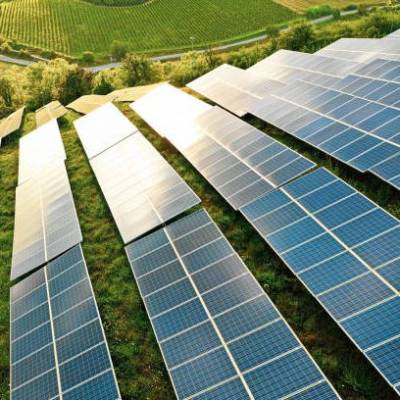
Image Source


Also read: TANGEDCO to set up 4 GW solar park in Tamil Nadu

The Assam Power Distribution Company Limited (APDCL) has floated tenders for off-grid rural electrification via 71,199 standalone solar systems on a turnkey basis under the Pradhan Mantri Sahaj Bijlee Har Ghar Yojana (SAUBHAGYA) program. The scope of work involves planning, site survey, testing, transportation, engineering, design, assembly manufacturing, installation, supply, loading, unloading, handling, insurance, storage, testing, commissioning, and documentation of all items needed to complete the establishment of the standalone solar systems. The selected bidder will have to take care of maintenance activities of the system for five years. A bidder may present a maximum of five packages separately in the same tendering process, either independently as a bidder or as a consortium partner. The tender has been split into 17 packages including several districts of the state. The estimated project cost is Rs 50,000 per system. The last date to present the tenders online is 28th September 2021, and tenders will be opened on September 29. The project must be concluded before 31st December 2021. Interested bidders will have to present Rs 2.5 million as an earnest money deposit. Micro and small enterprises (MSEs) have been exempted from paying the EMD. As a performance bank guarantee, the successful bidder will have to provide 3% of the total order value. To take part in the bidding process, the bidder should have experience in successfully implementing a single completed work of design, installation, and commissioning of solar home lighting systems, solar street lighting systems, off-grid-solar projects or grid-connected solar projects in the past seven years. The solar modules should be indigenously produced. The solar modules must be formed of crystalline silicon solar cells and should have a certificate of testing, according to IEC 61215 Edition II or Bureau of Indian Standards (BIS) 14286. The module efficiency should not be lower than 14%, and the array capacity of solar modules should not be lower than 300Wp. Assam has been using smaller solar systems because of the challenge of the availability of land for large-scale solar projects. Last December, the state government floated tenders for the supply and establishment of solar home lighting systems for scheduled caste (SC) beneficiaries in Assam on a rate contract basis for one year. Image SourceAlso read: TANGEDCO to set up 4 GW solar park in Tamil Nadu

Next Story
Infrastructure Transport

India Becomes First to Produce Bio-Bitumen for Roads

India has become the first country in the world to commercially produce bio-bitumen for use in road construction, according to Road, Transport and Highways Minister Nitin Gadkari. Bitumen, a black and viscous hydrocarbon derived from crude oil, is a key binding material in road building, and the bio-based alternative is expected to significantly improve the sector’s environmental footprint.Addressing the CSIR Technology Transfer Ceremony in New Delhi, Mr Gadkari congratulated Council of Scientific and Industrial Research on achieving the milestone, noting that the initiative would help curb ..

Next Story
Infrastructure Urban

HILT Policy Seen Boosting Telangana Revenue Sharply

The Hyderabad Industrial Land Transformation (HILT) Policy is expected to generate around Rs 1.08 billion in revenue for the Telangana state exchequer, according to Deputy Chief Minister Bhatti Vikramarka Mallu. Speaking in the Telangana Legislative Assembly, he said the policy would be implemented within a six-month timeframe in a transparent manner, with uniform rules applicable to all stakeholders. Mr Vikramarka noted that without the HILT Policy, the state would have earned only about Rs 1.2 million per acre. Under the new framework, however, revenue is projected to rise sharply to Rs 70 ..

Next Story
Infrastructure Urban

India Post, MoRD Tie Up to Boost Rural Inclusion

The Department of Posts and the Ministry of Rural Development have signed a Memorandum of Understanding to accelerate rural transformation and expand financial, digital and logistics services for Self-Help Groups (SHGs) and rural households across India. The agreement was signed in the presence of Union Minister of Communications and Development of North Eastern Region Jyotiraditya M. Scindia and Union Minister of Rural Development and Agriculture and Farmers’ Welfare Shivraj Singh Chouhan. The collaboration aligns with the government’s “Dak Sewa, Jan Sewa” vision and seeks to repositi..

Advertisement

Subscribe to Our Newsletter

Get daily newsletters around different themes from Construction world.

STAY CONNECTED

Advertisement

Advertisement

Advertisement

Advertisement

Open In App