S&P Global Says Tariff And Investment Rules Needed In Power Market
POWER & RENEWABLE ENERGY

S&P Global Says Tariff And Investment Rules Needed In Power Market

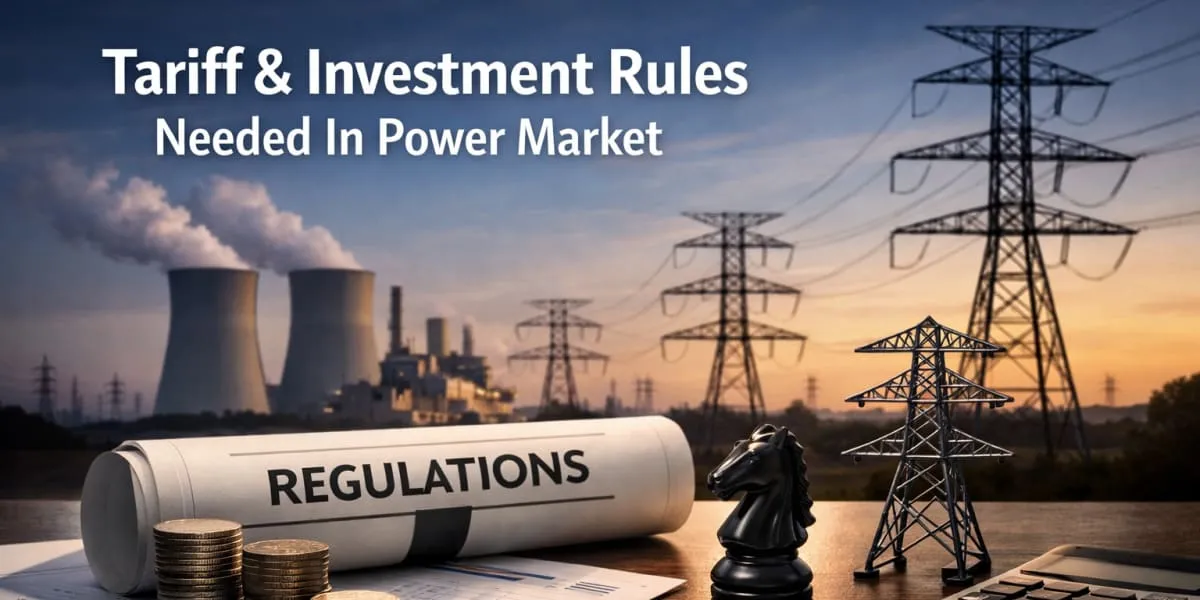
Researchers at S&P Global Energy, the research arm of S&P Global, said that government regulation on tariff and investment should complement competition in power markets, since transmission and distribution remain natural monopolies requiring large capital investments. The firm argued that enabling competition among existing companies is more important than bringing in more entrants. It noted that the power sector is a heavy industry where scale delivers value, particularly in transmission and distribution. The researchers emphasised that regulation must address tariff setting and investment planning alongside market liberalisation.

S&P Global suggested that a focus solely on encouraging competition without regulatory safeguards would be insufficient in areas of the sector that demand substantial infrastructure and long lead times. The analysis warned that market concentration by large conglomerates in renewable power production, transmission and distribution presents risks that must be managed through policy. It recommended that regulation should ensure fair access to networks, transparent tariff mechanisms and investment signals that attract prudent capital.

The firm also urged the government to incentivise micro, small and medium enterprises to invest in renewables and related power services to broaden participation and foster supply chain resilience. It outlined that targeted support for smaller firms could complement large scale investment while preserving system reliability. The researchers highlighted the interplay between energy reforms and geopolitical risks, stating that renewable adoption and market design are increasingly significant given spillovers into the wider economy.

Policy measures should therefore balance competition with regulatory oversight to secure long term investment and protect consumers, the research concluded. Officials and market participants were advised to consider a mix of tariff regulation, investment guidance and targeted incentives to achieve a diverse and stable power sector. S&P Global Energy said that such calibrated reforms would support renewable growth while maintaining the operational integrity of transmission and distribution networks.

"Join industry leaders at RAHSTA Expo, India's premier platform for roads, highways and traffic infrastructure. Register now to explore innovations, network with experts and shape the future of mobility."

Researchers at S&P Global Energy, the research arm of S&P Global, said that government regulation on tariff and investment should complement competition in power markets, since transmission and distribution remain natural monopolies requiring large capital investments. The firm argued that enabling competition among existing companies is more important than bringing in more entrants. It noted that the power sector is a heavy industry where scale delivers value, particularly in transmission and distribution. The researchers emphasised that regulation must address tariff setting and investment planning alongside market liberalisation. S&P Global suggested that a focus solely on encouraging competition without regulatory safeguards would be insufficient in areas of the sector that demand substantial infrastructure and long lead times. The analysis warned that market concentration by large conglomerates in renewable power production, transmission and distribution presents risks that must be managed through policy. It recommended that regulation should ensure fair access to networks, transparent tariff mechanisms and investment signals that attract prudent capital. The firm also urged the government to incentivise micro, small and medium enterprises to invest in renewables and related power services to broaden participation and foster supply chain resilience. It outlined that targeted support for smaller firms could complement large scale investment while preserving system reliability. The researchers highlighted the interplay between energy reforms and geopolitical risks, stating that renewable adoption and market design are increasingly significant given spillovers into the wider economy. Policy measures should therefore balance competition with regulatory oversight to secure long term investment and protect consumers, the research concluded. Officials and market participants were advised to consider a mix of tariff regulation, investment guidance and targeted incentives to achieve a diverse and stable power sector. S&P Global Energy said that such calibrated reforms would support renewable growth while maintaining the operational integrity of transmission and distribution networks.

Next Story
Real Estate

VeARC leases 27,000 sq ft office space in Bengaluru

VeARC India has leased approximately 27,000 sq ft of office space at The Executive Centre's (TEC) Helios Business Park on Outer Ring Road (ORR), Bengaluru, to support the expansion of its Global Capability Centre (GCC) operations.The new workspace accommodates more than 450 workstations and is intended to support the company's growing workforce in India. VeARC India serves as the Global Capability Centre for Long Arc Capital.Located on Bengaluru's Outer Ring Road, the office provides access to one of the city's key technology and business corridors. The expansion comes amid continued growth in..

Next Story
Real Estate

Bharat Shah Family Buys Four Luxury Apartments In Worli For Rs1.8 bn

The family of veteran investor Bharat Shah has acquired four ultra-luxury apartments on the higher floors of Kalpataru One in Worli, South Mumbai, for Rs1.8 billion (bn). The purchases were registered on 6 July 2026 and were executed through Preeti Bharat Shah and Kinnari Bharat Shah, who bought the flats from Kalpataru Properties Limited. Property registration documents reviewed by Zapkey show the total consideration at Rs1.7941 billion. The transactions recorded a per square foot RERA carpet price of Rs0.101 million (mn), with each apartment valued at about Rs448.5 million. The four residenc..

Next Story
Infrastructure Urban

NITI Aayog Consultation On Critical Mineral Supply Chains

NITI Aayog convened a stakeholder consultation in New Delhi on Wednesday to assess requirements for critical minerals across strategic sectors, bringing together experts from government, research institutions, academia and industry. The meeting aimed to estimate current and future demand, identify supply chain vulnerabilities and discuss measures to strengthen domestic capabilities in exploration, processing and recycling. The exercise formed part of broader efforts to secure mineral value chains essential for economic growth, technological advancement and national security.\n\nDiscussions con..

Advertisement

Subscribe to Our Newsletter

Get daily newsletters around different themes from Construction world.

STAY CONNECTED

Advertisement

Advertisement

Advertisement