Subansiri Hydropower Project Begins Generation After 20 Years
POWER & RENEWABLE ENERGY

Subansiri Hydropower Project Begins Generation After 20 Years

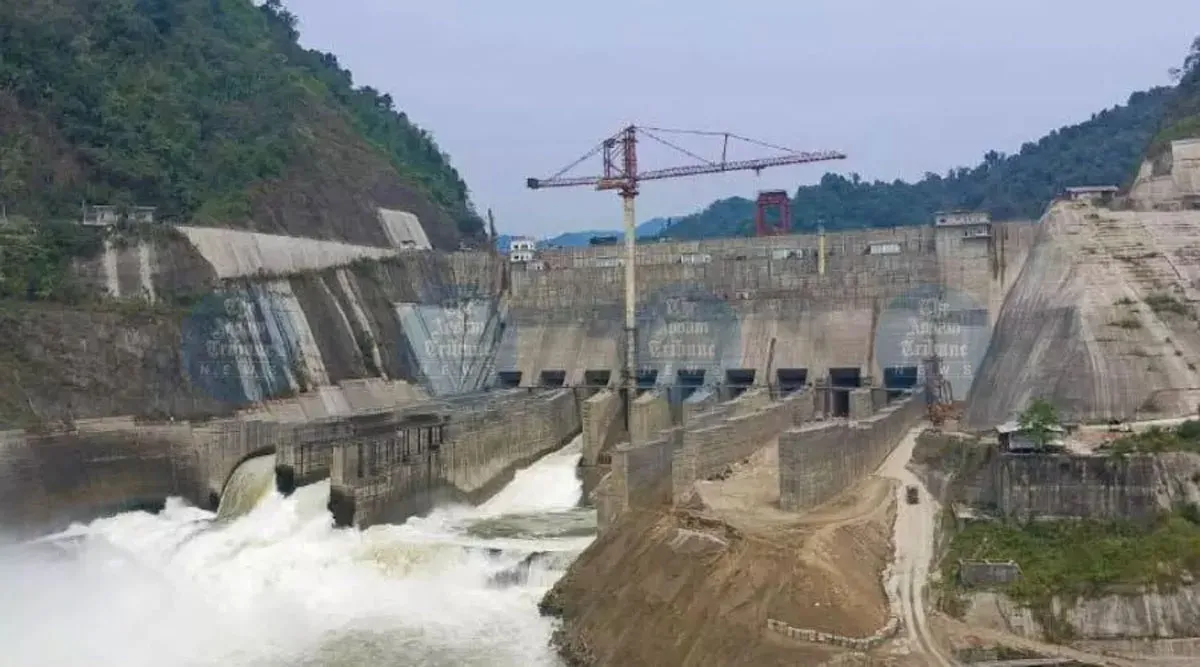
The Subansiri Lower Hydroelectric Power Project has begun generating electricity after a two-decade journey, with its first unit synchronised to the national power grid at 6.12 pm on Wednesday. The 2,000 MW project, implemented by NHPC, comprises eight units of 250 MW each. A second unit has also begun generation, while three more units are expected to be commissioned this month. Full commissioning is targeted for March 2027.

Project consultant A.N. Mohammad told The Assam Tribune that synchronisation marked a defining moment in India’s hydropower progress. He said Unit 1 and Unit 2 completed mechanical runs on 26 October and 6 November, respectively. Units 1, 3 and 4 will be synchronised after wet commissioning tests, adding 1,000 MW by December 2025. The commercial operation date will be confirmed shortly. The final four units are scheduled for phased commissioning between 2026 and 2027. When fully operational, the plant is expected to supply 7.421 billion units of renewable energy annually, bolstering India’s clean-energy ambitions.

Mohammad highlighted the project’s turbulent history. Conceived in January 2005 at Gerukamukh on the Assam–Arunachal border, construction stalled for eight years—from 2011 to 2019—due to protests, litigation and concerns over dam safety and downstream ecological impact. Work resumed in October 2019 after the government introduced enhanced safeguards.

Several expert panels reviewed the project. The Technical Expert Committee (TEC) addressed hydrological concerns, while the Dam Design Review Panel (DDRP) mandated key safety upgrades, including widening the dam from 171 metres to 271 metres, adding upstream and downstream cut-off walls, improving foundation grouting and installing rock anchors. The National Committee for Seismic Design Parameters (NCSDP) approved seismic safety measures.

A major cumulative impact study by the Central Water Commission in December 2014 required an environmental flow of 240 cubic metres per second to protect aquatic ecosystems. The Subansiri River’s volatile history—including massive floods triggered by the 1950 earthquake—also shaped design decisions. The project’s 1,365 MCM reservoir incorporates a 15-metre flood cushion of 442 MCM and 60 km of downstream embankment fortifications, increasing river-carrying capacity by 15–20 per cent.

Downstream development works worth over Rs 4.7 billion have been undertaken, covering health, education, livelihoods and infrastructure for affected communities. Once operational, Assam will receive 208 MW as per hydropower norms, an additional preferential allocation of 300 MW, and 25 MW of free power. Arunachal Pradesh will receive 12 per cent free power as the host state, with the remaining electricity distributed to other regions, including the Northeast.

The project cost has risen from Rs 62.85 billion at 2002 prices to about Rs 260 billion today, primarily due to prolonged construction, cost escalation and interest during construction, Mohammad said.

The Subansiri Lower Hydroelectric Power Project has begun generating electricity after a two-decade journey, with its first unit synchronised to the national power grid at 6.12 pm on Wednesday. The 2,000 MW project, implemented by NHPC, comprises eight units of 250 MW each. A second unit has also begun generation, while three more units are expected to be commissioned this month. Full commissioning is targeted for March 2027. Project consultant A.N. Mohammad told The Assam Tribune that synchronisation marked a defining moment in India’s hydropower progress. He said Unit 1 and Unit 2 completed mechanical runs on 26 October and 6 November, respectively. Units 1, 3 and 4 will be synchronised after wet commissioning tests, adding 1,000 MW by December 2025. The commercial operation date will be confirmed shortly. The final four units are scheduled for phased commissioning between 2026 and 2027. When fully operational, the plant is expected to supply 7.421 billion units of renewable energy annually, bolstering India’s clean-energy ambitions. Mohammad highlighted the project’s turbulent history. Conceived in January 2005 at Gerukamukh on the Assam–Arunachal border, construction stalled for eight years—from 2011 to 2019—due to protests, litigation and concerns over dam safety and downstream ecological impact. Work resumed in October 2019 after the government introduced enhanced safeguards. Several expert panels reviewed the project. The Technical Expert Committee (TEC) addressed hydrological concerns, while the Dam Design Review Panel (DDRP) mandated key safety upgrades, including widening the dam from 171 metres to 271 metres, adding upstream and downstream cut-off walls, improving foundation grouting and installing rock anchors. The National Committee for Seismic Design Parameters (NCSDP) approved seismic safety measures. A major cumulative impact study by the Central Water Commission in December 2014 required an environmental flow of 240 cubic metres per second to protect aquatic ecosystems. The Subansiri River’s volatile history—including massive floods triggered by the 1950 earthquake—also shaped design decisions. The project’s 1,365 MCM reservoir incorporates a 15-metre flood cushion of 442 MCM and 60 km of downstream embankment fortifications, increasing river-carrying capacity by 15–20 per cent. Downstream development works worth over Rs 4.7 billion have been undertaken, covering health, education, livelihoods and infrastructure for affected communities. Once operational, Assam will receive 208 MW as per hydropower norms, an additional preferential allocation of 300 MW, and 25 MW of free power. Arunachal Pradesh will receive 12 per cent free power as the host state, with the remaining electricity distributed to other regions, including the Northeast. The project cost has risen from Rs 62.85 billion at 2002 prices to about Rs 260 billion today, primarily due to prolonged construction, cost escalation and interest during construction, Mohammad said.

Next Story
Real Estate

L&T Consolidates Its Realty Operations Under One Entity

Larsen & Toubro has approved the transfer of its Realty Business Undertaking to its wholly-owned subsidiary, L&T Realty Properties Ltd, through a slump-sale via a Scheme of Arrangement. This marks the first phase of a broader consolidation strategy aimed at placing all real estate assets under L&T Realty, creating a single, future-ready development arm capable of leveraging India’s expanding property market. The unified structure is expected to enhance scale, agility and financial resilience as L&T Realty expands its project pipeline, strengthens land acquisition and accelerates joint devel..

Next Story
Infrastructure Transport

India Opens Longest Precast Cut-and-Cover Tunnel

India has inaugurated its longest precast cut-and-cover tunnel, a 920-metre structure located at an altitude of 12,300 ft (3,750 m) in a sensitive border region. The project was formally opened on 7 December 2025 by Defence Minister Rajnath Singh. The tunnel is designed to improve troop movement, strengthen supply lines and bolster operational readiness in challenging high-altitude terrain. The company has expressed gratitude to the Ministry of Defence and the Border Roads Organisation for their support and guidance, noting that it is honoured to contribute to a project of such strategic sign..

Next Story
Infrastructure Urban

Thermax Marks 30 Years of Listing on NSE

Thermax has celebrated 30 years of its listing on the National Stock Exchange with a ceremonial bell-ringing event held in Mumbai. The occasion brought together NSE MD & CEO Ashishkumar Chauhan, Thermax Chairperson Meher Pudumjee, Managing Director and CEO Ashish Bhandari, board members, senior leaders and key stakeholders who have supported the company’s journey. Listed on 30 August 1995, Thermax has evolved from a packaged boiler and heating equipment manufacturer into a global provider of energy transition and sustainability solutions. Established in 1966 as Wanson India by the late A S ..

Advertisement

Subscribe to Our Newsletter

Get daily newsletters around different themes from Construction world.

STAY CONNECTED

Advertisement

Advertisement

Advertisement

Advertisement

Open In App