+
UP Budget Allocates Rs 21,040 mn For Solar And Green Hydrogen
POWER & RENEWABLE ENERGY

UP Budget Allocates Rs 21,040 mn For Solar And Green Hydrogen

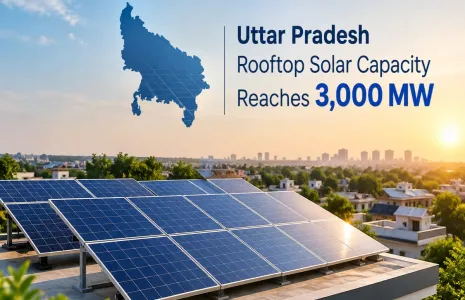
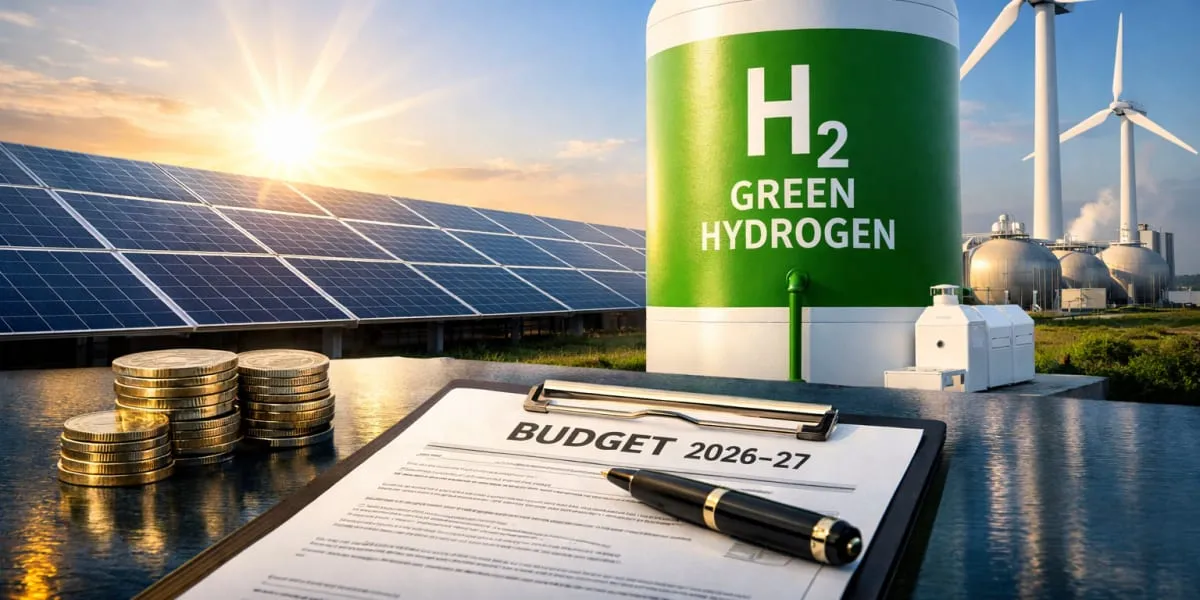
The Uttar Pradesh government has proposed an allocation of Rs 21,040 million (mn) in its budget for the financial year 2026–27 to develop solar power, bio-energy and green hydrogen. The sum represents more than double the provision in 2025–26 and signals a strategic emphasis on energy security and sustainable growth. The package is aimed at positioning the state as a leader in clean energy within the next five years.

The budget sets a target of generating 22,000 megawatt (MW) of electricity through alternative sources over the coming five years under the Uttar Pradesh Solar Energy Policy-2022, the State Bio-Energy Policy-2022 and the Green Hydrogen Policy-2024. To date solar projects with a total installed capacity of 2,815 MW have been commissioned across the state, indicating policy measures are translating into action. Officials described the target as a means to reduce reliance on conventional power and to advance energy self-reliance.

A major portion of the new allocation has been directed towards the PM Kusum Suryaghar Scheme, with Rs 15,000 mn earmarked to support farmers and households in adopting solar pumps and rooftop systems. The scheme is expected to lower electricity costs, improve energy access in rural and semi-urban areas and provide additional income opportunities for farmers. Urban measures include development of 17 municipal corporations as solar cities while rural electrification has been expanded with about half a million solar street lights installed so far (0.52 mn).

In the bio-energy sector the state has established 36 compressed biogas plants, the highest number reported in the country, to manage agricultural and organic waste while generating clean fuel. The Green Hydrogen Policy-2024 has approved two Centres of Excellence to promote research and industrial use of green hydrogen technologies. The combined measures are designed to build a cleaner power system and to strengthen the state’s renewable energy base.

The Uttar Pradesh government has proposed an allocation of Rs 21,040 million (mn) in its budget for the financial year 2026–27 to develop solar power, bio-energy and green hydrogen. The sum represents more than double the provision in 2025–26 and signals a strategic emphasis on energy security and sustainable growth. The package is aimed at positioning the state as a leader in clean energy within the next five years. The budget sets a target of generating 22,000 megawatt (MW) of electricity through alternative sources over the coming five years under the Uttar Pradesh Solar Energy Policy-2022, the State Bio-Energy Policy-2022 and the Green Hydrogen Policy-2024. To date solar projects with a total installed capacity of 2,815 MW have been commissioned across the state, indicating policy measures are translating into action. Officials described the target as a means to reduce reliance on conventional power and to advance energy self-reliance. A major portion of the new allocation has been directed towards the PM Kusum Suryaghar Scheme, with Rs 15,000 mn earmarked to support farmers and households in adopting solar pumps and rooftop systems. The scheme is expected to lower electricity costs, improve energy access in rural and semi-urban areas and provide additional income opportunities for farmers. Urban measures include development of 17 municipal corporations as solar cities while rural electrification has been expanded with about half a million solar street lights installed so far (0.52 mn). In the bio-energy sector the state has established 36 compressed biogas plants, the highest number reported in the country, to manage agricultural and organic waste while generating clean fuel. The Green Hydrogen Policy-2024 has approved two Centres of Excellence to promote research and industrial use of green hydrogen technologies. The combined measures are designed to build a cleaner power system and to strengthen the state’s renewable energy base.

Next Story
Infrastructure Urban

India Expands Semiconductor Training To 500 Institutions

Under the Chips to Startups programme of the India Semiconductor Mission, the Union minister responsible for Railways, Information and Broadcasting, and Electronics and IT reported notable progress in talent development. He indicated that over the past four years substantial steps have been taken towards a 10-year target of training 85,000 engineers in semiconductor design. World-class EDA tools have been deployed in 315 academic institutions across the country to provide students with practical exposure to chip design. These EDA tools are supported by leading global firms and are accessible t..

Next Story
Infrastructure Urban

Delhi Institutions Support India Semiconductor Mission

The Government of India has prioritised talent development through training, upskilling and workforce development under the Chips to Startups initiative of the India Semiconductor Mission, with officials noting progress in four years towards a 10-year target of training 85,000 engineers in semiconductor design. Electronic design automation tools provided by Synopsys, Cadence, Siemens, Renesas, Ansys and AMD have been deployed in 315 academic institutions, enabling students to gain practical chip design experience. Chips have been fabricated and tested at the Semiconductor Laboratory, Mohali, a..

Next Story
Infrastructure Urban

NHA Announces Winners Of NHCX Hackathon At IIT Hyderabad

The National Health Authority (NHA) has concluded the NHCX Hackathon under the Ayushman Bharat Digital Mission (ABDM) to stimulate innovation around the National Health Claims Exchange (NHCX). The winning teams presented their solutions at the NHCX Innovation Meet held at IIT Hyderabad during a two-day event in March 2026 that also served as the hackathon grand finale. The hackathon itself ran from 22 to 28 February 2026 and aimed to accelerate paperless, transparent claims processing across India. The event was organised with a range of ecosystem partners, including the Insurance Regulatory a..

Advertisement

Subscribe to Our Newsletter

Get daily newsletters around different themes from Construction world.

STAY CONNECTED

Advertisement

Advertisement

Advertisement