VECV Showcases Electric Mobility Progress on World EV Day 2025
POWER & RENEWABLE ENERGY

VECV Showcases Electric Mobility Progress on World EV Day 2025

VE Commercial Vehicles (VECV) marked World EV Day 2025 by reaffirming its commitment to advancing clean mobility in India through an ecosystem-led approach. For VECV, electric mobility extends beyond vehicles to include charging infrastructure, connected services, and inclusive, sustainable manufacturing practices that make adoption scalable and future-ready.

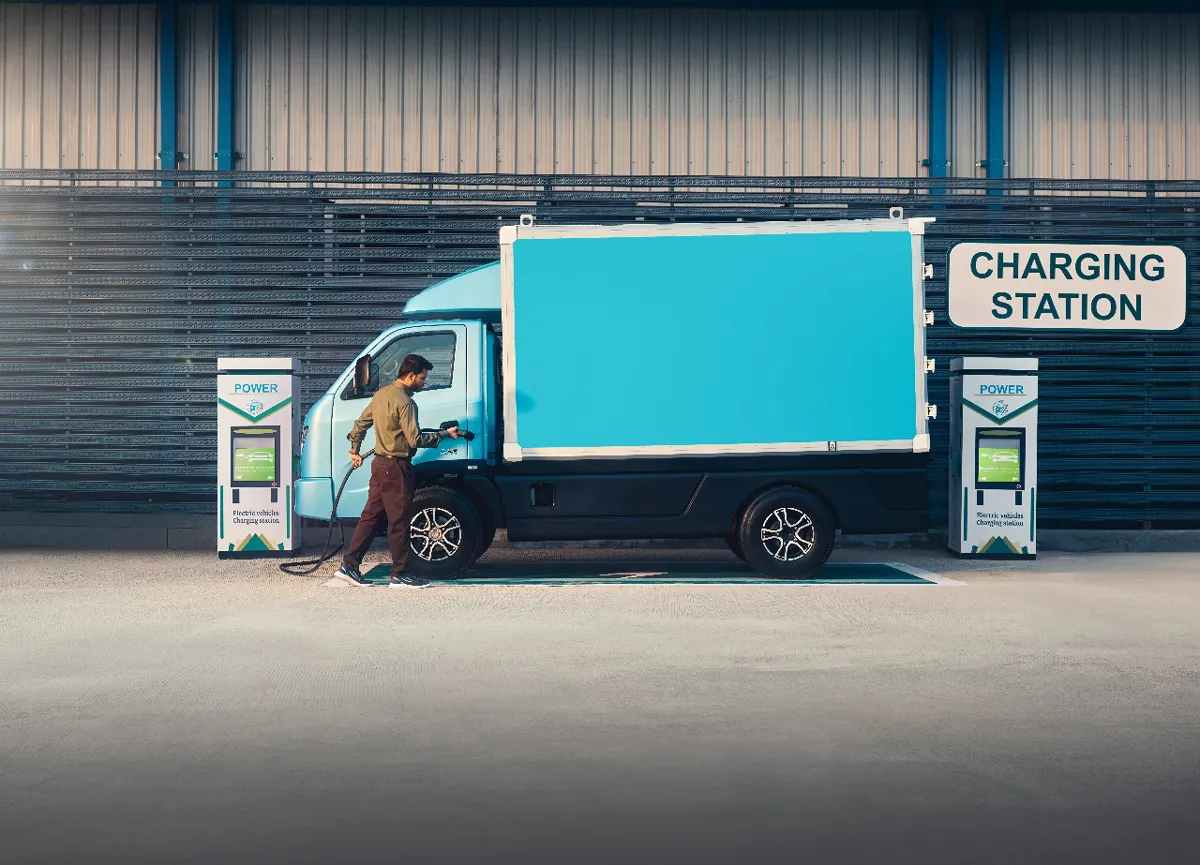
VECV is expanding its EV portfolio with products such as the Eicher Pro X Small Truck, Eicher 2055 EV, and Eicher Skyline Pro Electric bus, already deployed in several cities for school and staff transport. To enhance charging access, VECV has partnered with charging point operators, enabling customers to use thousands of charging stations across India.

The company’s Industry 4.0-enabled Bhopal plant further strengthens its sustainability credentials. It features AI-driven energy monitoring, an all-women assembly line, and eco-conscious design. Currently, 42 per cent of VECV’s energy needs are met through renewables, supported by a 75 MW captive solar capacity, with a target of 70 per cent by FY27. The plant also houses a 52-million-litre rainwater harvesting reservoir, supporting operations for up to four months, in line with VECV’s goal of becoming water-positive by 2030.

VECV was among the first to launch BS-VI vehicles in 2019 and continues to develop alternative fuel solutions, including CNG, LNG, hydrogen ICE, and hydrogen fuel cells, alongside its electric offerings.

Through innovation, renewable integration, and ecosystem partnerships, VECV aims to contribute to India’s net-zero journey, reinforcing its leadership in sustainable transportation.

VE Commercial Vehicles (VECV) marked World EV Day 2025 by reaffirming its commitment to advancing clean mobility in India through an ecosystem-led approach. For VECV, electric mobility extends beyond vehicles to include charging infrastructure, connected services, and inclusive, sustainable manufacturing practices that make adoption scalable and future-ready.VECV is expanding its EV portfolio with products such as the Eicher Pro X Small Truck, Eicher 2055 EV, and Eicher Skyline Pro Electric bus, already deployed in several cities for school and staff transport. To enhance charging access, VECV has partnered with charging point operators, enabling customers to use thousands of charging stations across India.The company’s Industry 4.0-enabled Bhopal plant further strengthens its sustainability credentials. It features AI-driven energy monitoring, an all-women assembly line, and eco-conscious design. Currently, 42 per cent of VECV’s energy needs are met through renewables, supported by a 75 MW captive solar capacity, with a target of 70 per cent by FY27. The plant also houses a 52-million-litre rainwater harvesting reservoir, supporting operations for up to four months, in line with VECV’s goal of becoming water-positive by 2030.VECV was among the first to launch BS-VI vehicles in 2019 and continues to develop alternative fuel solutions, including CNG, LNG, hydrogen ICE, and hydrogen fuel cells, alongside its electric offerings.Through innovation, renewable integration, and ecosystem partnerships, VECV aims to contribute to India’s net-zero journey, reinforcing its leadership in sustainable transportation.

Next Story
Infrastructure Transport

India Becomes First to Produce Bio-Bitumen for Roads

India has become the first country in the world to commercially produce bio-bitumen for use in road construction, according to Road, Transport and Highways Minister Nitin Gadkari. Bitumen, a black and viscous hydrocarbon derived from crude oil, is a key binding material in road building, and the bio-based alternative is expected to significantly improve the sector’s environmental footprint.Addressing the CSIR Technology Transfer Ceremony in New Delhi, Mr Gadkari congratulated Council of Scientific and Industrial Research on achieving the milestone, noting that the initiative would help curb ..

Next Story
Infrastructure Urban

HILT Policy Seen Boosting Telangana Revenue Sharply

The Hyderabad Industrial Land Transformation (HILT) Policy is expected to generate around Rs 1.08 billion in revenue for the Telangana state exchequer, according to Deputy Chief Minister Bhatti Vikramarka Mallu. Speaking in the Telangana Legislative Assembly, he said the policy would be implemented within a six-month timeframe in a transparent manner, with uniform rules applicable to all stakeholders. Mr Vikramarka noted that without the HILT Policy, the state would have earned only about Rs 1.2 million per acre. Under the new framework, however, revenue is projected to rise sharply to Rs 70 ..

Next Story
Infrastructure Urban

India Post, MoRD Tie Up to Boost Rural Inclusion

The Department of Posts and the Ministry of Rural Development have signed a Memorandum of Understanding to accelerate rural transformation and expand financial, digital and logistics services for Self-Help Groups (SHGs) and rural households across India. The agreement was signed in the presence of Union Minister of Communications and Development of North Eastern Region Jyotiraditya M. Scindia and Union Minister of Rural Development and Agriculture and Farmers’ Welfare Shivraj Singh Chouhan. The collaboration aligns with the government’s “Dak Sewa, Jan Sewa” vision and seeks to repositi..

Advertisement

Subscribe to Our Newsletter

Get daily newsletters around different themes from Construction world.

STAY CONNECTED

Advertisement

Advertisement

Advertisement

Advertisement

Open In App