
+
Indian Cement Conference 2015
Cement

Indian Cement Conference 2015

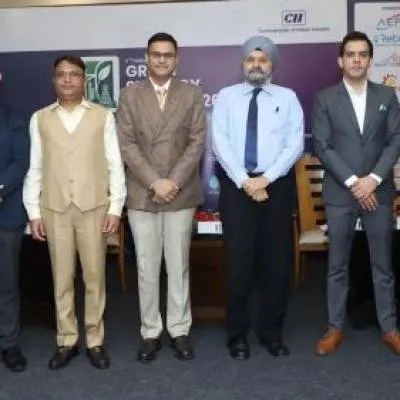
Organised by CII´s cement industry division on December 16, 2015, at Hotel Lalit, New Delhi, the event featured around 200 delegates, including top executives of cement companies, government officials and policymakers, consultants and academicians.

over a period of time, the Indian cement industry has become more organised, efficient, structured, and achieved substantial improvements in manufacturing technology. On one hand, the industry faces many challenges like environment regulation, availability of indigenous coal and rail transportation, while on the other, it has a close relationship with the country´s economy - though, sometimes, it has grown faster than the economy. The growth in the industry has been significant over the past three decades. However, at present, capacity utilisation is a big question mark when the industry is aiming to reach production capacity of 550 mtpa by 2025. The present government with its strong focus on infrastructure, housing and smart cities is offering great opportunity to the industry. Against this backdrop, the captains of the cement industry, along with consultants and government officials, discussed recent developments and the road ahead. The theme of the conference was ´Make in India - Urban Infrastructure and Smart Cities´.

At the outset, Ajay Kapur, Chairman, CII Cement Industry Division and Managing Director & CEO, Ambuja Cement, welcomed the delegates and highlighted some of the issues faced by the industry.

Mahendar Singhi, Group CEO, Dalmia Cement (Bharat) Ltd, gave a perspective of the Indian cement industry vis-a-vis the cement industry outside. He touched upon some of the recent advances of the Indian cement industry.

Then, Shailendra Singh, Joint Secretary, Department of Industrial Policy and Promotion, took stock of Make in India and how it will benefit the cement industry. Chief guest Chaudhary Birender Singh, Minister of Rural Development, spoke at length on the initiatives taken by the government and suggested that the cement industry could support government initiatives in road network development and improvement of sanitation.

There were two discussion sessions after lunch.

The first was a panel discussion on spurring infrastructure-led growth through Smart Cities, AMRUT and Housing for All. Panellists included Ajay Kapur; Dr S Chouksey, Whole Time Director, JK Lakshmi Cement; Dr Rishi Bhatnagar, Global Head-Digital Enterprise Solutions, Tech Mahindra Ltd; PK Tripathi, President, Unitech Ltd; Dr Asmi Raza, Professor of Economics, University of Delhi; and T Sivaram, IT Advisor, GMR Group. At the end, Dr Bhatnagar expressed the need for something disruptive to happen in the cement business, as it has happened in other business streams. He referred to some inventions in the cement market and said the industry should closely watch it.

The next session, CEOs Speak, featured an interactive debate on market scenario, supply-chain dynamics, opportunities and challenges. The session was moderated by Dr Omkar Goswami, Economist, Founder & Chairman, CERG. Panelists included Rajnish Kapur, Business Head-Grey Cement, JK Cement Ltd (Logistics and Transportation); Jagdeep Verma, Head-Business Consulting (Indian Cement Industry-New Horizons), Holtec Consulting Pvt Ltd; JC Toshniwal, Executive Director, Wonder Cement (Manufacturing Technologies); and Atul Desai, Executive Director and CMO, Reliance Cement Ltd. The entire group agreed that revival of the industry is certain to happen but had a difference of opinion on the time schedule. While some believed it will happen by 2016 the majority felt it would take place in late 2017 or early 2018.

There was a video message from Prakash Javadekar, Minister of State, Ministry of Environment, Forest and Climate Change, who could not attend the event as Parliament was in session. He applauded the industry for achieving world standards in energy-efficiency and said that SOX, NOX and particulate matters are the main pollutants emitted by the industry to be tackled efficiently and on priority. He further said that with the help of technology, pollutants are now monitored 24 x 7 and that he gets updates on his mobile every 15 minutes. He expected that the industry will follow the same path as energy-efficiency for emission parameters as well.

Jamshed Cooper, CEO and Managing Director, Heidelberg Cement India Ltd, spoke on sustainability and initiatives taken by his company to reduce the carbon footprint. Finally, Ajay Kapur, Chairman, CII Cement Industry Division, ended the event with his concluding remarks.

Organised by CII´s cement industry division on December 16, 2015, at Hotel Lalit, New Delhi, the event featured around 200 delegates, including top executives of cement companies, government officials and policymakers, consultants and academicians. over a period of time, the Indian cement industry has become more organised, efficient, structured, and achieved substantial improvements in manufacturing technology. On one hand, the industry faces many challenges like environment regulation, availability of indigenous coal and rail transportation, while on the other, it has a close relationship with the country´s economy - though, sometimes, it has grown faster than the economy. The growth in the industry has been significant over the past three decades. However, at present, capacity utilisation is a big question mark when the industry is aiming to reach production capacity of 550 mtpa by 2025. The present government with its strong focus on infrastructure, housing and smart cities is offering great opportunity to the industry. Against this backdrop, the captains of the cement industry, along with consultants and government officials, discussed recent developments and the road ahead. The theme of the conference was ´Make in India - Urban Infrastructure and Smart Cities´. At the outset, Ajay Kapur, Chairman, CII Cement Industry Division and Managing Director & CEO, Ambuja Cement, welcomed the delegates and highlighted some of the issues faced by the industry. Mahendar Singhi, Group CEO, Dalmia Cement (Bharat) Ltd, gave a perspective of the Indian cement industry vis-a-vis the cement industry outside. He touched upon some of the recent advances of the Indian cement industry. Then, Shailendra Singh, Joint Secretary, Department of Industrial Policy and Promotion, took stock of Make in India and how it will benefit the cement industry. Chief guest Chaudhary Birender Singh, Minister of Rural Development, spoke at length on the initiatives taken by the government and suggested that the cement industry could support government initiatives in road network development and improvement of sanitation. There were two discussion sessions after lunch. The first was a panel discussion on spurring infrastructure-led growth through Smart Cities, AMRUT and Housing for All. Panellists included Ajay Kapur; Dr S Chouksey, Whole Time Director, JK Lakshmi Cement; Dr Rishi Bhatnagar, Global Head-Digital Enterprise Solutions, Tech Mahindra Ltd; PK Tripathi, President, Unitech Ltd; Dr Asmi Raza, Professor of Economics, University of Delhi; and T Sivaram, IT Advisor, GMR Group. At the end, Dr Bhatnagar expressed the need for something disruptive to happen in the cement business, as it has happened in other business streams. He referred to some inventions in the cement market and said the industry should closely watch it. The next session, CEOs Speak, featured an interactive debate on market scenario, supply-chain dynamics, opportunities and challenges. The session was moderated by Dr Omkar Goswami, Economist, Founder & Chairman, CERG. Panelists included Rajnish Kapur, Business Head-Grey Cement, JK Cement Ltd (Logistics and Transportation); Jagdeep Verma, Head-Business Consulting (Indian Cement Industry-New Horizons), Holtec Consulting Pvt Ltd; JC Toshniwal, Executive Director, Wonder Cement (Manufacturing Technologies); and Atul Desai, Executive Director and CMO, Reliance Cement Ltd. The entire group agreed that revival of the industry is certain to happen but had a difference of opinion on the time schedule. While some believed it will happen by 2016 the majority felt it would take place in late 2017 or early 2018. There was a video message from Prakash Javadekar, Minister of State, Ministry of Environment, Forest and Climate Change, who could not attend the event as Parliament was in session. He applauded the industry for achieving world standards in energy-efficiency and said that SOX, NOX and particulate matters are the main pollutants emitted by the industry to be tackled efficiently and on priority. He further said that with the help of technology, pollutants are now monitored 24 x 7 and that he gets updates on his mobile every 15 minutes. He expected that the industry will follow the same path as energy-efficiency for emission parameters as well. Jamshed Cooper, CEO and Managing Director, Heidelberg Cement India Ltd, spoke on sustainability and initiatives taken by his company to reduce the carbon footprint. Finally, Ajay Kapur, Chairman, CII Cement Industry Division, ended the event with his concluding remarks.

Next Story
Infrastructure Transport

Lucknow Metro East-West Corridor Consultancy Contract Awarded

The Uttar Pradesh Metro Rail Corporation has awarded the first construction-related consultancy contract for the Lucknow Metro East West Corridor to a joint venture of AYESA Ingenieria Arquitectura SAU and AYESA India Pvt Ltd. The firm was declared the lowest bidder for the Detailed Design Consultant contract for Lucknow Metro Line-2 under Phase 1B and the contract was recommended following the financial bid. The contract is valued at Rs 159.0 million (mn), covering design services for the corridor. Lucknow Metro Line-2 envisages the construction of an 11.165 kilometre corridor connecting Cha..

Next Story
Infrastructure Urban

Div Com Kashmir Urges Fast Tracking Of Jhelum Water Transport Project

The Divisional Commissioner of Kashmir has called for the fast-tracking of the Jhelum water transport project, urging district administrations and relevant agencies to accelerate planning and clearances. In a meeting convened at the divisional headquarters, the commissioner instructed officials from irrigation, public health engineering and municipal departments to prioritise the project and coordinate survey and design work. The directive emphasised removal of administrative bottlenecks and close monitoring to ensure timely mobilisation of resources and contractors. Officials were told to in..

Next Story
Infrastructure Urban

Interarch Reports Strong Q3 And Nine Month Results

Interarch Building Solutions Limited reported unaudited results for the third quarter and nine months ended 31 December 2025, recording strong revenue growth driven by execution and a robust order book. Net revenue for the third quarter rose by 43.7 per cent to Rs 5.225 billion (bn), compared with Rs 3.636 bn a year earlier, reflecting heightened demand in pre-engineered building projects. The company’s total order book as at 31 January 2026 stood at Rs 16.85 bn, supporting near-term visibility. EBITDA excluding other income for the quarter increased by 43.2 per cent to Rs 503 million (mn),..

Advertisement

Subscribe to Our Newsletter

Get daily newsletters around different themes from Construction world.

STAY CONNECTED

Advertisement

Advertisement

Advertisement

Open In App