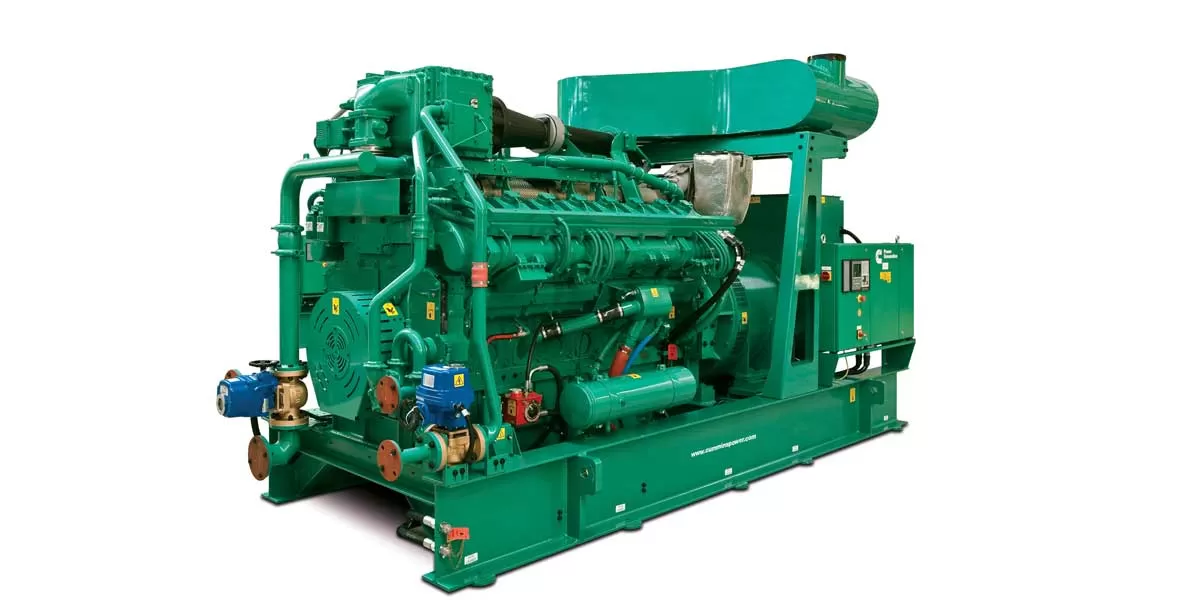
After expanding at a CAGR of 15.8 per cent between 2017 and 2022, India’s diesel generator market is poised to grow at 9.1 per cent through to 2027, according to Ken Research. By capacity, diesel generators above 1,000 kva account for 31 per cent of the market.
According to Shrikant Devanpelli, Managing Director, Prashanti MEP Consultant, “The need for every medium (more than 20 floors) to tall building
(more than 40 floors) to have a generator set (or alternative power supply, for medium buildings) to get a no-objection certificate from the relevant
fire authority is driving the market.”
From the safety point of view, every existing building should invest in a generator, he says, but finance and site constraints often pose hurdles.
The verdict
Ken Research identifies Kohler, Cummins, Sudhir Power, Ashok Leyland and Mahindra Powerol as the top players in the market, competing on running cost, environment-friendly features, reliability and a nationwide service network. Cummins India and GMMCO enjoy high customer satisfaction ratings. Do consultants agree?
Compactness, fuel economy, hybrid power systems (dual fuel), remote monitoring and control, low-emission engines and engine cooling systems are the most sought-after features of generators. “Cummins, Caterpillar, MTU Greaves
Cotton, Perkins & Baudouin offer most of these features,” says Vijaya Kumar CK, Managing Director, EPG Consultants. “We always advise clients to adopt gensets with the latest technological features.”
“Sudhir Power, Powerica, Cummins are all reliable brands,” says Milind Joshi, Testing and Commissioning Consultant, Milind Joshi and Associates.
To developers looking for the best buy, Srinivas TSS Rao, Founder and Principal Consultant, The Power Consultants, recommends Perkins gensets. “In my opinion, Perkins gensets are best known for their reliability and fuel-efficiency,” he says. “All their models have their own salient features. But they cost about 1.2x more than Cummins, Caterpillar or Mahindra Powerol.”
If cost is a concern, as it usually is, Rao recommends Mahindra Powerol gensets for both building construction sites and real estate for their compact design, lower harmful emissions, durability, reliability and ability to seamlessly switch over to the backup power.
“Cummins and Perkins generators are reliable and cost-effective for both buildings and construction sites,” says
Prashant Kaushik, Director
and Principal Consultant,
MCK MEP Consultant.
“Cummins and Kirloskar generators are best suited to buildings and construction sites, with the total load split over two or more smaller generators rather than investing in one large generator,” opines Devanpelli, while Prasshant Barrbade, Director - Projects, Neoinfinit, endorses Kirloskar Green gensets for their features.
Application diktats
The choice of genset depends on the application. The application may be subject to rules established by the local authority, the Pollution Control Board and/or the Commission for Air Quality Management, points out Joshi. “A consultant can help identify these rules and choose an appropriate model.”
“An industrial building would need a prime duty genset whereas standby duty gensets are better suited to buildings for commercial or residential use, and to construction sites,” says Vijaya Kumar. “If the construction site is situated in an area where the electrical supply is uncertain, the contractor may opt for a prime duty-rated genset. Buildings with heavy electrical loads such as those housing data centres will need continuous gensets.”
“Construction sites typically have harsh environments and need heavy-duty rugged gensets, exclusive office buildings are technically well-supported and need a reliable genset, while residential buildings and malls need a low-maintenance power backup,” says Joshi.
Hybrid challenges
Nowadays, strict pollution control regulations and green policies of companies are pushing the adoption of hybrid gensets consuming 70 per cent gas and 30 per cent diesel, observes Joshi.
“Gensets from Cummins, Caterpillar have hybrid power systems (dual fuel system),” adds Vijaya Kumar. According to him, only when the gas supply infrastructure covers all of India will the demand for hybrid systems increase.
Operational guidelines
A canopy and shock absorbers are mandatory for gensets, although on construction sites these aspects tend to be neglected, opines Joshi.
Further, he cautions that the installation of the genset must be in keeping with the municipal corporation guidelines and certified. ‘The operator needs permission to run a genset,” he says. “Any generator must be placed on a constructed base and properly fixed. Also, the fuel (diesel) the genset runs on must be properly stored.”
Joshi points out that these operational issues tend to be overlooked on construction sites, which poses safety concerns. Storing diesel in cans or drums must
be avoided.
Feature wishlist
While the use of a retrofit emission control device has been made mandatory in large gensets, even this solution is insufficient to curb emissions in areas that are already very polluted, such as the NCR, observes Kaushik. “Considering pollution concerns, it is only a matter of time before gensets are banned.”
Simultaneously, the transition to gas gensets is slow because of the lack of piped natural gas infrastructure and the comparative high cost, and solar technology as it exists isn’t a solution at present because it needs a reference voltage, he continues. “So we have a major gap in the backup power generation space.”
Vijaya Kumar cites AI machine learning-enabled engines with seamless integration for remote monitoring as a desirable feature, as well as gensets with variable speed engines and AI-powered engines. But these are still some time away in India. The market will evolve towards those goalposts.
- Charu Bahri