+
Mining reforms to aid prospects of equipment market
Equipment

Mining reforms to aid prospects of equipment market

In a virtual CEO’s round table orgainsed by FICCI in November, Anil Kumar Jain, Secretary, Ministry of Coal, Government of India, had announced that new mining reforms would be announced in next 6-8 weeks...

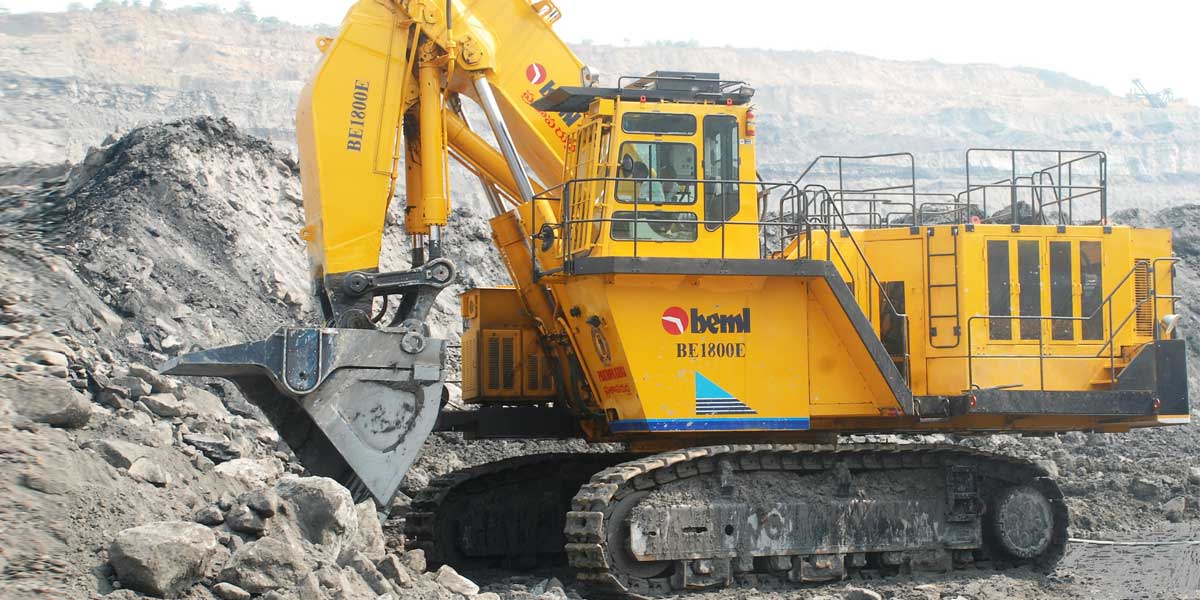
In a virtual CEO’s round table orgainsed by FICCI in November, Anil Kumar Jain, Secretary, Ministry of Coal, Government of India, had announced that new mining reforms would be announced in next 6-8 weeks. In a further update on the same, speaking at the inaugural session of the Global Mining Summit on 2nd December, Union Minister for Coal and Mines Pralhad Joshi said that the government was in the final stages of the structural reforms in the mining sector to realise its true potential. According to him, the proposed structural changes in the mining sector aim to increase participation of the private sector in mineral exploration, redefine the norms of exploration for auction of mineral blocks to ensure a seamless transition from exploration to production. They will also redefine the standard of exploration required for auctioning of blocks for prospecting license-cum mining lease and open acreage licensing policy for allocation of mining rights which will give a major boost to the production of minerals in the country. As the new steps in the proposed structural reforms will focus on sustainable mining practices, this is expected to support the mining equipment and technology players considerably. Jain speaking at the FICCI round table had an open dialogue with CEOs to understand how mining firms can adapt to the changing environmental conditions and optimise the various streams of operations through innovative technology solutions while complying with the requisite standards of safety and health. With the quantum of reserves in the country, India has a huge scope to increase the contribution of the mining sector and adopt a higher degree of mechanisation, like the environment-friendly continuous mining that can enable significant growth in the short term. Mining equipment and technology providers today offer updated technologies and solutions that meet the requirements of sustainable mining practices. Vivek Bhatia, Managing Director and CEO, thyssenkrupp Industries India says, “A broad range of technologies are available today which can ensure competitive mining while ensuring minimal environmental impact even permitting the elimination of blasting in several cases. These technology solutions provide a continuous mining system that can work round the clock along with conveyor systems without any intermediate handling, improving operational safety and reducing OPEX significantly. Additionally, the life cycle cost of such systems is significantly lower than the present systems along with improved carbon footprints.” With the growing demand for coal production in India, companies are planning for higher capacity opencast mining projects. This will require deployment of higher capacity mining equipment with the latest technology that will increase productivity. “In order to meet this demand, BEML has indigenously developed and manufactured the latest technology higher capacity mining equipment as per the requirement of Indian mining industry,” MV Rajasekhar, Director – Mining & Construction, BEML says. The electric version of dump trucks and excavators introduced by the company promote environment-friendly sustainable mining practices. Union Minister Joshi says that the opening of the coal sector to private players will garner hefty capital investment in the country over the next 5-7 years. Similarly, the proposed structural mining reforms, once implemented successfully, will augment this and more utilisation of advanced mining technologies and solutions will take place.

Next Story
Infrastructure Urban

Implementation Status of Jal Jeevan Mission

Since August 2019 the Government has implemented Jal Jeevan Mission to provide assured potable water through household tap connections in rural India. At the start of the mission only 32.3 million (mn) rural households, representing 16.7 per cent, were reported to have tap water connections. States and union territories have reported that 125.8 mn additional rural households have since been provided with tap connections. As a result, of about 193.6 mn rural households roughly 158.2 mn, or 81.71 per cent, are reported to have tap water supply at home.\n\nThe State, district and village level st..

Next Story
Infrastructure Urban

Jal Jeevan Mission Reaches Eighty One Per Cent Rural Coverage

The Government reported substantial progress under the Jal Jeevan Mission, launched in August 2019 to provide tap water to every rural household. At launch only 32.3 million (mn) rural households had tap connections and states and Union territories reported provision of 125.8 mn additional households by March 2026. Consequently, out of about 193.6 mn rural households around 158.2 mn, or 81.71 per cent, are reported to have tap water at home. The Finance Minister announced extension of the mission until 2028 in the 2025-26 budget speech. The Swachh Bharat Mission Grameen, launched in October 20..

Next Story
Infrastructure Urban

Empowering Local Governance for Sustainable Rural Water Supply

The Ministry of Jal Shakti has aligned the Jal Jeevan Mission (JJM) with the 73rd Amendment to strengthen village level planning and community ownership of water supply. Gram Panchayats, village water and sanitation committees and Pani Samitis are to plan, implement, manage and maintain piped water systems, with gram sabha processes formalising handover and oversight. Implementation support agencies including non government organisations, community based organisations and self help groups have been empanelled to train local committees and promote women participation. Under JJM, the department ..

Advertisement

Subscribe to Our Newsletter

Get daily newsletters around different themes from Construction world.

STAY CONNECTED

Advertisement

Advertisement

Advertisement