India’s First Creative Tech Institute Coming to Mumbai
ECONOMY & POLICY

India’s First Creative Tech Institute Coming to Mumbai

In a major push to India’s creative economy, the Union Ministry of Information & Broadcasting today signed a Memorandum of Understanding (MoU) with the Government of Maharashtra, Maharashtra Film, Stage & Cultural Development Corporation Ltd. (MFSCDCL), and the Indian Institute of Creative Technologies (IICT) for the establishment of a world-class institute dedicated to the Animation, Visual Effects, Gaming, Comics, and Extended Reality (AVGC-XR) sector.

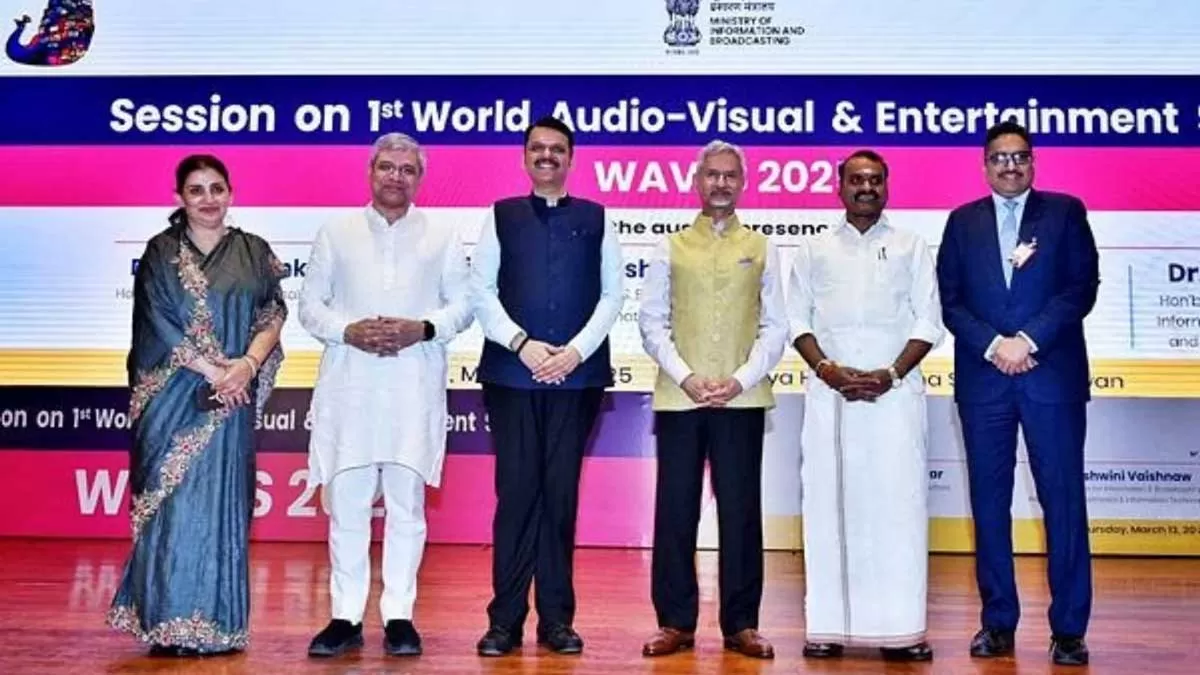
The MoU was exchanged in Mumbai between Chief Secretary of Maharashtra Ms. Sujata Saunik and Information & Broadcasting Secretary Shri Sanjay Jaju, in the presence of Maharashtra Chief Minister Shri Devendra Fadnavis and Union Minister Shri Ashwini Vaishnaw.

A First-of-its-Kind Institute for India The Indian Institute of Creative Technologies (IICT), to be located at the iconic Dadasaheb Phalke Film City in Goregaon, is envisioned as a premier centre for education, research, innovation, and skill development in the AVGC-XR domain. This is India’s first national-level institution dedicated to the creative sector.

Speaking at the event, CM Devendra Fadnavis said, “IICT will be a transformative institution, nurturing homegrown talent and creating a global talent pipeline for India’s booming creative economy.”

Union Minister Vaishnaw highlighted that the establishment of IICT in Mumbai — the capital of India’s entertainment sector — will act as a catalyst for industry growth and international collaborations.

Ownership Model and Funding The IICT has been set up as a not-for-profit Section 8 company with an innovative public-private ownership structure. The Government of India holds 34% stake, the Government of Maharashtra (via MFSCDCL) holds 14%, while industry bodies — FICCI and CII — together hold the remaining 52% (26% each).

A one-time budgetary grant of Rs 3.91 billion has been sanctioned by the Union Government to kickstart infrastructure development and initial operations. The institute will operate in a self-sustaining mode thereafter.

Global-Standard Infrastructure and Curriculum The IICT will be established on a 10-acre land parcel leased by MFSCDCL for 30 years. A temporary campus at the NFDC premises will become operational soon, enabling the first batch to begin.

The MoU outlines a strategic framework, including:

Setting up a dedicated AVGC-XR Centre focused on education, skilling, and R&D

A Governing Council and Board of Directors with government and industry representation

Creation of specialized councils on Academia, Industry, and Innovation

Public-private collaborations and global partnerships

Officials stated that IICT aims to become the IIT/IIM equivalent for the media and entertainment sector, providing globally relevant skills, producing high-value employment, and fueling India’s aspirations to become a top creative-tech destination.

In a major push to India’s creative economy, the Union Ministry of Information & Broadcasting today signed a Memorandum of Understanding (MoU) with the Government of Maharashtra, Maharashtra Film, Stage & Cultural Development Corporation Ltd. (MFSCDCL), and the Indian Institute of Creative Technologies (IICT) for the establishment of a world-class institute dedicated to the Animation, Visual Effects, Gaming, Comics, and Extended Reality (AVGC-XR) sector. The MoU was exchanged in Mumbai between Chief Secretary of Maharashtra Ms. Sujata Saunik and Information & Broadcasting Secretary Shri Sanjay Jaju, in the presence of Maharashtra Chief Minister Shri Devendra Fadnavis and Union Minister Shri Ashwini Vaishnaw. A First-of-its-Kind Institute for India The Indian Institute of Creative Technologies (IICT), to be located at the iconic Dadasaheb Phalke Film City in Goregaon, is envisioned as a premier centre for education, research, innovation, and skill development in the AVGC-XR domain. This is India’s first national-level institution dedicated to the creative sector. Speaking at the event, CM Devendra Fadnavis said, “IICT will be a transformative institution, nurturing homegrown talent and creating a global talent pipeline for India’s booming creative economy.” Union Minister Vaishnaw highlighted that the establishment of IICT in Mumbai — the capital of India’s entertainment sector — will act as a catalyst for industry growth and international collaborations. Ownership Model and Funding The IICT has been set up as a not-for-profit Section 8 company with an innovative public-private ownership structure. The Government of India holds 34% stake, the Government of Maharashtra (via MFSCDCL) holds 14%, while industry bodies — FICCI and CII — together hold the remaining 52% (26% each). A one-time budgetary grant of Rs 3.91 billion has been sanctioned by the Union Government to kickstart infrastructure development and initial operations. The institute will operate in a self-sustaining mode thereafter. Global-Standard Infrastructure and Curriculum The IICT will be established on a 10-acre land parcel leased by MFSCDCL for 30 years. A temporary campus at the NFDC premises will become operational soon, enabling the first batch to begin. The MoU outlines a strategic framework, including: Setting up a dedicated AVGC-XR Centre focused on education, skilling, and R&D A Governing Council and Board of Directors with government and industry representation Creation of specialized councils on Academia, Industry, and Innovation Public-private collaborations and global partnerships Officials stated that IICT aims to become the IIT/IIM equivalent for the media and entertainment sector, providing globally relevant skills, producing high-value employment, and fueling India’s aspirations to become a top creative-tech destination.

Next Story
Infrastructure Transport

MMRDA advances 250 m on Orange Gate–Marine Drive tunnel

The Mumbai Metropolitan Region Development Authority (MMRDA) has completed 250 m of underground tunnelling for the Orange Gate–Marine Drive Urban Road Tunnel using India’s largest slurry shield tunnel boring machine (TBM) deployed for an urban road project.The project involves twin tunnels extending over 7 km beneath critical transport corridors, including Central Railway, Western Railway and Metro Line 3. The work requires high-precision engineering to navigate densely developed urban infrastructure.Once completed, the tunnel is expected to reduce travel time between Orange Gate and Marin..

Next Story
Infrastructure Urban

Hindustan Zinc Pays Rs 188.46 Billion in FY26

Hindustan Zinc contributed Rs 188.46 billion to the public exchequer in FY 2025-26, according to its 9th Tax Transparency Report. The contribution, equivalent to 46 per cent of the company’s revenue, included direct and indirect taxes, government royalties, dividends to the Government of India, withholding taxes and other statutory levies.The company’s five-year cumulative contribution to the exchequer stood at Rs 915.72 billion. In FY26, Hindustan Zinc reported revenue of Rs 408.44 billion, EBITDA of Rs 221.62 billion and profit after tax of Rs 138.32 billion. It also achieved its highest..

Next Story
Infrastructure Urban

World of Concrete India 2026 Opens in Mumbai

Informa Markets in India will host the 12th edition of World of Concrete India 2026 from 3–5 June 2026 at the Bombay Exhibition Centre, Mumbai. The specialised B2B exhibition will bring together manufacturers, suppliers, contractors, developers, architects, consultants, infrastructure companies, project leaders and government stakeholders.The event is expected to feature over 350 brands and more than 18,000 trade professionals. It will cover concrete and cement, dry mortar, precast technologies, formwork, construction chemicals, industrial and commercial flooring, scaffolding, safety solutio..

Advertisement

Subscribe to Our Newsletter

Get daily newsletters around different themes from Construction world.

STAY CONNECTED

Advertisement

Advertisement

Advertisement