Streamlined Communication Policy for Open Network
Equipment

Streamlined Communication Policy for Open Network

“At Schwing Stetter, we maintain a streamlined communication policy which enables a transparent network between any employee and any member of the upper management. Our corporate structure is set up to address any issue that affects the welfare of a stakeholder of the company.” ...

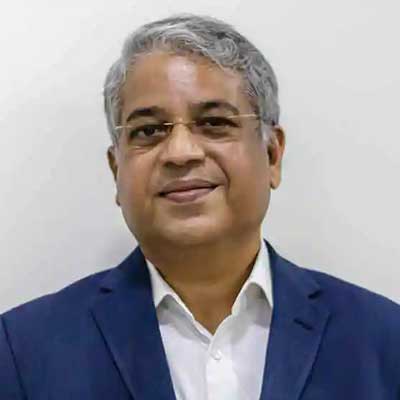
“At Schwing Stetter, we maintain a streamlined communication policy which enables a transparent network between any employee and any member of the upper management. Our corporate structure is set up to address any issue that affects the welfare of a stakeholder of the company.” — VG Sakthikumar Incorporated in June 1998, and commencing its manufacturing operations in 1999, Schwing Stetter India is a 100-per-cent subsidiary of Schwing GmbH, a US$ 1.30 billion German concreting machinery manufacturer and a part of the XCMG group. From introducing the BP 250 stationary pump to the Indian construction equipment market as the first product, our range has grown vastly as we cater to multiple categories of the industry with 29 machines that have created a remarkable brand identity for Schwing Stetter India in the Indian construction equipment market. From maintaining the greenery in the SIPCOT Industrial Park, Irungattukottai, Tamil Nadu, the company’s commitment to environmental conservation goes a long way. We follow strict measures to ensure that our stakeholders are trained and informed on the subject. Our pollution control policy has been formulated according to the international standards of pollution control, and regular maintenance of the pollution control machinery is done and recorded. A dedicated wastewater treatment plant has been integrated into our manufacturing facilities to reuse the wastewater for garden irrigation. We use only reusable material for packaging and recommend specific instructions to our customers in handling the waste generated by our machines. We have minimised our total wastage by eliminating the use of one-time plastic accessories in all our facilities and with the use of transparent roof sheets to reduce the usage of lights during daytime. Schwing Stetter India is the first company in SIPCOT Industrial Estate to install a completely flameless kitchen as an employee welfare initiative. The initiative has sped up the cooking process and ensures that the ingredients do not lose their nutritional value and kitchen is completely free from any safety hazards. We provide a safe workplace for all employees with zero tolerance for unsafe acts or unsafe conditions. To ensure this, we conduct multiple training programmes with credible professionals on a regular basis. The employees also enjoy get-togethers organised by department heads, which are financially supported by the companies at least once every year. A streamlined communication policy is maintained, which enables a transparent network between any employee and any member of the upper management. Our corporate structure is set up to address any issue that affects the welfare of a stakeholder of the company. Schwing’s global manufacturing hub at Cheyyar, Kancheepuram, Tamil Nadu plays host to 25 per cent of women employees on the shop floor as proof of our diverse and inclusive employment policies. In the case of customer satisfaction, we are an organisation with a formidable customer service network in India with 27 offices, 10 service centres with more than 500 service and spares teams deployed for quick response. We also have a specially dedicated team to support special projects to provide quick support and reduce the breakdown time. With a wide network of pan-Indian service centres and branches, we store all wearable and consumable spares in the nearest location of the machines so that the customer can avail our services and parts promptly. There is a specialist team of more than 40 members in India providing special support and training to customers on an all-India level. The company’s focus is on cluster service activity at major projects in line with our products. The company has added 14 new machines to the Indian construction equipment market, and is still developing multiple products to match the rising trends and demands of the industry on a global level. We have also launched an application for mobile and desktop devices for our customers to take full advantage of the tech features of our machines like data cloud integration and IoT. With five manufacturing facilities working round the clock, Schwing Stetter India is able to support our presence in more than 30 countries worldwide with machine availability and ample customer support service. Our training department, which has completed over 950 skilling programmes and certified more than 1,300 machine operators is available for customer support globally. Our training department is partners with ICEMA, Infrastructure Equipment Skill Council (IESC), NSDC and Pradhan Mantri Kaushal Vikas Yojana and we have worked in collaboration with Uttarakhand Skill Development Corporation (UKSDM). With a multitude of MoUs signed with various banks to support our customers financially, our collaboration with the Tamil Nadu Skill Development Corporation ensures the availability of trained and certified machine operators who can bring maximum output with efficient machine handling and on-time maintenance. About the author VG Sakthikumar is the Managing Director of Schwing Stetter (India) with more than three decades of industry experience in the Ready-Mix Concrete and construction machinery business.

Next Story
Infrastructure Urban

Implementation Status of Jal Jeevan Mission

Since August 2019 the Government has implemented Jal Jeevan Mission to provide assured potable water through household tap connections in rural India. At the start of the mission only 32.3 million (mn) rural households, representing 16.7 per cent, were reported to have tap water connections. States and union territories have reported that 125.8 mn additional rural households have since been provided with tap connections. As a result, of about 193.6 mn rural households roughly 158.2 mn, or 81.71 per cent, are reported to have tap water supply at home.\n\nThe State, district and village level st..

Next Story
Infrastructure Urban

Jal Jeevan Mission Reaches Eighty One Per Cent Rural Coverage

The Government reported substantial progress under the Jal Jeevan Mission, launched in August 2019 to provide tap water to every rural household. At launch only 32.3 million (mn) rural households had tap connections and states and Union territories reported provision of 125.8 mn additional households by March 2026. Consequently, out of about 193.6 mn rural households around 158.2 mn, or 81.71 per cent, are reported to have tap water at home. The Finance Minister announced extension of the mission until 2028 in the 2025-26 budget speech. The Swachh Bharat Mission Grameen, launched in October 20..

Next Story
Infrastructure Urban

Empowering Local Governance for Sustainable Rural Water Supply

The Ministry of Jal Shakti has aligned the Jal Jeevan Mission (JJM) with the 73rd Amendment to strengthen village level planning and community ownership of water supply. Gram Panchayats, village water and sanitation committees and Pani Samitis are to plan, implement, manage and maintain piped water systems, with gram sabha processes formalising handover and oversight. Implementation support agencies including non government organisations, community based organisations and self help groups have been empanelled to train local committees and promote women participation. Under JJM, the department ..

Advertisement

Subscribe to Our Newsletter

Get daily newsletters around different themes from Construction world.

STAY CONNECTED

Advertisement

Advertisement

Advertisement