Private Participation in Major Ports to Reach 85 Per Cent by 2030: Sonowal
PORTS & SHIPPING

Private Participation in Major Ports to Reach 85 Per Cent by 2030: Sonowal

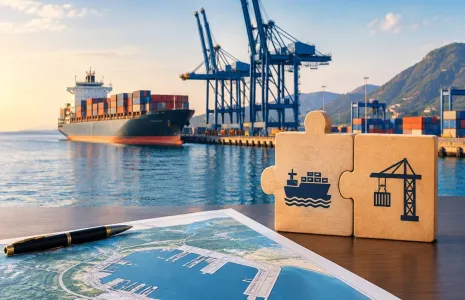
Union Minister for Ports, Shipping and Waterways Sarbananda Sonowal has said the government is targeting 85 per cent private participation in major ports by 2030. Speaking at the Business Standard Infrastructure Summit, he announced that 50 public-private partnership (PPP) projects worth over Rs 600 billion have already been identified, exceeding targets set under the National Monetisation Pipeline.

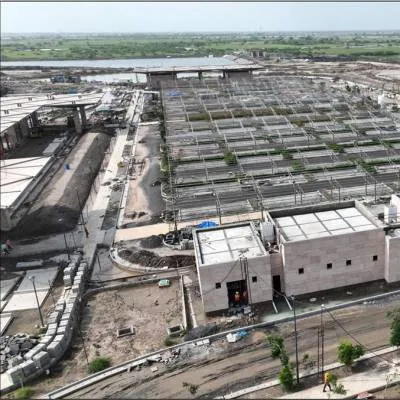
Among the upcoming projects, the greenfield port at Vadhavan in Maharashtra will be India’s largest by capacity, with an investment of Rs 760 billion. It will be developed in two phases, scheduled for completion in 2029 and 2037. Another major project, the Nicobar port, is planned at a cost of Rs 480 billion over the next decade.

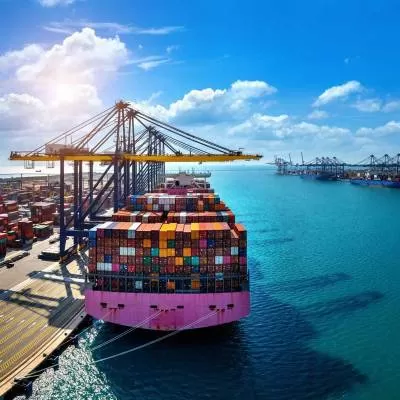
Sonowal said alternative trade corridors such as the India-Middle East-Europe Corridor (IMEC) and the International North-South Transport Corridor (INSTC) are being developed to mitigate geopolitical risks. Over the past 11 years, cargo handling at India’s 12 major ports has nearly doubled, rising from 855 million tonnes to 1,690 million tonnes. Overall port capacity now stands at 2,600 million tonnes, with plans to increase this to 10,000 million tonnes by 2047.

He added that India aims to emerge as a global shipbuilding hub by 2030 and among the world’s top five shipbuilding nations by 2047. The Amrit Kaal Vision 2047 outlines investments worth Rs 80 trillion to modernise infrastructure, expand port capacity, improve operational efficiency through digitisation and automation, and promote green initiatives such as hydrogen hubs and coastal tourism.

The minister noted that five landmark legislations were introduced during the monsoon session of Parliament, including the Indian Ports Bill 2025, Merchant Shipping Bill 2025 and Coastal Shipping Bill 2025, to create a globally aligned and competitive legal framework for the maritime sector.

He further highlighted tax and financial reforms, such as the creation of a Maritime Development Fund with a corpus of Rs 250 billion, extension of the Tonnage Tax scheme to inland vessels, and exemptions on input material for shipbuilding and shipbreaking. These measures, he said, would strengthen the shipping ecosystem and attract greater investment.

On green shipping, Sonowal said the government has issued Harit Sagar guidelines and is setting up methanol and green hydrogen plants, enabling green fuel bunkering, and developing green corridors. Electric tugs are also being introduced, with tenders floated by six to seven major ports.

News source: Business Standard

Union Minister for Ports, Shipping and Waterways Sarbananda Sonowal has said the government is targeting 85 per cent private participation in major ports by 2030. Speaking at the Business Standard Infrastructure Summit, he announced that 50 public-private partnership (PPP) projects worth over Rs 600 billion have already been identified, exceeding targets set under the National Monetisation Pipeline.Among the upcoming projects, the greenfield port at Vadhavan in Maharashtra will be India’s largest by capacity, with an investment of Rs 760 billion. It will be developed in two phases, scheduled for completion in 2029 and 2037. Another major project, the Nicobar port, is planned at a cost of Rs 480 billion over the next decade.Sonowal said alternative trade corridors such as the India-Middle East-Europe Corridor (IMEC) and the International North-South Transport Corridor (INSTC) are being developed to mitigate geopolitical risks. Over the past 11 years, cargo handling at India’s 12 major ports has nearly doubled, rising from 855 million tonnes to 1,690 million tonnes. Overall port capacity now stands at 2,600 million tonnes, with plans to increase this to 10,000 million tonnes by 2047.He added that India aims to emerge as a global shipbuilding hub by 2030 and among the world’s top five shipbuilding nations by 2047. The Amrit Kaal Vision 2047 outlines investments worth Rs 80 trillion to modernise infrastructure, expand port capacity, improve operational efficiency through digitisation and automation, and promote green initiatives such as hydrogen hubs and coastal tourism.The minister noted that five landmark legislations were introduced during the monsoon session of Parliament, including the Indian Ports Bill 2025, Merchant Shipping Bill 2025 and Coastal Shipping Bill 2025, to create a globally aligned and competitive legal framework for the maritime sector.He further highlighted tax and financial reforms, such as the creation of a Maritime Development Fund with a corpus of Rs 250 billion, extension of the Tonnage Tax scheme to inland vessels, and exemptions on input material for shipbuilding and shipbreaking. These measures, he said, would strengthen the shipping ecosystem and attract greater investment.On green shipping, Sonowal said the government has issued Harit Sagar guidelines and is setting up methanol and green hydrogen plants, enabling green fuel bunkering, and developing green corridors. Electric tugs are also being introduced, with tenders floated by six to seven major ports.News source: Business Standard

Next Story
Building Material

Suraj Estate Wins Euromoney Award for India’s Best Residential Developer

"Suraj Estate Developers Limited has received the Euromoney Real Estate Award 2025 for ‘India’s Best Residential Developer’, positioning the company among globally benchmarked leaders in the sector. The recognition reflects its four-decade legacy in delivering high-quality residential and redevelopment-led projects across South Central Mumbai. The Euromoney Real Estate Awards, presented by the London-based Euromoney magazine, are widely regarded as one of the most credible global assessments of performance in real estate, banking and finance. Winners are selected through surveys of inte..

Next Story
Building Material

Lloyds Metals, Tata Steel Sign MoU to Explore Strategic Collaboration

"Lloyds Metals and Energy Limited has signed a non-binding Memorandum of Understanding with Tata Steel Limited to evaluate potential areas of strategic cooperation across mining, logistics, pelletisation and steelmaking. The MoU was signed by B Prabhakaran, Managing Director of Lloyds Metals, and Mr T V Narendran, CEO and Managing Director of Tata Steel. The partnership framework aims to leverage the natural operational synergies between both companies and assess opportunities in greenfield steel projects, iron ore mining, slurry pipeline infrastructure, pellet manufacturing in iron ore–ric..

Next Story
Building Material

IndiaAI, Gujarat Govt Host Regional Conclave Ahead of 2026 AI Summit

The IndiaAI Mission under the Ministry of Electronics and Information Technology, along with the Government of Gujarat and IIT Gandhinagar, convened a Regional Pre-Summit Event at Mahatma Mandir, Gandhinagar. The initiative is part of the build-up to the India–AI Impact Summit 2026, scheduled for 15–20 February 2026 at Bharat Mandapam, New Delhi. The conclave brought together senior policymakers, technology leaders, researchers and industry practitioners to examine how AI can accelerate economic, digital and social transformation across sectors. The programme focused on the overarching th..

Advertisement

Subscribe to Our Newsletter

Get daily newsletters around different themes from Construction world.

STAY CONNECTED

Advertisement

Advertisement

Advertisement

Advertisement

Open In App