Our turnover in FY2019-20 and FY2020-21 exceeded projected turnover by 5% and 20%.
ECONOMY & POLICY

Our turnover in FY2019-20 and FY2020-21 exceeded projected turnover by 5% and 20%.

SECTOR: Construction & Contracting KNR Constructions KNR Constructions is a multidomain infrastructure development organisation with over two-and-a-half decades of experience. It executes the construction of technically complex and high-value projects across ...

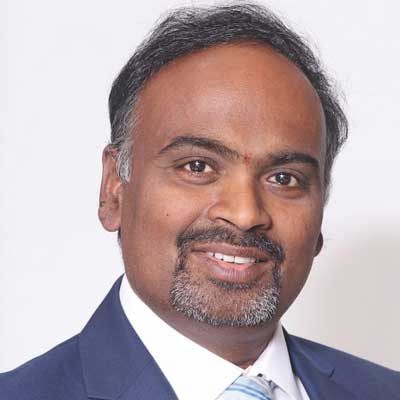
SECTOR: Construction & Contracting KNR Constructions KNR Constructions is a multidomain infrastructure development organisation with over two-and-a-half decades of experience. It executes the construction of technically complex and high-value projects across segments such as expressways, national highways, flyovers, bridges and viaducts, irrigation projects such as dams, reservoirs and canals and urban development, including civic amenities and water infrastructure.K Jalandhar Reddy, Executive Director, KNR Constructions Ltd (KNRCL), shares more.... Strategies to overcome COVID-19 and other challenges in FY2020-21: Our response to the pandemic was prompt and decisive in the following sphere of activities to exemplify that systematic planning in execution could sustain growth with robust cash generation: - Staff care - Communication network: We leveraged project management platforms to facilitate remote working and make digital capital products and Cloud collaboration the standard for projects. - Disruption remedies: KNRCL issued COVID-19-related notices claiming extension of time (force majeure) and cost consequences, potential relief under the contract, notifications to lenders under information covenants in finance documents, consideration of efficacy of time limits on claims notification and review of termination rights. - Supply chain management: We considered delaying certain procurement activities (commodities, fuel, service providers and subcontractors) to yield more competitive pricing. - Rescheduling working methodologies: Works involving major construction equipment were given preference over works where more labour was required. These strategies ensured prudent capital allocation towards fixed block and working capital, thus reflecting low leverage and resulting in efficient project management. With this, KNRCL could excel in all parameters and its turnover in FY2019-20 and FY2020-21 exceeded projected turnover by 5 per cent and 20 per cent to Rs 23 billion and Rs 27.52 billion, respectively. Major contributor to growth in FY2020-21: The company’s policy to monetise BOT and HAM projects ensured most value from assets on monetisation and maximised profits, reduced costs, optimised new opportunities and enriched the intrinsic value of shares. For instance, the KNR Walayar Tollway, a BOT (toll) four-laning of the Walayar-Vadakkancherry section in Kerala, was completed ahead of schedule and awarded for this. The proceeds have been recycled in the new HAM projects awarded and given the company liquidity for further growth. Further, a decision has been made not to attempt monopolistic core infrastructure projects with different characteristics in income generation, low returns and that entail huge investments. The philosophy to quote all projects with reasonable EBITDA and not to aggressively quote and accumulate projects helps monitor a feasible number of projects at the same time. Decision avoided/made that helped maintain topline and bottomline: The decision to adhere to construction timeliness and cost-cutting exercises. Also, the decision not to draw HAM term loans and avail surplus cash in the system till the achievement of PCOD has resulted in savings in interest during construction, and consequently improved the valuation of the asset. Plans for growth in FY2021-22 and beyond: With Rs 11,620 million (gross block) of advanced modern machinery, KNRCL could navigate timely project execution cycles. Besides, robust collection mechanisms and prudent financial planning have ensured near-zero debt levels. KNRCL is poised to complete three NHAI HAM projects in 2021-22 and monetise them. The proceeds will be utilised for three new HAM projects of Rs 55.50 billion bid project cost. With Rs 120 billion of orders on hand, KNRCL is poised for exponential growth in all parameters.

Next Story
Infrastructure Urban

Implementation Status of Jal Jeevan Mission

Since August 2019 the Government has implemented Jal Jeevan Mission to provide assured potable water through household tap connections in rural India. At the start of the mission only 32.3 million (mn) rural households, representing 16.7 per cent, were reported to have tap water connections. States and union territories have reported that 125.8 mn additional rural households have since been provided with tap connections. As a result, of about 193.6 mn rural households roughly 158.2 mn, or 81.71 per cent, are reported to have tap water supply at home.\n\nThe State, district and village level st..

Next Story
Infrastructure Urban

Jal Jeevan Mission Reaches Eighty One Per Cent Rural Coverage

The Government reported substantial progress under the Jal Jeevan Mission, launched in August 2019 to provide tap water to every rural household. At launch only 32.3 million (mn) rural households had tap connections and states and Union territories reported provision of 125.8 mn additional households by March 2026. Consequently, out of about 193.6 mn rural households around 158.2 mn, or 81.71 per cent, are reported to have tap water at home. The Finance Minister announced extension of the mission until 2028 in the 2025-26 budget speech. The Swachh Bharat Mission Grameen, launched in October 20..

Next Story
Infrastructure Urban

Empowering Local Governance for Sustainable Rural Water Supply

The Ministry of Jal Shakti has aligned the Jal Jeevan Mission (JJM) with the 73rd Amendment to strengthen village level planning and community ownership of water supply. Gram Panchayats, village water and sanitation committees and Pani Samitis are to plan, implement, manage and maintain piped water systems, with gram sabha processes formalising handover and oversight. Implementation support agencies including non government organisations, community based organisations and self help groups have been empanelled to train local committees and promote women participation. Under JJM, the department ..

Advertisement

Subscribe to Our Newsletter

Get daily newsletters around different themes from Construction world.

STAY CONNECTED

Advertisement

Advertisement

Advertisement