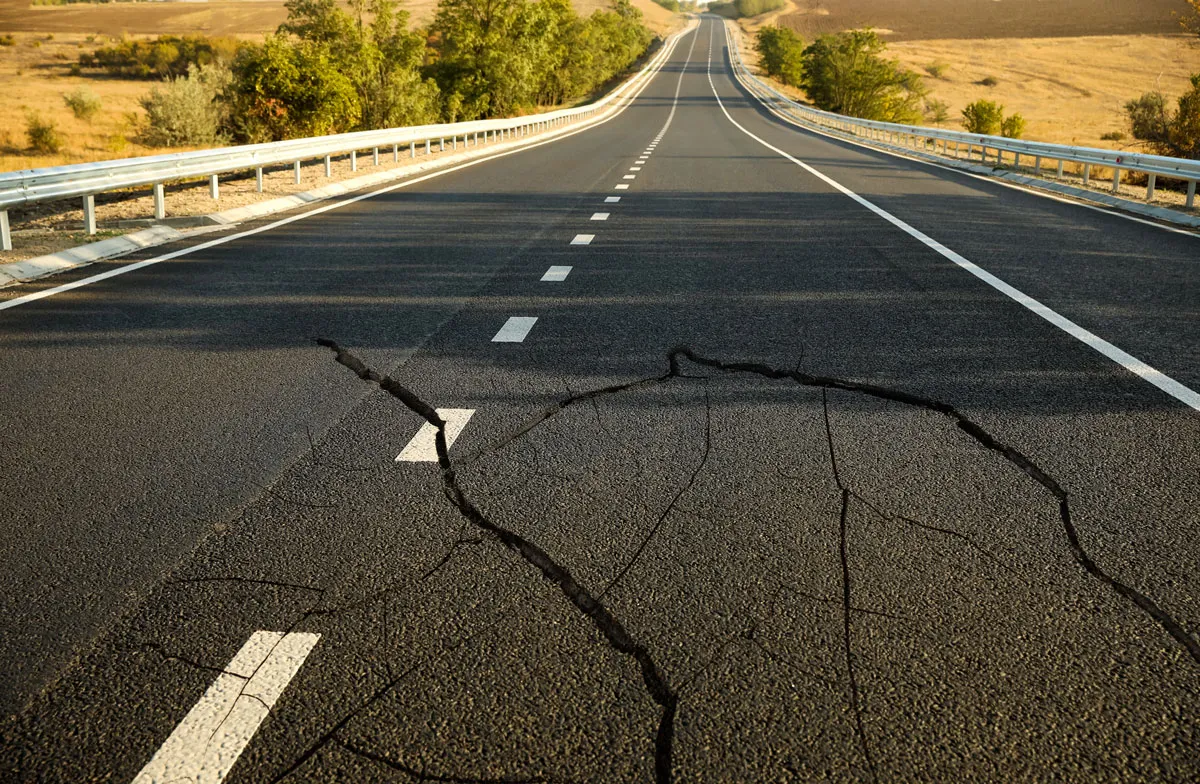
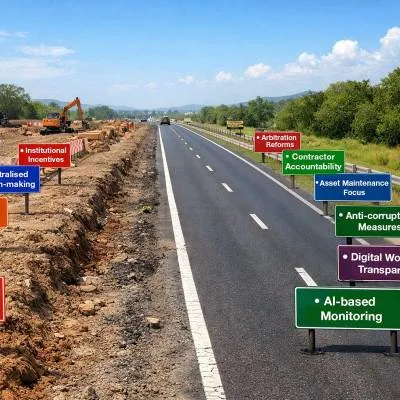
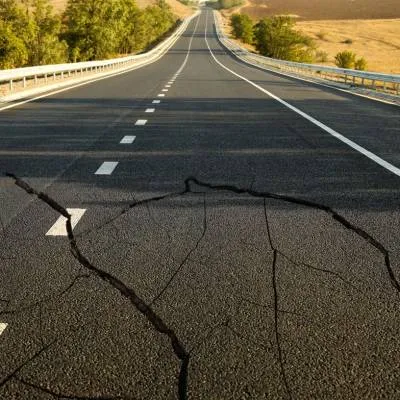
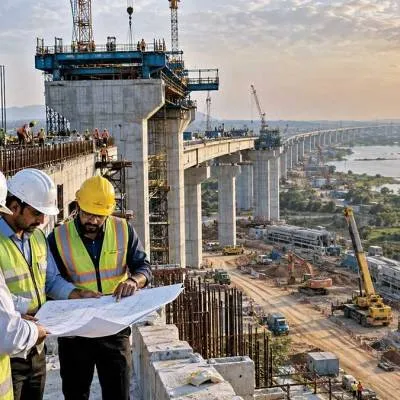
Massive spending, inflated metrics, systemic delays and deep-rooted corruption now threaten the credibility of India’s highway expansion, observes LT GEN RAJEEV CHAUDHRY (Retd), former DG Border Roads.India is spending more on national highways than ever before. With Rs 2.72 lakh crore earmarked for FY 2025–26 and ambitious targets under the Amrit Kaal vision, the narrative is one of speed, scale and transformation. Yet, beneath the headline numbers lies an uncomfortable reality: highways that crack under monsoons, projects that spiral into delays and arbitration, and a system where optics often trump outcomes. As India races to build, the harder question is whether it is building to last — or merely building fast.The progress — and the illusion of scale The NH network has grown rapidly to become the second largest road network globally. Government spending on road infrastructure has increased 6.4 times in the past 10 years, with a 57 per cent rise in budget allocation. During the past three years, projects covering an average of 6,000 km are being awarded annually. There are plans to bid out 124 highway projects worth Rs.3.4 lakh crore in FY26, covering 6,376 km.The Ministry of Road Transport & Highways (MORTH) has promoted many initiatives to accelerate the progress of highways, resulting in employment generation across various sectors. Significantly, 10,000 km of NHs have been constructed in the Northeast over the past decade, underscoring the Prime Minister’s Act East Policy. Other highlights include the initiative to develop 700 wayside amenities by 2028-29, comprising quality restrooms, food, rest areas, fuel stations and EV charging points; rectification of 14,000 accident-prone blackspots; successful execution of programmes such as the Good Samaritan Scheme and the Cashless Golden Hour Scheme to reduce fatalities by ensuring timely and accessible emergency care; and the Green Highways Policy and ‘Ek Ped Maa Ke Naam’, which have led to planting around 70,000 trees along NHs. The Ministry is also adopting sustainable practices, utilising over 80 lakh tonne of plastic waste in significant projects.However, infrastructure’s true value is realised not just by spending more, but building better. Recent years have underscored the critical importance of quality infrastructure. Extreme weather conditions – from record monsoon floods to landslides – have put HWs under severe stress. This doesn’t just endanger lives but disrupts supply chains, hurts commerce and imposes huge recovery costs. A robust economy funds new roads and reliable roads further strengthen the economy. Thus, ensuring resilient, high-quality highways is essential to sustain growth.The pitfalls no one wants to own That said, the NH infrastructure in India is plagued by systemic inefficiencies, institutional weaknesses and quality concerns. Recent structural collapses, chronic potholes, stalled projects and spiralling costs are not isolated incidents but symptoms of deeper, structural maladies. At a recent event, Union Minister for Road Transport and Highways Nitin Gadkari expressed his unhappiness at the ‘delayed’ work culture in the National Highways Authority of India (NHAI) and said it was time to show the exit door to “non-preforming assets” complicating and delaying projects, including officials creating hurdles. NHAI has a mix of permanent cadre, officials on deputation and contractual staff in the ratio of about 30 per cent, 30 per cent and 40 per cent, respectively, which creates lack of continuity, gaps in institutional memory, poor organisational ethos and lack of accountability. All these weaknesses have given rise to a grossly inefficient work culture and deep-rooted corruption. The following problem areas outline the scale and complexity of the crisis.Substance vs. symbolism: Illusory expansion and misreported progressWhile official statistics portray a massive expansion of the NH network, a closer examination reveals that this growth is, in part, statistical rather than structural. The illusion of rapid progress also masks deeper challenges related to quality, capacity and transparency. Between 2014 and 2023, the total length of NHs reportedly grew by 60 per cent, from about 91,300 km to 1.45 lakh km. However, a significant share of this expansion – about 50,000 km – came not from new construction but the reclassification of existing state highways and roads into the NH network. This administrative relabelling creates the impression of expansion without corresponding investment in widening, strengthening or improving those roads. The quality, capacity and safety standards of these rebranded roads often remain below par, defeating the purpose of their new classification.Further, in 2018, the Ministry adopted a new reporting metric: lane-kilometre construction, replacing the conventional linear kilometre count. Under this method, each lane of a road is counted individually. For example, building 1 km of a four-lane road is reported as 4 lane-km. By this measure, India “constructed” 34,378 km of highways in 2017-18, compared to just 9,829 km under the earlier linear system. While the Government justified this shift by citing the greater effort, cost and complexity involved in building multilane roads, critics argue that it inflates construction figures, distorting year-on-year comparisons and misleads stakeholders and the public.The rebranding of old roads and adoption of lane-kilometre metrics point to a larger issue of optics over outcomes. A six-lane, 100 km highway being reported as ‘600 km of highway’ does not change the fact that it is still just 100 km of road on the ground. These practices project an illusion of rapid growth, often cited in government achievements, but mask operational and structural deficiencies. Such misrepresentation undermines accountability, misinforms policy debates and leaves pressing ground-level problems – such as potholes, unfinished stretches and inadequate safety features – unaddressed.Delays that bleed time, money and trustThe widespread and persistent delay in project execution – bogged down by systemic inefficiencies, institutional inertia and poor planning – directly translates into massive cost overruns, legal disputes and lost public trust. Weak project readiness, centralised control and inflexible processes derail timelines and budgets. The entire project lifecycle, from preconstruction to handover, needs reform. The challenge isn’t just to build highways but to build them on time, within budget, and to lasting quality standards. Institutions that slow, not supportFirst, the over-centralisation of decision-making is a serious concern. Too many approvals are routed through Regional Officers (ROs), Project Directors (PDs), and Ministry Headquarters. This not only slows work but demotivates site-level teams who are best placed to make real-time decisions. Further, there is high turnover, leading to poor continuity. Frequent transfers of engineers and consultants disrupt project memory and accountability. New incumbents often revalidate past decisions, causing repeated procedural loops.Tender manipulation: The first breach in the systemThe genesis of corruption in highway infrastructure often lies in non-transparent and manipulated tendering processes, which distort competition and compromise value-for-money outcomes. One prevalent malpractice is bid rigging, where contractor cartels collude to predetermine pricing and rotate winning bidders, creating the illusion of competition. In many cases, tender conditions are deliberately customised to favour select firms, either due to political pressure or through illicit inducements to officials. What appears as a competitive bidding process is frequently a token exercise, where multiple bidders participate under a prearranged collusive framework. The consequences are twofold: either abnormally low bids are accepted, resulting in post-award quality compromises and dispute claims, or artificially inflated project estimates are pushed through – justified by unnecessary design complexity or padded scope – leading to massive cost overruns. This distortion at the very start of the procurement cycle sets the stage for systemic inefficiency and long-term financial leakage.The L1 bidding fallacy: Cheap wins, costly consequencesA key structural flaw in highway procurement is the uncritical adoption of the Lowest Bidder (L1) system, where projects are awarded solely based on the lowest quoted price, without adequate scrutiny of feasibility, resource capacity or execution risk. In many instances, bids that are 40-50 per cent below the estimated cost are accepted in a rush to expedite award decisions. This often incentivises a dangerous cycle where contractors cut corners on materials, workforce deployment and supervision to remain within the under-quoted budget. To recover their margins, many rely on post-award tactics such as inflated claims, time extensions and arbitration – effectively turning the project into a legal and financial trap for the Government. The downstream effects are severe: substandard construction, frequent repairs, escalated public expenditure and a recurring cycle of litigation. In essence, the L1 model, when applied without safeguards, sacrifices long-term value for short-term administrative convenience.Contractor inefficiencies and lax monitoringDespite significant investment in the NH sector, execution at the ground level continues to suffer due to poor contractor performance and weak field-level oversight. The contractor’s inefficiencies, coupled with inadequate supervision, delay project completion, degrade quality and inflate costs. The problem is not just operational – it is structurally embedded in project governance.Delayed mobilisation post awardA persistent inefficiency plaguing highway execution is the habitual delay in mobilisation by contractors even after issuance of Letters of Award (LoAs). Despite formal award of work, contractors frequently cite resource constraints – such as unavailability of labour, machinery or site readiness – as justifications for inaction. These unverified or exaggerated claims result in months of idle time, effectively compressing the project’s execution window and pushing timelines into avoidable overruns. The root cause lies in the absence of stringent penalties or enforceable accountability mechanisms for delayed mobilisation. This systemic leniency enables a culture of indiscipline, undermines scheduling accuracy, and erodes trust in contract enforcement, ultimately derailing project delivery schedules nationally.Collusive extension of time (EoT) cultureA subtler but highly damaging form of inefficiency stems from deliberate, engineered delays by contractors, who later seek EoTs under the pretext of factors such as bad weather, non-availability of quarries or statutory clearances, and lack of scope clarity. In many cases, these justifications are strategically constructed, with internal collusion from field officers or consultants, who either provide favourable endorsements or intentionally delay adverse reporting. This practice, often termed ‘soft corruption’, enables contractors to regularise schedule slippages on paper, circumventing penalties and creating a false narrative of procedural compliance. Meanwhile, actual physical progress on the ground remains stagnant, compounding delays and eroding project credibility. This breakdown in accountability compromises the integrity of project timelines and undermines the deterrent value of contractual enforcement mechanisms.Delayed decisions and contractor non-complianceContractor inefficiency is further exacerbated by loopholes in monitoring, delayed decision-making and soft collusion within the implementation hierarchy. Field officers, consultants and contractors often operate in informal alignment to normalise delays, evade penalties and justify poor delivery.Overestimated item rates and built-in paddingIn many states, the Schedule of Rates (SoR) used for highway projects is artificially inflated, creating a systemic cushion for inflated billing, ghost work certifications and unchecked scope expansion. This padding of baseline estimates enables contractors and colluding officials to generate exaggerated invoices, often without delivering commensurate physical progress. A common practice includes issuing additional work orders under the guise of “emergent requirements” or “scope changes”, which are frequently cleared without competitive bidding – undermining both cost efficiency and procedural fairness. Audit reports across multiple projects have revealed items quoted at three to five times their actual market rates, coupled with mobilisation advances released without proper monitoring or milestone tracking. These manipulations often result in project costs ballooning by 30-50 per cent over original DPR estimates, draining public funds and distorting budgetary planning. Such practices reflect a deliberate design flaw, not just administrative oversight – one that demands urgent reform in rate standardisation, third-party verification and financial governance.Faulty measurement practicesA critical yet under-addressed weakness in infrastructure execution lies in flawed measurement methodologies, particularly for earthworks and embankments. Current practices in many projects still rely on running meter (RM) measurements, which are inappropriate for volumetric works such as cut-and-fill operations, compaction and subgrade layering. This outdated metric creates loopholes that not only compromise construction quality but facilitate financial misreporting.The triangular nexus: Authority, engineer and contractorThe highway execution model was originally structured around a three-tier system – authority, engineer and contractor – to ensure checks and balances, with each entity expected to independently uphold project integrity. However, in practice, this framework often degrades into a two-party collusion between the engineer and the contractor, effectively neutralising the oversight role of the authority. Engineers, who are mandated to supervise quality and certify progress, are frequently coopted by contractors, leading to the approval of incomplete works, acceptance of substandard materials and inflated measurements. This creates a mutual benefit loop, wherein engineers gain personal favours or illicit financial incentives, contractors receive certified bills and generous time extensions, and the authority either remains complicit or chooses inaction – often owing to the absence of robust whistleblower protections or fear of internal backlash. This embedded collusion undermines quality, escalates costs and severely compromises the credibility of the project monitoring system.Corruption as a cost multiplierCorruption in India’s highway infrastructure sector is not a fringe anomaly – it is a deeply embedded, systemic problem that significantly inflates costs, dilutes quality and jeopardises public safety. From tendering to payments, the process is often riddled with collusive practices, manipulated estimates and weak oversight. This institutionalized inefficiency extracts a heavy toll on national development and erodes public trust. The cost of such systemic rot is not just monetary; it is seen in lives lost, public anger, eroded trust and massive opportunity cost.The economic impact of corruptionCorruption in infrastructure projects is not merely a moral concern – it is a quantifiable economic burden. Global benchmarks and Indian audit observations estimate that 20-30 per cent of project value is routinely lost to corruption in environments lacking robust institutional safeguards. In the Indian highway context, this means that for every `100 crore spent, `20-30 crore is potentially siphoned off or wasted. Given that NH investments run into trillions of rupees, the cumulative loss amounts to hundreds of billions. These losses are not abstract – they materialise in gold-plated projects with inflated costs, redundant and unjustified scope changes, artificial cost escalations and frequent repair cycles for newly commissioned assets. Ultimately, corruption does not just bleed resources; it undermines the long-term durability, safety and reliability of national infrastructure.The double burden: Maintenance and reconstruction costsThe systemic failure in construction quality has forced the Government into a wasteful and unsustainable cycle of repeated spending: first to build the road, and then again to repair it, often within just a few years. Between 2021 and 2024, the Government spent Rs.17,900 crore on highway maintenance alone – averaging `6,000 crore per year – with a sharp increase to `9,599 crore budgeted for FY 2024–25, indicating a deteriorating national road health profile. Urban local bodies mirror this crisis: for instance, Mumbai’s civic body BMC reportedly spent `17,700 per pothole, amounting to hundreds of crores annually, yet the problem persists year after year. This self-perpetuating loop of build–neglect–repair–rebuild has been aptly described by experts as an “extortionary phenomenon”, where the taxpayer pays multiple times for the same road, while non-performing contractors continue to escape accountability. Poor payment transparency and physical coercionThe absence of automated, transparent billing and payment systems in highway project execution has created significant vulnerabilities to corruption and coercion. Manual verification of bills, coupled with a lack of real-time digital payment mechanisms, opens the door to bribery for file movement, unjustified delays and the absence of a verifiable audit trail for contractor payments. This opaque setup fosters a system where physical interaction between contractors and officials – especially during final bill clearance stages – becomes a breeding ground for coercion and unofficial monetary demands. The issue is particularly acute for small and mid-sized contractors, who often face unofficial hurdles at every procedural stage; from measurement verification and site inspection to payment release and time extension approvals. In such an environment, procedural compliance becomes contingent not on merit or progress, but on informal transactions, deeply compromising project ethics, efficiency and fairness.Misaligned metrics: Spend over outcomeA fundamental flaw in the monitoring of highway projects lies in the over-reliance on financial expenditure milestones as a proxy for progress, rather than on actual physical or quality-based achievements. In many cases, projects are prematurely declared “50 per cent complete” simply because 50 per cent of the allocated funds have been disbursed, even when only 20-30 per cent of the physical work is complete onsite. This misalignment creates perverse incentives, where the emphasis shifts from delivering quality infrastructure to spending allocated budgets quickly. As a result, officials and contractors often rush to certify bills, bypass ground verification and engage in backdoor corruption to demonstrate progress on paper. This deeply flawed paradigm undermines both accountability and transparency, fostering an environment where optics trump outcomes and financial reporting becomes decoupled from actual project delivery.Safety consequences of corruptionThe consequences of corruption in highway infrastructure go well beyond financial loss; they pose a direct threat to public safety and structural integrity. The use of inferior materials in road foundations and pavement layers, inadequate embankment compaction and the neglect of critical safety features such as drainage, signage and crash barriers are not isolated lapses but the inevitable outcomes of a system where corruption overrides compliance. The frequent collapse of bridges, flyovers and water-logged highways are not accidents – they are the structural manifestations of compromised execution, unchecked malpractices and diluted accountability. If India is to build infrastructure that is both durable and safe, it must undertake fundamental reforms in procurement transparency, enforce digital payment workflows, mandate third-party quality audits and implement strong whistleblower protection frameworks. Anything less would mean continuing to build roads that fail under the weight of their own corruption.Poor quality construction and the maintenance burdenWhile India has accelerated highway construction, quality assurance has emerged as a critical failure point. The frequent collapse of newly built infrastructure, proliferation of potholes and ever-increasing repair budgets underscore that we are building fast – but not building to last. The consequences are not only fiscal but also fatal. The burden of poor construction is borne by both the economy and the citizen, through inflated budgets, hazardous roads and repeated repairs. This is not just a construction failure – it is a failure of governance, enforcement and ethics. Unless quality becomes non-negotiable and enforcement becomes institutionalised with real-time monitoring, third-party audits and digital accountability, India will remain trapped in a vicious loop of building roads that crack under pressure – literally and figuratively.Substandard construction practices: The silent saboteurA major contributor to premature infrastructure failure is the widespread use of substandard construction practices by contractors, particularly in rural, hilly or politically less-sensitive regions where scrutiny is weaker. To cut costs and protect margins, contractors frequently resort to low-grade materials, bypass engineering specifications and skip mandatory processes like soil compaction, curing and layered testing. Quality-control mechanisms that should catch these lapses are often compromised through collusion between authority engineers (AEs), consultants and contractors, resulting in fudged test results or skipped inspections altogether. Even tools such as value engineering, originally intended to optimise cost without compromising performance, are misused as a pretext for unjustified cost-cutting, leading to infrastructure that lacks the durability, resilience and safety required for long-term service. In fact, modern infrastructure is collapsing faster than colonial-era builds, revealing systemic breakdowns in planning, materials and supervision. For instance, Pune Bridge, which was flagged as unsafe but still in use, collapsed in June 2023 and claimed four lives. Mahisagar River Bridge (Gujarat) collapsed in July 2023, within months of completion, killing at least 12 people. And a Mumbai suburban flyover opened to traffic, then shut down within hours due to pothole-triggered accidents.Lax enforcement and absence of accountabilityContractors routinely escape penalties due to expiry of liability periods before defects surface and move to new projects with no linkage to past performance. AEs rarely face consequences even when quality lapses occur under their watch. No financial disincentives, blacklisting mechanisms or service record impacts are effectively enforced. And whistleblowers or users have no formal channel to report defects, further shielding malpractices.Nexus of corruption, apathy and poor oversightQuality issues are not isolated – they are a byproduct of corruption, collusion and weak systems. Bribed inspections, fabricated test results and turnkey quality assurances are left to the same party doing the work. Supervisory structures are either weak, coopted or understaffed, allowing substandard work to pass unchecked. Even when caught, political shielding or bureaucratic inertia often prevents punitive action.Legal disputes, arbitration and institutionalised inefficiencyAmid the challenges of physical execution and financial mismanagement in India’s highway infrastructure sector, one of the most financially debilitating yet under-addressed issues is the proliferation of contractual disputes and arbitration claims. What began as a mechanism to resolve project conflicts has now turned into an institutionalised drain on public resources – exposing systemic weaknesses in planning, legal capacity, accountability and incentive structures. As in March 2025, the NHAI is embroiled in arbitration claims amounting to Rs.1 lakh crore, representing nearly 40 per cent of its total liabilities. This amounts to approximately 40 per cent of its capital expenditure budget. This figure, growing year on year, ties up substantial fiscal bandwidth and undermines NHAI’s capacity to initiate or sustain new projects.A recurring pattern has emerged where contractors bid abnormally low to win contracts (due to L1 pressures), and later exploit execution delays, incomplete site handovers or scope changes to raise cost claims. Then they drag the authority into arbitration, relying on the Government’s weak legal preparation to secure favourable awards. This transforms arbitration from a conflict resolution tool into a planned financial recovery strategy for contractors.India’s highway arbitration crisis is not just about legal delays – it is symptomatic of deep-rooted governance failures. An unchecked ecosystem of collusive contracting, poor documentation, weak legal defence and zero accountability has allowed disputes to flourish into financial black holes.Real-world impact The cascading impact of project delays and inefficiencies is felt most acutely by the public and the economy. Incomplete highways that were meant to reduce congestion, improve logistics and save fuel remain inaccessible, thereby denying users the intended benefits of time and cost-efficiency. Meanwhile, commuters and freight operators are forced to navigate half-finished stretches, poorly designed detours, and roads lacking basic amenities, resulting in significantly higher vehicle operating costs (VOC). The consequences of poor-quality infrastructure extend far beyond cracked pavements and delayed timelines – they are measured in lives lost, injuries suffered and livelihoods disrupted. Every structural failure or fatal accident due to substandard construction reflects a deep betrayal of public trust, especially given that roads are public goods meant to serve as safe, reliable conduits for economic and social activity. When these assets are compromised, it undermines faith in governance and institutional credibility. The economic fallout is equally severe: logistics slow down, fuel consumption rises and supply chains are disrupted as trucks crawl over damaged corridors. Tourism suffers, and industrial growth are constrained as key arterial routes become unreliable. In essence, every poorly built road is not just a wasted investment – it is a systemic failure that weakens national productivity, regional mobility and public morale.On a macroeconomic level, the delay in project execution triggers inflation-linked cost escalation – with rising prices of construction materials, land and interest rates further worsening financial viability. Moreover, such delays frequently lead to contractual disputes and arbitration claims, where contractors demand compensation for idling, escalations or design changes – thereby converting execution failures into additional public liabilities. The net result is a vicious cycle of fiscal leakage, economic inefficiency and public frustration.