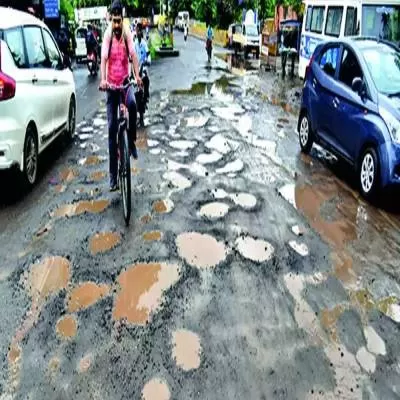
Manisha Khatri, Municipal Commissioner, Nashik Municipal Corporation, discusses Nashik’s accelerated push to upgrade its water, sewage, road and bridge systems ahead of Kumbh –a citywide transformation that opens new avenues for contractors and infrastructure partners.Please share an overall update on Nashik’s smart city initiatives and outline the forthcoming opportunities for stakeholders across ongoing and planned projects.Most smart city projects in Nashik have been completed, including interventions in the core ABD (area-based development) zones covering sewage, water supply and beautification. Riverfront development and improvements in public spaces were also taken up. The only remaining element is the CCTV project, which is close to completion but it is being implemented outside the smart city vehicle.Although smart city works have largely concluded, extensive infrastructure programmes under the Kumbh umbrella now present significant opportunities. These include large-scale road and bridge works, major water-supply upgrades, new sewerage networks and technology-enabled systems, creating prospects for construction firms, engineering partners and service providers involved in modernising Nashik’s core infrastructure.How can stakeholders participate in the refloated RCC sewer line project covering about 90 km and what key timelines should they keep in mind?The refloated RCC sewer line project has been awarded to Eagle Infrastructure and is now in the execution phase. Stakeholder participation is, therefore, likely through logistics, supply-chain support and related implementation roles. This project forms part of a broader overhaul of Nashik’s sewerage system. On one bank of the Godavari, network replacement is funded through municipal bonds, where the city raised Rs 200 crore and received subscriptions exceeding Rs 400 crore at an interest rate of 7.8 per cent. The network on the opposite bank is being taken up under AMRUT (Atal Mission for Rejuvenation and Urban Transformation). All sewerage-linked works must be completed before March 2027, aligning with Kumbh readiness timelines.What impact will Nashik’s World Bank-supported sewerage upgrade have on the city’s infrastructure and what avenues does it create for industry participation?Nashik is transitioning to modern sewage treatment through a One City, One Operator framework. Existing STPs (sewage treatment plants) were outdated, energy-intensive and lacked recycling provisions. The city is refurbishing them and constructing new facilities to achieve 547 mld (million litres per day) of total treatment capacity. This is being executed under a PPP, HAM (hybrid annuity model), NVT (net present value-based tendering) structure, where payments are linked to measurable performance tracked through an online SCADA (supervisory control and data acquisition) system. Meeting bathing-quality water standards is central to the operator’s obligations and essential for Kumbh preparations. Industry players may participate in EPC works, plant refurbishment, network strengthening, automation systems, leak-proofing solutions and advanced treatment technologies across this multiyear programme.What is the scope of Nashik’s emerging traffic technology and surveillance upgrades and how may construction firms engage in strengthening these systems?To manage both ongoing construction challenges and the massive Kumbh influx, Nashik is developing a comprehensive traffic and crowd-management plan supported by AI modelling and scenario-based simulations. The city plans to install automatic traffic signals, ensuring optimised signal cycles. It is also deploying VMDs (variable message displays) under a PPP model to provide real-time information on congestion and travel times. A major CCTV programme involving more than 3,000 AI-enabled cameras is being rolled out to detect traffic violations, monitor crowd flow and support enforcement. Opportunities for construction and technology firms include civil works for signal infrastructure, installation and integration of CCTV systems, junction redesign, control-room development and public-information infrastructure.For the MNGL (Maharashtra Natural Gas Ltd) pipeline-related road-restoration, what will be the primary focus areas for contractors and the expected implementation timeline?The MNGL pipeline restoration work is currently underway. Given the Kumbh timeline, Nashik cannot allow prolonged road excavations. Contractors must complete all household connections within 15 days in areas already dug up. Where new roads are planned, MNGL must lay trunk lines before resurfacing. The city expects all works to be fully planned and executed within one to two months, making rapid mobilisation and tight coordination essential for contractors.How may construction stakeholders participate in the Kumbh Mela road-development works and which priority packages remain open for engagement?Nashik has categorised its Kumbh works into three verticals: roads and bridges, water supply, and sewerage and river restoration. Under roads and bridges alone, the city is executing nearly Rs 1,200 crore of road works and around Rs 100 crore in bridge projects. These include concretisation, white-topping, widening, strengthening of arterial corridors and construction of new above-flood-line bridges to address flood vulnerability. The city is also adopting TOD (transit-oriented development) principles, exploring PPP opportunities for bus stands, VMDs and monetizable urban assets. Engagement opportunities remain across road construction, bridge widening, PPP-based urban assets and auxiliary public-infrastructure works.Under the city’s comprehensive road-resurfacing plan covering 61 stretches, what role can contractors play in improving urban mobility and how are the phases expected to progress?The resurfacing of 61 stretches forms a major component of Nashik’s Kumbh-readiness strategy. Contractors play a crucial role across white-topping, widening, strengthening, drainage integration and coordination with utilities such as MNGL to prevent post-construction trenching. Road, bridge and junction upgrades are expected to align with the March 2027 completion target, consistent with water-supply and sewerage timelines. These synchronised phases will help restore mobility across the city as construction progresses simultaneously in multiple zones.Beyond road and water networks, what other connectivity-related improvements are the city advancing as part of long-term planning for Kumbh readiness and beyond?The city’s focus is on strengthening internal connectivity. This includes arterial-road upgrades, widening of ring-road networks, construction of above-flood-line bridges and TOD-based planning to monetise infrastructure through PPP interventions. Water-connectivity improvements include replacement of the decades-old concrete pipeline from Gangapur Dam with a new mild-steel pipeline, reduction of NRW (non-revenue water) losses and development of a new WTP (water-treatment plant) funded through green municipal bonds. These improvements anchor Nashik’s long-term urban strategy and readiness for the Kumbh.With initiatives such as riverfront development and heritage-area enhancement, what opportunities do you foresee for construction firms within Nashik’s tourism-oriented infrastructure planning?Nashik is undertaking riverfront development and heritage conservation in the Ramkund core through the Ram Kalpat initiative. Supported by state and central funds, the city is restoring key heritage structures, opening up the precinct and creating new public-realm spaces along the river. Other initiatives include development of a truck terminus and logistics park on the National Highway under a PPP model, as well as multilevel car parking and pedestrian-friendly zones near the riverfront and market areas. These efforts strengthen Nashik’s cultural, religious and tourism value, offering opportunities for construction firms in civil works, heritage-sensitive upgrades and public-space development.