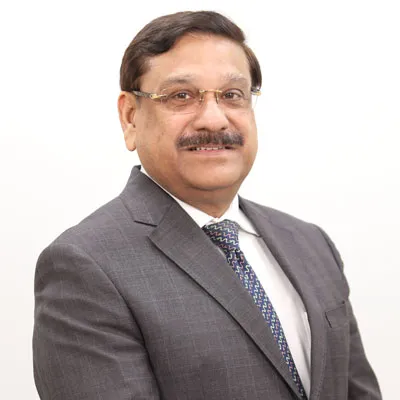
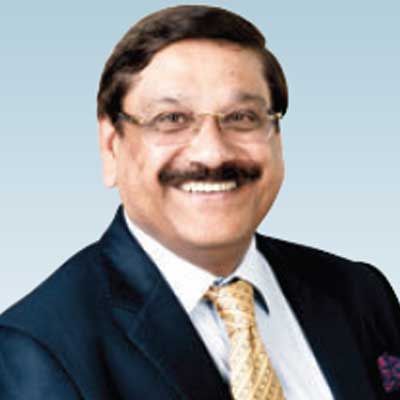
Welspun Enterprises is positioning itself as a differentiated infrastructure developer focused on technology-led urban solutions rather than volume-led contracting. In conversation with Sandeep Garg, Managing Director, conducted by KAVITA PARAB the discussion delves into the company’s selective bidding philosophy, people-centric culture and long-term vision for landmark creation, against the backdrop of a consolidated order book of around Rs.156 billion and EBITDA margins of 23.9 per cent in H1 FY26.Welspun follows a highly selective bidding approach. What underpins this strategy?We do not chase run-of-the-mill projects. If competition intensity is very high, we stop and rethink. Our approach is ‘aim and shoot’ rather than ‘spray and pray’. We work on a project much longer before bidding, understand costs and risks in detail, plan mitigation, and balance them against reward. This allows us to predict profitability with reasonable accuracy and has stood the test of time.How would you describe the current composition and direction of your order book?The order book is currently skewed towards water, which is our focus area and will remain so. At a consolidated level, the order book is around `156 billion, with water contributing about 68 per cent, tunnelling and rehabilitation about 24 per cent, and transport around 8 per cent. It also includes roughly `53.93 billion of O&M and asset replacement value. Over time, we expect a more balanced mix between water and transport. We are not trying to build scale through routine projects but through differentiated opportunities. What makes Welspun’s water projects distinct?We pursue technologically differentiated projects that solve urban problems, particularly land scarcity. For instance, the Dharavi Wastewater Treatment Plant is a 418-mld facility with an extremely small footprint, using multilevel SBR tanks starting at minus 6 m and rising to plus 48 m. There are very few global references for such a configuration. The Bhandup Water Treatment Plant is a 2,000-mld project and possibly the largest currently under construction anywhere. It is being built on land significantly smaller than an existing plant of similar capacity. Panjrapur, at 910 mld, follows the same principle of compact design. These projects use global technologies and aim to minimise social cost while maximising efficiency.How important is technology in your water strategy?Technology is central. We have brought a UK-based technology called SmartOps, which is proving effective for distributed wastewater treatment, cleaning ponds and water bodies and retrofitting underperforming plants. We are continuously evaluating alternate water and wastewater technologies that can be introduced in India to address future demand.You have spoken about tunnelling and underground infrastructure as a major opportunity. Why?Urban infrastructure needs are rising and at-grade or elevated construction carries very high social costs, such as traffic disruption, fuel wastage, health impacts and inconvenience. Tunnelling reduces these costs. Mumbai has demonstrated this shift and is now investing heavily in underground networks. With Welspun Michigan, we have created strong tunnelling capability and are positioning ourselves for this transition.How is your tunnelling capability positioned within the group?Welspun Michigan Engineers, in which we hold a majority stake, has an order book of around `26.50 billion and EBITDA margins above 20 per cent in H1FY26. This platform gives us the technical depth to pursue complex underground and rehabilitation projects as urban tunnelling demand grows.What structural changes do you see in the transport sector?Two major trends are visible. First, authorities are increasingly segmenting EPC, HAM and BOT, recognising that not all players can do everything. Balance sheet strength is becoming more important, especially for HAM. Second, there is a push for larger BOT toll projects, where project sizes have increased substantially. These require strong liquidity, project management capability and financial resilience, leading to limited competitive intensity.How does the Pune–Shirur project reflect your transport strategy?It is largely elevated, BOT-based and not a routine highway project. Importantly, land acquisition cost is being paid upfront as a premium to the client, which significantly reduces execution risk. These are the types of projects we will pursue.In your view, what is Welspun’s true USP?People. Capital, machines and materials are all acquirable. People are not. We have a leadership team with entrepreneurial experience, government-side understanding and deep sector expertise. We run structured Individual Development Plans for senior leaders, invest heavily in learning and development across levels, and recruit at the graduate engineer level to build future capability. We also train subcontractor manpower because last-mile skill determines execution quality.How does governance shape decision-making at Welspun?Beyond statutory committees, we have project review, risk management and ESG committees, mostly chaired and dominated by Independent Directors. Management decisions are open to third-party scrutiny. We also maintain strict fiscal discipline. Liquidity is critical in infrastructure. Cashflow stress, not project margins, is what destroys companies. Therefore, we ensure substantial liquidity and follow clear capital allocation principles.You lay emphasis on liquidity and fiscal discipline. How does this reflect in your current financial position?Liquidity is critical in infrastructure. Project profitability is not always the risk; cashflow stress is. At a consolidated level, we have cash and cash equivalents of about Rs.10.43 billion and net debt of around Rs.6.88 billion. On a standalone basis, we are in a net cash position. We follow clear capital allocation principles and initiate liquidity-raising actions as soon as we see capital getting committed to large opportunities.You often refer to the principles of 3Gs and LITE. What do they mean in practice?3Gs stand for Governance, Green and Growth, where growth is value-accretive and differentiated. LITE stands for Learning, Innovation, Trust & Transparency, and Endurance. Innovation can be incremental. Trust is supported through digitisation and single sources of truth. Endurance reflects the ability to withstand setbacks and continue.From your experience, what are the biggest challenges in large infrastructure projects today?First, PPP must genuinely function as a partnership. Contracts cannot foresee everything over 30-40 years; there must be mechanisms to jointly resolve unforeseen issues. Second, L1 bias creates an impossible equation: best quality, lowest cost, fastest time, with no compromise on safety. Movement towards quality and capability-based selection is needed. Third, DPRs must be current. Delays between preparation and execution reduce relevance. Finally, large-scale skilling and certification of construction manpower is essential.What is your long-term vision for Welspun Enterprises?To be an infrastructure developer of difference, supported by technology and known for creating landmarks. I do not define the future in terms of multiples of revenue. I want Welspun to be recognised for tunnelling, for urban problem-solving, and as a single-stop solution provider for water. Numbers will follow if we get that right.