+
Kavach 4.0 Commissioned on Delhi–Mumbai and Delhi–Howrah
RAILWAYS & METRO RAIL

Kavach 4.0 Commissioned on Delhi–Mumbai and Delhi–Howrah

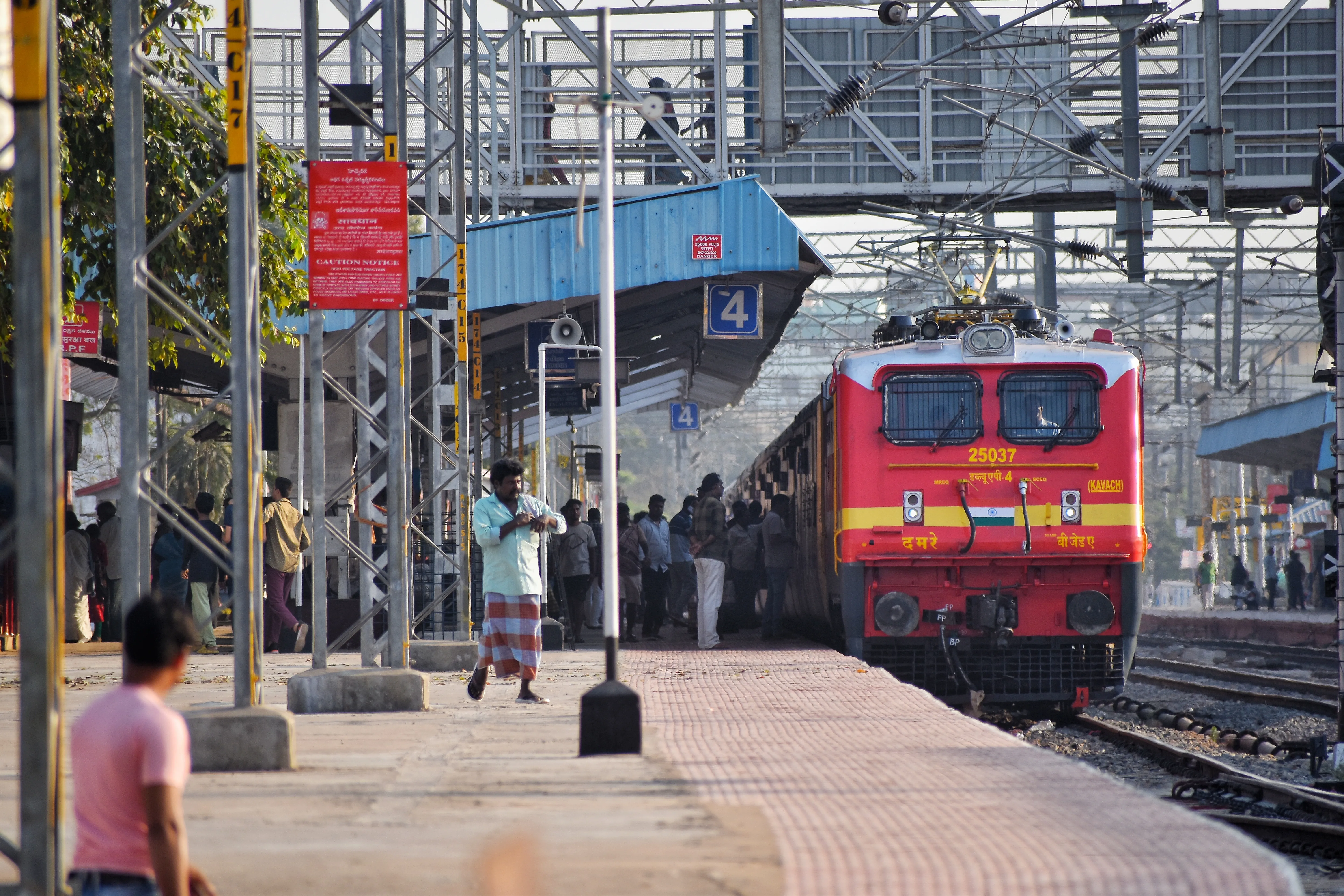
"Kavach version four has been commissioned on 1,452 route km, covering the high density Delhi–Mumbai and Delhi–Howrah corridors. The rollout included laying 8,570 km of optical fibre, installation of 1,100 telecom towers, deployment of trackside equipment over 6,776 RKm and establishment of 767 station data centres. Trackside implementation has been taken up on 24,427 RKm covering Golden Quadrilateral, Golden Diagonal and High Density Network sections. The programme aims to strengthen signalling and train protection on key routes.

Kavach is an indigenously developed automatic train protection system certified to safety integrity level four. The system intervenes to apply brakes automatically if a loco pilot fails to adhere to speed restrictions and improves safety in adverse weather and complex yards. Field trials began in February 2016 and the system was adopted as the national ATP in July 2020 after independent safety assessment. Version four of the specification was approved in July 2024 with enhanced location accuracy and interfaces to electronic interlocking.

Deployment includes provision of Kavach on 4,154 locomotives and work to equip 8,979 locomotives and 1,200 EMU and MEMU units. More than 55,000 technicians and engineers have been trained, including about 47,500 loco pilots and assistant loco pilots. The cost for trackside and station equipment is approximately Rs. 5 million (mn) per km and the cost for locomotive equipment is approximately Rs. 8 mn per loco. Funds utilised up to February 2026 total Rs. 27,639 mn, equivalent to Rs. 27.639 bn.

Safety spending has risen from Rs. 392,000 mn or Rs. 392 bn in 2013–14 to Rs. 1,203,890 mn or Rs. 1,203.89 bn in 2026–27, supporting technology upgrades. Consequential train accidents have fallen from 135 in 2014–15 to 14 in 2025–26, a reduction of 90 per cent, and the consequential accident index has declined from 0.11 to 0.03, or 73 per cent. Electrical interlocking, level crossing interlocking and track circuiting have been extended to reduce human error and verify track occupancy. The ministry reported in a parliamentary reply to the Lok Sabha."

Kavach version four has been commissioned on 1,452 route km, covering the high density Delhi–Mumbai and Delhi–Howrah corridors. The rollout included laying 8,570 km of optical fibre, installation of 1,100 telecom towers, deployment of trackside equipment over 6,776 RKm and establishment of 767 station data centres. Trackside implementation has been taken up on 24,427 RKm covering Golden Quadrilateral, Golden Diagonal and High Density Network sections. The programme aims to strengthen signalling and train protection on key routes.Kavach is an indigenously developed automatic train protection system certified to safety integrity level four. The system intervenes to apply brakes automatically if a loco pilot fails to adhere to speed restrictions and improves safety in adverse weather and complex yards. Field trials began in February 2016 and the system was adopted as the national ATP in July 2020 after independent safety assessment. Version four of the specification was approved in July 2024 with enhanced location accuracy and interfaces to electronic interlocking.Deployment includes provision of Kavach on 4,154 locomotives and work to equip 8,979 locomotives and 1,200 EMU and MEMU units. More than 55,000 technicians and engineers have been trained, including about 47,500 loco pilots and assistant loco pilots. The cost for trackside and station equipment is approximately Rs. 5 million (mn) per km and the cost for locomotive equipment is approximately Rs. 8 mn per loco. Funds utilised up to February 2026 total Rs. 27,639 mn, equivalent to Rs. 27.639 bn.Safety spending has risen from Rs. 392,000 mn or Rs. 392 bn in 2013–14 to Rs. 1,203,890 mn or Rs. 1,203.89 bn in 2026–27, supporting technology upgrades. Consequential train accidents have fallen from 135 in 2014–15 to 14 in 2025–26, a reduction of 90 per cent, and the consequential accident index has declined from 0.11 to 0.03, or 73 per cent. Electrical interlocking, level crossing interlocking and track circuiting have been extended to reduce human error and verify track occupancy. The ministry reported in a parliamentary reply to the Lok Sabha.

Next Story
Infrastructure Transport

Railways Advance Kalyan–Murbad Line And Mumbai Capacity Expansion

"Indian Railways is advancing multiple rail infrastructure projects in Maharashtra, including the sanctioned Kalyan–Murbad new line and sizable investments under the Mumbai Urban Transport Project and the Mumbai–Ahmedabad High Speed Rail project. The Kalyan–Murbad 28 km new line has been sanctioned at Rs 8.36 billion (bn) on a 50:50 cost-sharing basis with the Government of Maharashtra and has been declared a Special Railway Project for land acquisition; proposals covering 214 hectares are at various stages of acquisition. Budgetary outlay for projects falling fully or partly in Maharash..

Next Story
Infrastructure Urban

Parliamentary Panel Flags Funding Gaps in Heavy Industries

"The Department-Related Parliamentary Standing Committee on Industry (Rajya Sabha) presented its 332nd report on the Demands for Grants 2026-27 of the Ministry of Heavy Industries (MHI). Figures converted from crore and lakh are expressed in million (mn). The Budget Estimates 2026-27 for the Ministry stand at Rs 79,399 mn against a projected requirement of Rs 94,843.2 mn, a shortfall of about 16 per cent, with revenue at Rs 79,370.8 mn and capital compressed to Rs 28.2 mn from Rs 5,020 mn.The committee flagged recurring BE-to-RE compression and declining revised estimate utilisation, and calle..

Next Story
Infrastructure Urban

PM Launches Rs 56 Billion Projects In Tiruchirappalli

"Prime Minister Narendra Modi visited Tiruchirappalli to inaugurate and dedicate multiple development projects covering infrastructure for clean energy, petroleum-related manufacturing, highways, railways and rural roads. The initiatives represent a combined investment of Rs 56 billion (Rs 56 bn) and are intended to expand energy access, improve connectivity and generate thousands of jobs for the youth of Tamil Nadu. Officials said the programme seeks to integrate regional growth with national development priorities.He laid the foundation stone for Bharat Petroleum's city gas distribution netw..

Advertisement

Subscribe to Our Newsletter

Get daily newsletters around different themes from Construction world.

STAY CONNECTED

Advertisement

Advertisement

Advertisement