+
Southco’s Blind Mate Mechanism Boosts Data Centre Liquid Cooling Efficiency
Equipment

Southco’s Blind Mate Mechanism Boosts Data Centre Liquid Cooling Efficiency

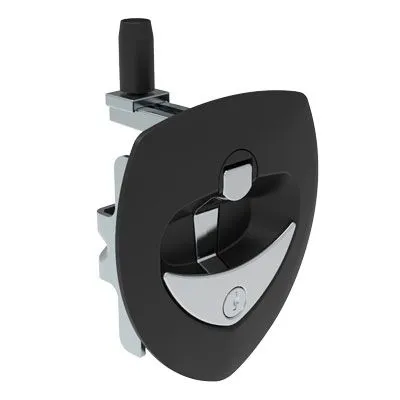
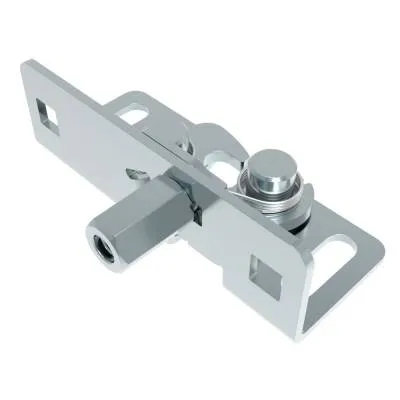
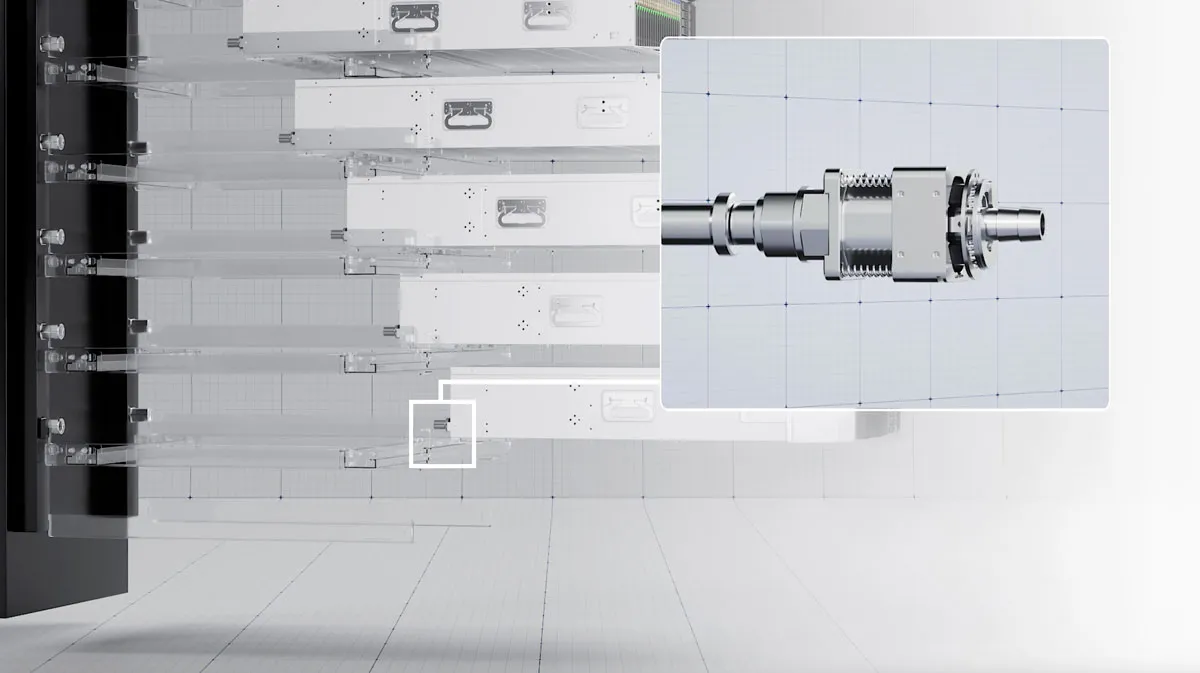
As data centres adopt liquid cooling to manage rising chip power densities, mechanical tolerances at cooling interfaces are emerging as a critical performance challenge. Southco has introduced its Blind Mate Floating Mechanism to address reliability, energy efficiency and maintenance issues associated with large-scale liquid cooling deployments.

According to Open Compute Project guidelines, even a 1 mm deviation at a liquid cooling interface can increase flow resistance by 15 per cent, raising pump energy consumption by around 7 per cent. In hyperscale facilities, such inefficiencies can translate into millions of kilowatt-hours in additional annual energy use. Traditional rigid connectors, typically limited to ±0.5 mm tolerance, struggle to accommodate installation deviations, vibration during transport and operation, and thermal expansion.

Southco’s Blind Mate Floating Mechanism offers three-dimensional dynamic tolerance control, with ±4 mm radial float and 6 mm axial displacement absorption, enabling it to adapt to installation misalignment, vibration and temperature-induced movement. The self-centring design supports blind connection and disconnection, simplifying maintenance and reducing downtime by over 90 per cent.

Tested to ASME B31.3 standards, the solution is designed for long-term, leak-free operation and compatibility with OCP ORV3 architectures. As liquid cooling becomes core infrastructure, Southco’s mechanism supports lower PUE targets, improved system resilience and future-ready data centre design.

As data centres adopt liquid cooling to manage rising chip power densities, mechanical tolerances at cooling interfaces are emerging as a critical performance challenge. Southco has introduced its Blind Mate Floating Mechanism to address reliability, energy efficiency and maintenance issues associated with large-scale liquid cooling deployments.According to Open Compute Project guidelines, even a 1 mm deviation at a liquid cooling interface can increase flow resistance by 15 per cent, raising pump energy consumption by around 7 per cent. In hyperscale facilities, such inefficiencies can translate into millions of kilowatt-hours in additional annual energy use. Traditional rigid connectors, typically limited to ±0.5 mm tolerance, struggle to accommodate installation deviations, vibration during transport and operation, and thermal expansion.Southco’s Blind Mate Floating Mechanism offers three-dimensional dynamic tolerance control, with ±4 mm radial float and 6 mm axial displacement absorption, enabling it to adapt to installation misalignment, vibration and temperature-induced movement. The self-centring design supports blind connection and disconnection, simplifying maintenance and reducing downtime by over 90 per cent.Tested to ASME B31.3 standards, the solution is designed for long-term, leak-free operation and compatibility with OCP ORV3 architectures. As liquid cooling becomes core infrastructure, Southco’s mechanism supports lower PUE targets, improved system resilience and future-ready data centre design.

Next Story
Infrastructure Urban

Eicher Delivers First 13.5 m Electric Intercity Sleeper Bus

Eicher Trucks & Buses, a business unit of VE Commercial Vehicles Ltd., has recently delivered its first 13.5 m electric intercity sleeper bus, marking a key milestone in India’s long-distance electric mobility segment. The first bus is being operated by LeafyBus, with plans to deploy 35 buses by March 2026 across high-demand intercity corridors in North India.The initial deployment will cover routes such as Delhi–Dehradun and Delhi–Lucknow, supporting LeafyBus’ expansion across environmentally sensitive and high-density travel corridors.Commenting on the partnership, Suresh Chettia..

Next Story
Infrastructure Urban

HCSS Showcases Unified Construction Platform at CONEXPO 2026

HCSS will recently present the next evolution of its connected construction management platform at CONEXPO-CON/AGG 2026, bringing together construction workflows, data and teams on a single platform across the entire project lifecycle. The event will be held from 3–7 March 2026 in Las Vegas, Nevada. HCSS will host two booths at the show, demonstrating how its integrated software ecosystem enables seamless collaboration between the office, field and shop, from bid stage through to project closeout. Steve McGough, President and CEO, HCSS, said, “For 40 years, we’ve done everything within..

Next Story
Building Material

Berger Paints Q3 Profit Declines Despite Volume Growth

Berger Paints India has reported a mixed performance for the quarter ended 31 December 2025, with healthy volume growth and margin improvement offset by softer demand conditions and cost pressures. On a consolidated basis, revenue from operations for the quarter stood at Rs 29,840 million, compared to Rs 29,751 million in the corresponding quarter last year, reflecting a marginal increase of 0.3 per cent. EBITDA (excluding other income) was Rs 4,710 million, slightly lower than Rs 4,717 million a year earlier. Net profit declined by 8.3 per cent to Rs 2,713 million from Rs 2,960 million. Sta..

Advertisement

Subscribe to Our Newsletter

Get daily newsletters around different themes from Construction world.

STAY CONNECTED

Advertisement

Advertisement

Advertisement

Open In App