We have now started planning for Gujarat and Karnataka
Real Estate

We have now started planning for Gujarat and Karnataka

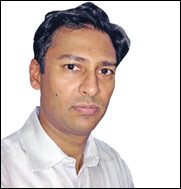
Rohit Poddar, Managing Director, Poddar Developers

One of India's oldest business houses, Poddar Group boasts a legacy of 10 generations. In 2008, the company decided to form Poddar Developers with the aim to provide high-quality housing at affordable rates, great amenities and low monthly maintenance. Rohit Poddar, Managing Director, Poddar Developers, backs this decision of affordable housing by saying, "We are a well-known brand. We had the aggregation of land skills and a long history of manufacturing commodities, which is basically what the affordable housing business is." He elaborates upon the company's projects and market challenges in conversation with SHRIYAL SETHUMADHAVAN.

Initially, what was your key to develop a scalable business model?
The idea to venture into affordable housing came up in 2007. To determine the model, we conducted research across cities mainly in Maharashtra, Gujarat and Karnataka. We then decided to test the concept in Bhivpuri by developing our first project, Samrudhi Complex. The location we chose was not urbanised, yet it offered demand drivers in terms of transportation and infrastructure such as water, electricity, public schools and hospitals. When the project was launched after one-and-a-half years of planning, it was a great success. From here, we meticulously planned our second project in Badlapur, and the outcome has been a resounding success. We have sunlight in each room and natural ventilation. We have also used high-quality and durable fit outs such as vitrified ceramic tiles, Godrej locks and door hangings, high-quality laminated wooden doors, waterproofing and steam proofing in the bathroom, Panasonic lights with 10-year warranty, and so on. The site offers a great lifestyle because of the vast array of amenities and pollution free environment.

Then, how do you balance the cost factor?
You have to offer the customer a high quality life at an affor-dable price. Hence, as a developer, we need to have very strong financial resources to build infrastructure. Also, you need a strong project and construction management background. This helps you design in a cost-effective manner and use your economies of scale and financial strength to drive Poddar Groupdown the cost of various materials from the actual manufacturer and not the reseller.

How challenging is it to build an affordable township?
Our goal is to create first-time right infrastructure with low recurring maintenance cost. Our township, Poddar Navjeevan, is being developed in 10 phases over probably seven to eight years. In the first phase, we will provide over 570 apartments costing around Rs 2,450 per sq ft. We are looking at investing around Rs 40-45 crore in the first phase, which is expected to be completed by the end of December 2014. But the challenges include first aggregating the land at an affordable price, then seeking the required permissions, which in itself is time-consuming. Hopefully, the Development Control Rule (DCR) in Maharashtra will be suitably amended in future to fast track affordable housing projects.

So, is transparency the key to timely delivery?
It is all about transparency and predictability, whether it is on the government's side or the developer's. It would be beneficial if the departments work together within the same timeframe to make the necessary clearances happen. We received environment clearance for both our projects the first time, but the issue is the queue to get your hearing, which is very long. This should be reduced from 12 to 18 months to a reasonable timeframe. Also, if a new DCR plan is to be released, you have to wait and redo your plans accordingly. This leads to time overruns, which directly leads to cost overruns in a project.

Talking of expansion plans, do you intend to look beyond Mumbai?
Our initial plan was to execute projects in Mumbai first and deliver at least 3,000 houses before moving forward. Having successfully executed this, we have now started planning for Gujarat and Karnataka as well. We already had land in Karnataka and have just acquired land in Gujarat.

How did the company perform last year?
When we started our business, we adopted a conservative accounting policy of only booking the top line after the project is 100 per cent completed. Considering this, we are expecting a turnover of about Rs 250 crore in FY13-14.

Rohit Poddar, Managing Director, Poddar Developers One of India's oldest business houses, Poddar Group boasts a legacy of 10 generations. In 2008, the company decided to form Poddar Developers with the aim to provide high-quality housing at affordable rates, great amenities and low monthly maintenance. Rohit Poddar, Managing Director, Poddar Developers, backs this decision of affordable housing by saying, We are a well-known brand. We had the aggregation of land skills and a long history of manufacturing commodities, which is basically what the affordable housing business is. He elaborates upon the company's projects and market challenges in conversation with SHRIYAL SETHUMADHAVAN. Initially, what was your key to develop a scalable business model? The idea to venture into affordable housing came up in 2007. To determine the model, we conducted research across cities mainly in Maharashtra, Gujarat and Karnataka. We then decided to test the concept in Bhivpuri by developing our first project, Samrudhi Complex. The location we chose was not urbanised, yet it offered demand drivers in terms of transportation and infrastructure such as water, electricity, public schools and hospitals. When the project was launched after one-and-a-half years of planning, it was a great success. From here, we meticulously planned our second project in Badlapur, and the outcome has been a resounding success. We have sunlight in each room and natural ventilation. We have also used high-quality and durable fit outs such as vitrified ceramic tiles, Godrej locks and door hangings, high-quality laminated wooden doors, waterproofing and steam proofing in the bathroom, Panasonic lights with 10-year warranty, and so on. The site offers a great lifestyle because of the vast array of amenities and pollution free environment. Then, how do you balance the cost factor? You have to offer the customer a high quality life at an affor-dable price. Hence, as a developer, we need to have very strong financial resources to build infrastructure. Also, you need a strong project and construction management background. This helps you design in a cost-effective manner and use your economies of scale and financial strength to drive Poddar Groupdown the cost of various materials from the actual manufacturer and not the reseller. How challenging is it to build an affordable township? Our goal is to create first-time right infrastructure with low recurring maintenance cost. Our township, Poddar Navjeevan, is being developed in 10 phases over probably seven to eight years. In the first phase, we will provide over 570 apartments costing around Rs 2,450 per sq ft. We are looking at investing around Rs 40-45 crore in the first phase, which is expected to be completed by the end of December 2014. But the challenges include first aggregating the land at an affordable price, then seeking the required permissions, which in itself is time-consuming. Hopefully, the Development Control Rule (DCR) in Maharashtra will be suitably amended in future to fast track affordable housing projects. So, is transparency the key to timely delivery? It is all about transparency and predictability, whether it is on the government's side or the developer's. It would be beneficial if the departments work together within the same timeframe to make the necessary clearances happen. We received environment clearance for both our projects the first time, but the issue is the queue to get your hearing, which is very long. This should be reduced from 12 to 18 months to a reasonable timeframe. Also, if a new DCR plan is to be released, you have to wait and redo your plans accordingly. This leads to time overruns, which directly leads to cost overruns in a project. Talking of expansion plans, do you intend to look beyond Mumbai? Our initial plan was to execute projects in Mumbai first and deliver at least 3,000 houses before moving forward. Having successfully executed this, we have now started planning for Gujarat and Karnataka as well. We already had land in Karnataka and have just acquired land in Gujarat. How did the company perform last year? When we started our business, we adopted a conservative accounting policy of only booking the top line after the project is 100 per cent completed. Considering this, we are expecting a turnover of about Rs 250 crore in FY13-14.

Next Story
Infrastructure Transport

MMRDA advances 250 m on Orange Gate–Marine Drive tunnel

The Mumbai Metropolitan Region Development Authority (MMRDA) has completed 250 m of underground tunnelling for the Orange Gate–Marine Drive Urban Road Tunnel using India’s largest slurry shield tunnel boring machine (TBM) deployed for an urban road project.The project involves twin tunnels extending over 7 km beneath critical transport corridors, including Central Railway, Western Railway and Metro Line 3. The work requires high-precision engineering to navigate densely developed urban infrastructure.Once completed, the tunnel is expected to reduce travel time between Orange Gate and Marin..

Next Story
Infrastructure Urban

Hindustan Zinc Pays Rs 188.46 Billion in FY26

Hindustan Zinc contributed Rs 188.46 billion to the public exchequer in FY 2025-26, according to its 9th Tax Transparency Report. The contribution, equivalent to 46 per cent of the company’s revenue, included direct and indirect taxes, government royalties, dividends to the Government of India, withholding taxes and other statutory levies.The company’s five-year cumulative contribution to the exchequer stood at Rs 915.72 billion. In FY26, Hindustan Zinc reported revenue of Rs 408.44 billion, EBITDA of Rs 221.62 billion and profit after tax of Rs 138.32 billion. It also achieved its highest..

Next Story
Infrastructure Urban

World of Concrete India 2026 Opens in Mumbai

Informa Markets in India will host the 12th edition of World of Concrete India 2026 from 3–5 June 2026 at the Bombay Exhibition Centre, Mumbai. The specialised B2B exhibition will bring together manufacturers, suppliers, contractors, developers, architects, consultants, infrastructure companies, project leaders and government stakeholders.The event is expected to feature over 350 brands and more than 18,000 trade professionals. It will cover concrete and cement, dry mortar, precast technologies, formwork, construction chemicals, industrial and commercial flooring, scaffolding, safety solutio..

Advertisement

Subscribe to Our Newsletter

Get daily newsletters around different themes from Construction world.

STAY CONNECTED

Advertisement

Advertisement

Advertisement