
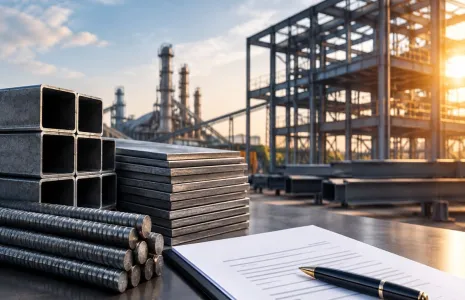
Steel Prices Hit Four-Year High on Strong Demand
Steel

Steel Prices Hit Four-Year High on Strong Demand

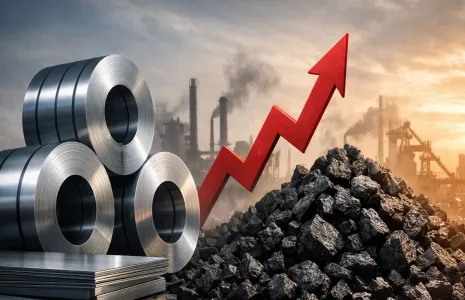
Domestic steel prices have reached a four-year high amid strong demand and rising raw material costs, according to Enlight Metals, India’s first agentic AI-enabled metal aggregator.
Hot Rolled Coil (HRC) prices have increased to around Rs 64,000 per tonne, while Cold Rolled Coil (CRC) prices are at approximately Rs 75,000 per tonne. Meanwhile, domestic steel consumption grew 7 per cent year-on-year to around 70 MT during April–August FY27, reflecting continued demand from major steel-consuming sectors.
The price movement has been driven by sustained demand from infrastructure, construction and automotive sectors, along with elevated input costs. Manufacturers are increasingly focusing on procurement planning, price visibility and inventory management to navigate market fluctuations.
“Steel prices reaching four-year highs underline the growing cost pressures across the manufacturing value chain. HRC prices have risen to around Rs 64,000 per tonne, while CRC is at Rs 75,000 per tonne, with domestic steel consumption also growing 7 per cent year-on-year to 70 MT during April-August FY27,” said Vedant Goel, Director, Enlight Metals.
He added that with demand remaining firm across infrastructure, construction and automotive sectors, data-led sourcing and timely inventory decisions will become increasingly important for manufacturers.
The current market scenario highlights the need for close monitoring of steel prices and procurement conditions as industries plan requirements for the second half of FY27. With demand continuing across key sectors, efficient sourcing strategies and inventory management are expected to remain critical for steel consumers.

Domestic steel prices have reached a four-year high amid strong demand and rising raw material costs, according to Enlight Metals, India’s first agentic AI-enabled metal aggregator.Hot Rolled Coil (HRC) prices have increased to around Rs 64,000 per tonne, while Cold Rolled Coil (CRC) prices are at approximately Rs 75,000 per tonne. Meanwhile, domestic steel consumption grew 7 per cent year-on-year to around 70 MT during April–August FY27, reflecting continued demand from major steel-consuming sectors.The price movement has been driven by sustained demand from infrastructure, construction and automotive sectors, along with elevated input costs. Manufacturers are increasingly focusing on procurement planning, price visibility and inventory management to navigate market fluctuations.“Steel prices reaching four-year highs underline the growing cost pressures across the manufacturing value chain. HRC prices have risen to around Rs 64,000 per tonne, while CRC is at Rs 75,000 per tonne, with domestic steel consumption also growing 7 per cent year-on-year to 70 MT during April-August FY27,” said Vedant Goel, Director, Enlight Metals.He added that with demand remaining firm across infrastructure, construction and automotive sectors, data-led sourcing and timely inventory decisions will become increasingly important for manufacturers.The current market scenario highlights the need for close monitoring of steel prices and procurement conditions as industries plan requirements for the second half of FY27. With demand continuing across key sectors, efficient sourcing strategies and inventory management are expected to remain critical for steel consumers.

Related Stories

Gold Stories
Next Story
Real Estate

Born Smart or Built Smart?

In residential projects where the homeowner has a clear requirement for extensive automation, the smart-home brief should influence the design from the outset. CW explores exactly how such mandates influence design-development. QUICK BYTESIntegrate smart technology with architecture, interiors and MEP from the outset.Let residents’ needs and routines guide automation.Integrate sensors, wiring and controls without compromising design.Build flexible infrastructure for evolving technologies.Smart systems should be simple, reliable and easy to use.Existing homes can be retrofitted with mini..
Next Story
Technology

Move Less, Build More

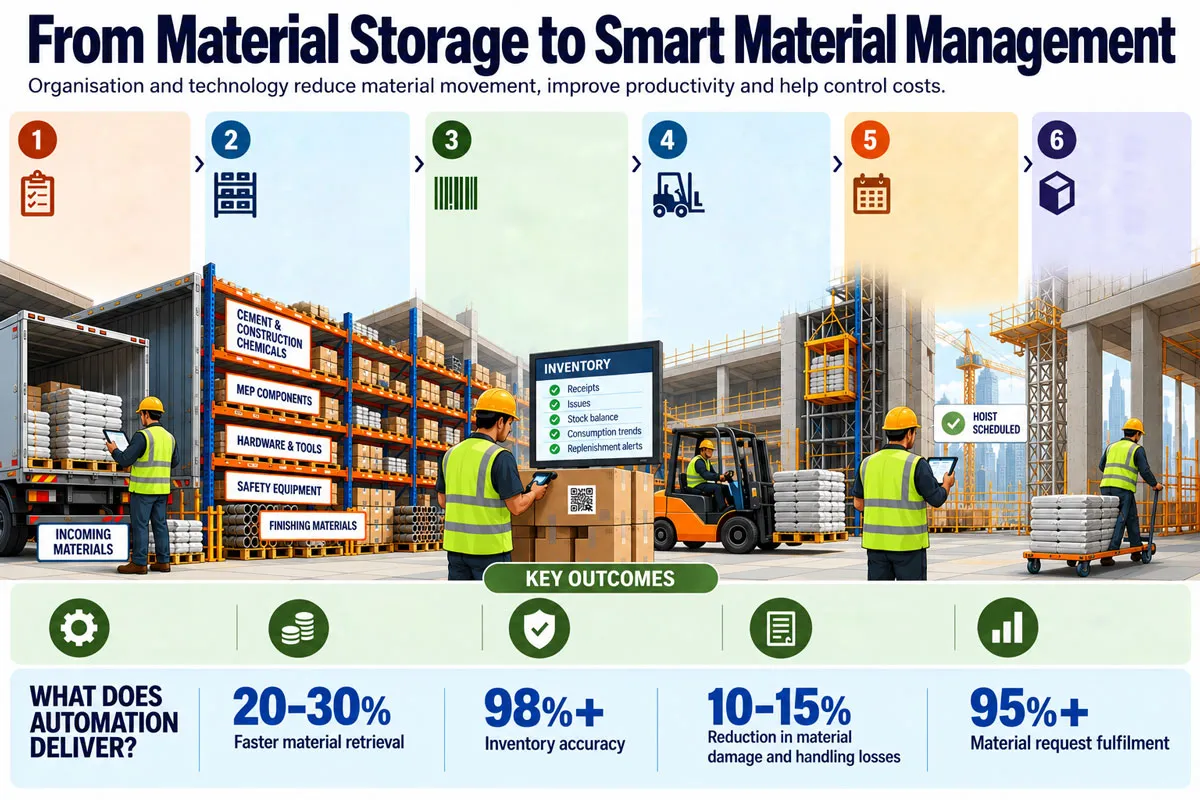
On high-rise sites in Mumbai, until a few years ago, the common material handling solution was manpower and the repeated relocation of material until it finally reached the floor where it was to be installed.Cut to today. “Now, we are adopting automation in material handling, not to replace people but to reduce unnecessary movement, improve planning, and use people and equipment more efficiently,” says Raahul Maroo, Founder & Managing Director, Tat:vm Builders and Developers.To read the full article Click Here ..

Next Story
Infrastructure Urban

Law and Order

In modern economies, construction projects serve as a catalyst for economic growth and national development. In India, the construction industry plays a vital role in infrastructure development, urbanisation and employment generation. However, these projects involve significant financial, contractual, legal, environmental and safety risks, necessitating an effective legal framework to regulate their execution.The India perspectiveConstruction projects are governed by various legal and regulatory requirements relating to land acquisition, planning permissions, labour welfare, environmental clea..

Advertisement

Subscribe to Our Newsletter

Get daily newsletters around different themes from Construction world.

STAY CONNECTED

Advertisement

SPECIAL OFFER
QR Code