Andhra Boosts Land Allotment For Google AI Data Centres To 600 Acres
Real Estate

Andhra Boosts Land Allotment For Google AI Data Centres To 600 Acres

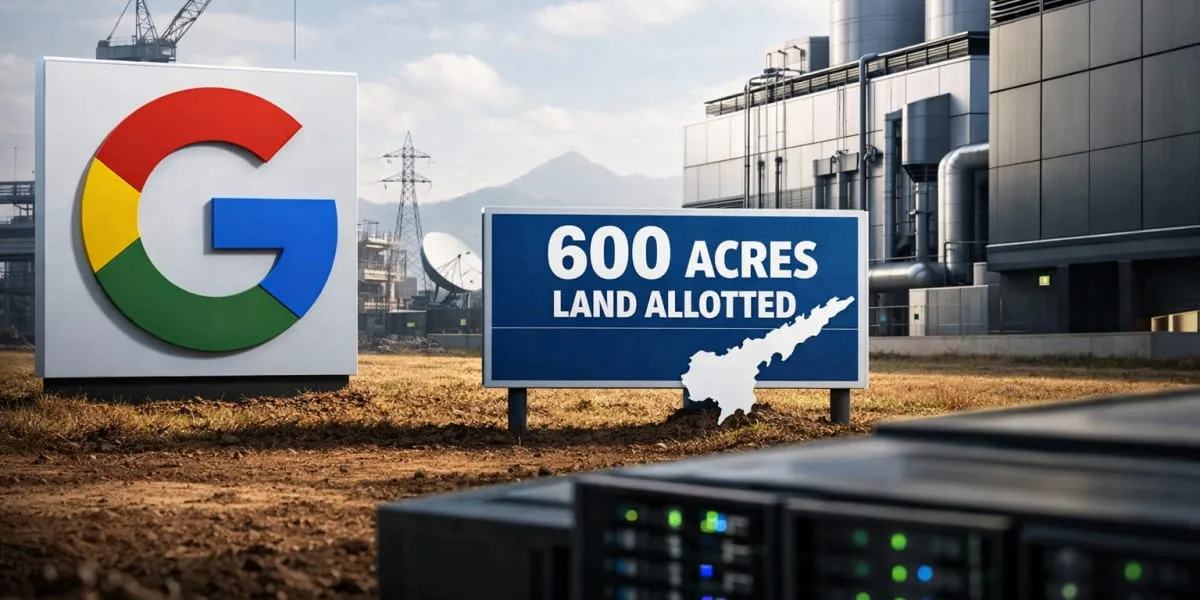
The Andhra Pradesh government has increased land allocation for Google to 600 acres to support the development of artificial intelligence (AI) data centres, according to state officials. The allotment is intended to accelerate the establishment of cloud infrastructure and associated facilities in the state. Authorities presented the move as part of a broader effort to attract large technology investment and strengthen the local digital ecosystem. The development is expected to position the state as a regional hub for data centre activity.

Officials indicated that the enlarged site will accommodate server farms, cooling systems and supporting power facilities while complying with regulatory and environmental requirements. The administration emphasised coordination with utilities to ensure adequate electricity and water supply for continuous operations. Local authorities plan to streamline approvals and offer logistical support to expedite construction. The timing aligns with growing corporate demand for AI compute and storage capacity.

The expansion follows discussions between Google representatives and senior state officials on investment facilitation and infrastructure commitments. Government sources noted that the allocation reflects a strategic push to secure long term projects that can generate employment and supply chain opportunities for regional firms. Observers expect ancillary services such as maintenance, security and transport to scale up around the site. Officials will monitor environmental impact and community engagement as project plans advance.

The move is likely to influence the competitive landscape for data centre investments across the region and to signal Andhra Pradesh's intent to compete for large scale technology projects. State planners said they will continue to promote policies that ease land assembly and foster partnerships between multinational corporations and local stakeholders. The project timeline will depend on final regulatory clearances, infrastructure readiness and corporate scheduling. Authorities indicated that further details will be released as agreements are finalised.

The Andhra Pradesh government has increased land allocation for Google to 600 acres to support the development of artificial intelligence (AI) data centres, according to state officials. The allotment is intended to accelerate the establishment of cloud infrastructure and associated facilities in the state. Authorities presented the move as part of a broader effort to attract large technology investment and strengthen the local digital ecosystem. The development is expected to position the state as a regional hub for data centre activity. Officials indicated that the enlarged site will accommodate server farms, cooling systems and supporting power facilities while complying with regulatory and environmental requirements. The administration emphasised coordination with utilities to ensure adequate electricity and water supply for continuous operations. Local authorities plan to streamline approvals and offer logistical support to expedite construction. The timing aligns with growing corporate demand for AI compute and storage capacity. The expansion follows discussions between Google representatives and senior state officials on investment facilitation and infrastructure commitments. Government sources noted that the allocation reflects a strategic push to secure long term projects that can generate employment and supply chain opportunities for regional firms. Observers expect ancillary services such as maintenance, security and transport to scale up around the site. Officials will monitor environmental impact and community engagement as project plans advance. The move is likely to influence the competitive landscape for data centre investments across the region and to signal Andhra Pradesh's intent to compete for large scale technology projects. State planners said they will continue to promote policies that ease land assembly and foster partnerships between multinational corporations and local stakeholders. The project timeline will depend on final regulatory clearances, infrastructure readiness and corporate scheduling. Authorities indicated that further details will be released as agreements are finalised.

Next Story
Equipment

India CE Industry Ends FY26 on a Steady Recovery Path

India’s construction equipment industry closed FY26 on a stable note, reflecting measured resilience and gradually improving momentum. Total sales in Q4 FY26 rose 4 per cent year on year to 42,906 units, extending the recovery seen over the past two years.Domestic demand for the full year remained under pressure, declining 7 per cent, but exports provided strong support. Overall exports grew 31 per cent, while non-OEM exports increased 13 per cent, highlighting sustained demand from overseas markets.March 2026 further underlined the recovery, with sales rising 6 per cent year on year and 13 ..

Next Story
Infrastructure Urban

Leaders Question FIR Against Anil Agarwal

Several industry and public figures have questioned the FIR filed against Anil Agarwal following the boiler accident in Chhattisgarh, while also expressing condolences over the loss of lives and calling for a thorough investigation.Naveen Jindal said the tragedy was deeply painful and stressed that compensation, livelihood support for affected families and a fair probe were essential. He also questioned naming Agarwal in the FIR before completion of the investigation.Kiran Bedi urged restraint, saying investigations should focus on learning lessons and strengthening systems rather than prematu..

Next Story
Infrastructure Urban

Tier 2, 3 Cities Drive 66% of New D2C Orders

Tier 2 and Tier 3 cities accounted for 66 per cent of new direct-to-consumer (D2C) orders in FY 2026, according to a new analysis by Unicommerce.The report said buyers from smaller cities also contributed 60 per cent of incremental gross merchandise value (GMV) in FY 2026 compared with FY 2025, highlighting rising demand beyond metro markets.Overall, India’s D2C segment recorded strong growth, with order volumes rising 33 per cent and GMV increasing 32 per cent year-on-year. The findings are based on more than 400 million order items processed through brand websites on Unicommerce’s Uniwar..

Advertisement

Subscribe to Our Newsletter

Get daily newsletters around different themes from Construction world.

STAY CONNECTED

Advertisement

Advertisement

Advertisement