Centre allocates Rs 48k cr for 80 lakh homes construction under PMAY
Real Estate

Centre allocates Rs 48k cr for 80 lakh homes construction under PMAY

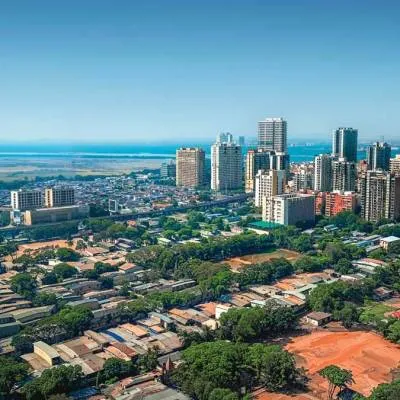
On Tuesday, Finance Minister Nirmala Sitharaman declared the allocation of a whopping Rs 48,000 crore for the completion of 80 lakh homes under the Pradhan Mantri Awas Yojana (PMAY), both rural and urban, during the coming fiscal year.

In her budget speech, the minister said that in 2022-23, 80 lakh homes will be achieved for the recognised qualified beneficiaries of PM Awas Yojana, both rural and urban. Rs 48,000 crore is allotted for this goal.

The Centre would work with states for reduction of time needed for all land and construction-related permissions, for encouraging affordable housing for middle-class and Economically Weaker Sections (EWS) in urban regions, she said.

They shall additionally work with the financial sector regulators to boost access to capital along with a reduction in the cost of intermediation. For better land records management, Sitharaman said that the states will be uplifted to adopt Unique Land Parcel Identification Number (ULPIN) to boost IT-based management of records.

The facility for transliteration of land records across any of the Schedule VIII languages will additionally be launched.The adoption or linkage with National Generic Document Registration System (NGDRS) with the 'One-Nation One-Registration Software' will be encouraged as an option for a uniform process for listing and 'anywhere registration' of deeds and documents.

On Monday, the economy survey emphasised that 33.99 lakh homes were achieved in 2020-21 and 26.20 lakh units as of November 25, 2021, under the Pradhan Mantri Awas Yojana - Gramin (PMAY-G) programme. For the Pradhan Mantri Awas Yojana - Urban (PMAY-U), the survey reported that 14.56 lakh homes were achieved in FY21. In 2021-22, 4.49 lakh homes were attained till December 2021.

Image Source

Also read: Govt nods 3.16 lakh houses in 17 states and UTs under PMAY

On Tuesday, Finance Minister Nirmala Sitharaman declared the allocation of a whopping Rs 48,000 crore for the completion of 80 lakh homes under the Pradhan Mantri Awas Yojana (PMAY), both rural and urban, during the coming fiscal year. In her budget speech, the minister said that in 2022-23, 80 lakh homes will be achieved for the recognised qualified beneficiaries of PM Awas Yojana, both rural and urban. Rs 48,000 crore is allotted for this goal. The Centre would work with states for reduction of time needed for all land and construction-related permissions, for encouraging affordable housing for middle-class and Economically Weaker Sections (EWS) in urban regions, she said. They shall additionally work with the financial sector regulators to boost access to capital along with a reduction in the cost of intermediation. For better land records management, Sitharaman said that the states will be uplifted to adopt Unique Land Parcel Identification Number (ULPIN) to boost IT-based management of records. The facility for transliteration of land records across any of the Schedule VIII languages will additionally be launched.The adoption or linkage with National Generic Document Registration System (NGDRS) with the 'One-Nation One-Registration Software' will be encouraged as an option for a uniform process for listing and 'anywhere registration' of deeds and documents. On Monday, the economy survey emphasised that 33.99 lakh homes were achieved in 2020-21 and 26.20 lakh units as of November 25, 2021, under the Pradhan Mantri Awas Yojana - Gramin (PMAY-G) programme. For the Pradhan Mantri Awas Yojana - Urban (PMAY-U), the survey reported that 14.56 lakh homes were achieved in FY21. In 2021-22, 4.49 lakh homes were attained till December 2021. Image Source Also read: Govt nods 3.16 lakh houses in 17 states and UTs under PMAY

Related Stories

Gold Stories
Next Story
Infrastructure Urban

KONE Opens India's First Digital Experience Centre in Pune

KONE, a global elevator and escalator manufacturer, has inaugurated its first Digital Experience Centre (DEC) in India, located in Pune. The facility aims to showcase how artificial intelligence (AI), connectivity and data-driven technologies can enhance customer experiences and improve building operations.The centre was inaugurated by Jussi Herlin, Executive Vice Chair, KONE Corporation; Philippe Delorme, President and CEO, KONE; and Nandan Nilekani, Co-founder and Chairman of the Board, Infosys.Designed as an interactive customer environment, the facility demonstrates digital solutions cover..

Next Story
Infrastructure Urban

CII GreenCo Launches Circularity Guidelines for Indian Industry

The Confederation of Indian Industry (CII) GreenCo Council has launched the CII GreenCo Circularity Guidelines – Pilot Version at the 17th CII GreenCo Waste & Resource Management Summit 2026 in Chennai. The initiative aims to strengthen resource efficiency, waste reduction and circular economy practices across Indian manufacturing and process industries.The guidelines introduce a structured framework with circularity indices covering raw materials, consumables, packaging and other resource inputs. These indicators will help industries assess existing practices, identify opportunities to ..

Next Story
Infrastructure Energy

Global Electronics Association Launches IPC-1783-CO2E Standard

The Global Electronics Association has introduced IPC-1783-CO2E, a new international standard aimed at improving consistency, transparency and comparability in product carbon footprint reporting across the electronics manufacturing industry.The standard, titled International Standard for Data Collection and Reporting of CO2 Equivalent (CO2e) Emissions for the Electronics Manufacturing Supply Chain, provides industry-specific guidance for collecting, estimating and reporting carbon emissions data.With increasing regulatory requirements and customer expectations, electronics manufacturers face c..

Advertisement

Subscribe to Our Newsletter

Get daily newsletters around different themes from Construction world.

STAY CONNECTED

Advertisement

SPECIAL OFFER
QR Code