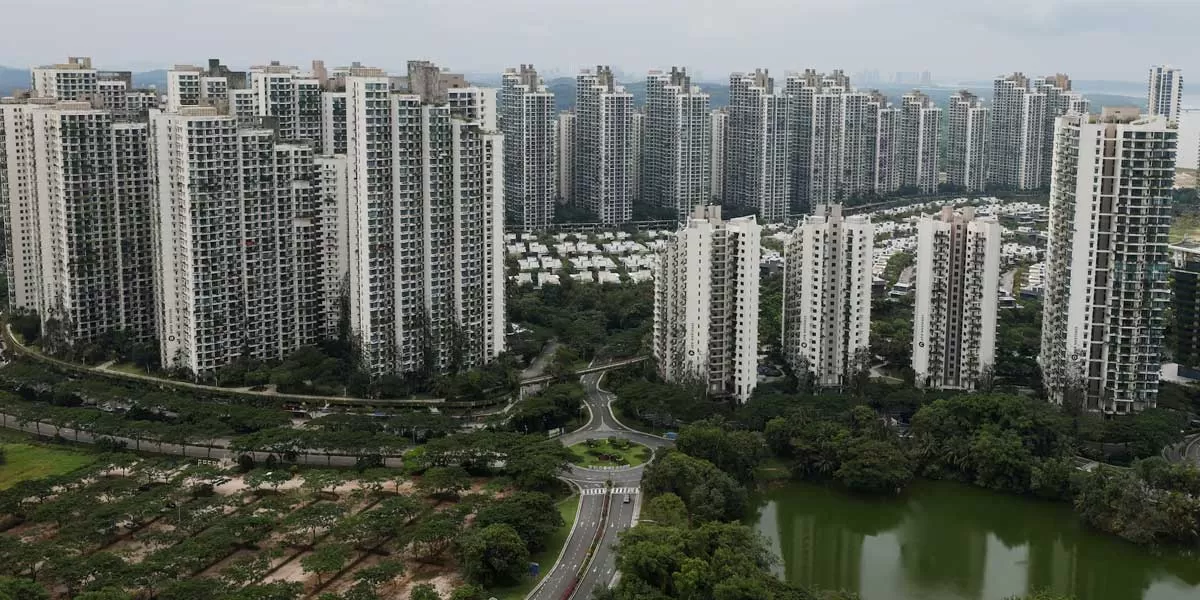





Country Garden bondholders approve payment postponement
Real Estate

Country Garden bondholders approve payment postponement

Country Garden, one of China's leading property developers, has received approval from its bondholders to defer payments on three onshore bonds. This decision comes amid the ongoing challenges facing the real estate sector in China, including tightened regulations and a slowing property market.

The company faced mounting pressure as it sought to navigate through a liquidity crunch, exacerbated by stringent government policies aimed at curbing speculative investment and controlling debt levels in the property market. With this approval, Country Garden gains much-needed breathing room to manage its financial obligations strategically.

The bondholders' agreement reflects a pragmatic approach, acknowledging the complex economic environment and the need for flexibility in addressing financial obligations. By postponing the bond repayments, Country Garden can focus on stabilizing its operations, exploring alternative funding sources, and implementing strategic measures to weather the storm in the real estate sector.

This development underscores the challenges faced by property developers in China, where regulatory changes and market dynamics have significantly impacted the industry's profitability and growth prospects. Amidst tightening credit conditions and heightened scrutiny from regulators, companies like Country Garden are compelled to adapt swiftly to the evolving landscape.

The decision to defer bond payments is a testament to Country Garden's efforts to proactively address its financial challenges and maintain the trust of its stakeholders. By seeking approval from bondholders and engaging in transparent communication, the company demonstrates its commitment to responsible financial management and long-term sustainability.

While the postponement provides temporary relief, Country Garden remains focused on executing its business strategy, driving operational efficiency, and mitigating risks associated with the volatile real estate market. The company continues to explore opportunities for growth and innovation, leveraging its strengths and capabilities to navigate through uncertain times.

Country Garden, one of China's leading property developers, has received approval from its bondholders to defer payments on three onshore bonds. This decision comes amid the ongoing challenges facing the real estate sector in China, including tightened regulations and a slowing property market. The company faced mounting pressure as it sought to navigate through a liquidity crunch, exacerbated by stringent government policies aimed at curbing speculative investment and controlling debt levels in the property market. With this approval, Country Garden gains much-needed breathing room to manage its financial obligations strategically. The bondholders' agreement reflects a pragmatic approach, acknowledging the complex economic environment and the need for flexibility in addressing financial obligations. By postponing the bond repayments, Country Garden can focus on stabilizing its operations, exploring alternative funding sources, and implementing strategic measures to weather the storm in the real estate sector. This development underscores the challenges faced by property developers in China, where regulatory changes and market dynamics have significantly impacted the industry's profitability and growth prospects. Amidst tightening credit conditions and heightened scrutiny from regulators, companies like Country Garden are compelled to adapt swiftly to the evolving landscape. The decision to defer bond payments is a testament to Country Garden's efforts to proactively address its financial challenges and maintain the trust of its stakeholders. By seeking approval from bondholders and engaging in transparent communication, the company demonstrates its commitment to responsible financial management and long-term sustainability. While the postponement provides temporary relief, Country Garden remains focused on executing its business strategy, driving operational efficiency, and mitigating risks associated with the volatile real estate market. The company continues to explore opportunities for growth and innovation, leveraging its strengths and capabilities to navigate through uncertain times.

Next Story
Infrastructure Urban

Implementation Status of Jal Jeevan Mission

Since August 2019 the Government has implemented Jal Jeevan Mission to provide assured potable water through household tap connections in rural India. At the start of the mission only 32.3 million (mn) rural households, representing 16.7 per cent, were reported to have tap water connections. States and union territories have reported that 125.8 mn additional rural households have since been provided with tap connections. As a result, of about 193.6 mn rural households roughly 158.2 mn, or 81.71 per cent, are reported to have tap water supply at home.\n\nThe State, district and village level st..

Next Story
Infrastructure Urban

Jal Jeevan Mission Reaches Eighty One Per Cent Rural Coverage

The Government reported substantial progress under the Jal Jeevan Mission, launched in August 2019 to provide tap water to every rural household. At launch only 32.3 million (mn) rural households had tap connections and states and Union territories reported provision of 125.8 mn additional households by March 2026. Consequently, out of about 193.6 mn rural households around 158.2 mn, or 81.71 per cent, are reported to have tap water at home. The Finance Minister announced extension of the mission until 2028 in the 2025-26 budget speech. The Swachh Bharat Mission Grameen, launched in October 20..

Next Story
Infrastructure Urban

Empowering Local Governance for Sustainable Rural Water Supply

The Ministry of Jal Shakti has aligned the Jal Jeevan Mission (JJM) with the 73rd Amendment to strengthen village level planning and community ownership of water supply. Gram Panchayats, village water and sanitation committees and Pani Samitis are to plan, implement, manage and maintain piped water systems, with gram sabha processes formalising handover and oversight. Implementation support agencies including non government organisations, community based organisations and self help groups have been empanelled to train local committees and promote women participation. Under JJM, the department ..

Advertisement

Subscribe to Our Newsletter

Get daily newsletters around different themes from Construction world.

STAY CONNECTED

Advertisement

Advertisement

Advertisement