Delhi govt to resume construction of 16,000 flats for poor
Real Estate

Delhi govt to resume construction of 16,000 flats for poor

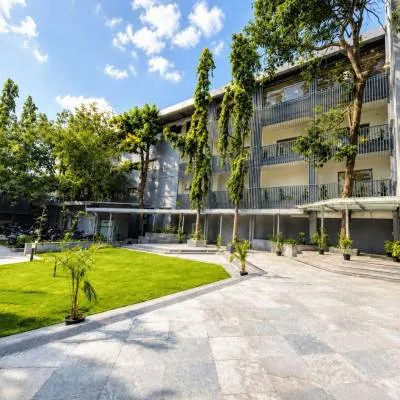
The Delhi government has decided to restart the construction of about 16,000 semi-built flats meant for the economically weaker sections, which could not be completed due to various reasons. The government has also decided to repair 17,660 flats that have been lying unoccupied for several years and are currently in a dilapidated state. These flats were built by Delhi State Industries and Infrastructure Development Corporation (DSIIDC) under the Jawaharlal Nehru National Urban Renewal Mission (JNNURM) with financial help from the central government. The department of urban development of Delhi government has approved a proposal to repair unoccupied EWS flats and fully construct semi-built units at a cost of Rs 22.10 billion. The proposal is likely to be brought before the expenditure and finance committee of Delhi government soon.

The DSIIDC had taken up the construction of 34,260 low-cost houses under the JNNURM scheme following various surveys conducted during the 1990s and 2000s. According to the Urban Development Department, 17,660 flats have been completed and 16,600 remain in different stages of construction due to various factors, including non-availability of some parts of land parcels. Of the 17,660 flats, DSIIDC has already handed over 1,530 flats—362 at Bawana and 1,168 at Baprola— to Delhi Urban Shelter Improvement Board for allotment to jhuggi dwellers.

See also:
Lodha to invest Rs 39.5 billion on sustainability
Japanese-backed Satya MicroCapital to finance affordable housing


The Delhi government has decided to restart the construction of about 16,000 semi-built flats meant for the economically weaker sections, which could not be completed due to various reasons. The government has also decided to repair 17,660 flats that have been lying unoccupied for several years and are currently in a dilapidated state. These flats were built by Delhi State Industries and Infrastructure Development Corporation (DSIIDC) under the Jawaharlal Nehru National Urban Renewal Mission (JNNURM) with financial help from the central government. The department of urban development of Delhi government has approved a proposal to repair unoccupied EWS flats and fully construct semi-built units at a cost of Rs 22.10 billion. The proposal is likely to be brought before the expenditure and finance committee of Delhi government soon. The DSIIDC had taken up the construction of 34,260 low-cost houses under the JNNURM scheme following various surveys conducted during the 1990s and 2000s. According to the Urban Development Department, 17,660 flats have been completed and 16,600 remain in different stages of construction due to various factors, including non-availability of some parts of land parcels. Of the 17,660 flats, DSIIDC has already handed over 1,530 flats—362 at Bawana and 1,168 at Baprola— to Delhi Urban Shelter Improvement Board for allotment to jhuggi dwellers.See also: Lodha to invest Rs 39.5 billion on sustainability Japanese-backed Satya MicroCapital to finance affordable housing

Next Story
Infrastructure Urban

Implementation Status of Jal Jeevan Mission

Since August 2019 the Government has implemented Jal Jeevan Mission to provide assured potable water through household tap connections in rural India. At the start of the mission only 32.3 million (mn) rural households, representing 16.7 per cent, were reported to have tap water connections. States and union territories have reported that 125.8 mn additional rural households have since been provided with tap connections. As a result, of about 193.6 mn rural households roughly 158.2 mn, or 81.71 per cent, are reported to have tap water supply at home.\n\nThe State, district and village level st..

Next Story
Infrastructure Urban

Jal Jeevan Mission Reaches Eighty One Per Cent Rural Coverage

The Government reported substantial progress under the Jal Jeevan Mission, launched in August 2019 to provide tap water to every rural household. At launch only 32.3 million (mn) rural households had tap connections and states and Union territories reported provision of 125.8 mn additional households by March 2026. Consequently, out of about 193.6 mn rural households around 158.2 mn, or 81.71 per cent, are reported to have tap water at home. The Finance Minister announced extension of the mission until 2028 in the 2025-26 budget speech. The Swachh Bharat Mission Grameen, launched in October 20..

Next Story
Infrastructure Urban

Empowering Local Governance for Sustainable Rural Water Supply

The Ministry of Jal Shakti has aligned the Jal Jeevan Mission (JJM) with the 73rd Amendment to strengthen village level planning and community ownership of water supply. Gram Panchayats, village water and sanitation committees and Pani Samitis are to plan, implement, manage and maintain piped water systems, with gram sabha processes formalising handover and oversight. Implementation support agencies including non government organisations, community based organisations and self help groups have been empanelled to train local committees and promote women participation. Under JJM, the department ..

Advertisement

Subscribe to Our Newsletter

Get daily newsletters around different themes from Construction world.

STAY CONNECTED

Advertisement

Advertisement

Advertisement