



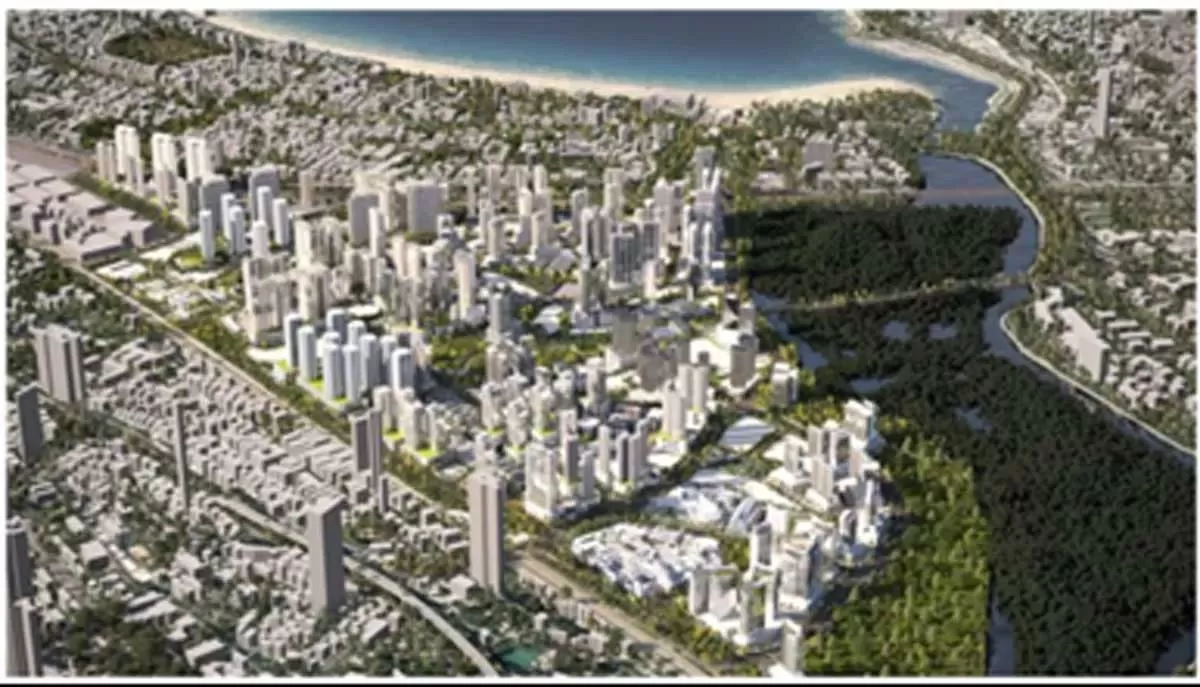
Dharavi Reimagined Rs 957.9 Billion Makeover
Construction World got a sneak peek at the plan submitted and approved by the Maharashtra Government a few days ago. Here are a few insights from the plan. When we spoke to SVR Srinivas, CEO of the Dharavi Redevelopment Project, last month, the plans were still under wraps. Today, with the development blueprint in hand, the vision is beginning to take shape—with timelines, phases, and goals now clearly defined.
Imagine Dharavi in 2031 — no longer a crowded slum but a thriving, green, and modern community with wide walkways, clean parks, and fast metro connections. This dream is becoming reality with the Rs 957.9 billion Dharavi Redevelopment Project, set to impact nearly 5 lakh lives.
Spanning 173.9 ha within the 253.27-ha notified area, this massive project is a joint effort between the Maharashtra Government (20 per cent equity) and Adani Properties (80 per cent equity), with construction already underway and Rs 45.63 billion invested.
Though Dharavi’s total area is 251 ha, only 43 per cent (about 109 ha) is developable after accounting for roads, open spaces, and protected zones. Within this space, 72,000 new homes and commercial units will be built, designed to support a diverse community.
Tenement Assumption | ||
Sr No. | Particulars | No. of Tenements |
1 | Resi. Rehab Units | 49,832 |
2 | Res. Renewal Units | 8,700 |
3 | Com. + Industrial Rehab | 12,458 |
4 | Com. Renewal | 1,010 |
Total Units | 72,000 | |
DNA Land Area | |||
Sr No. | Particulars | Proposed Land area (In Hectares) | Per Cent
|
A | Gross Area | 251.24
| 100 Per Cent |
| less Roads
| 44.25
| 17.61 Per Cent
|
| less Excluded Properties | 43.78 | 17.43 Per Cent |
| less Non-Buildable Areas | 2.83
| 1.13 Per Cent
|
| less Open Spaces | 40.31
| 16.05 Per Cent
|
| less Buildable Amenities | 4.50
| 1.79 Per Cent
|
| less Public Amenities | 4.05
| 1.61 Per Cent
|
| less RLDA Plot | 2.52
| 1.00 Per Cent
|
B | Net Developable Area
| 108.99
| 43.38 Per Cent
|
| Per Cent of Gross Area | 2.52 Per Cent
|
|
Advanced digital door-to-door surveys using drones and LiDAR are ensuring every resident is counted. Eligible residents will receive new homes inside Dharavi. Those not eligible will be provided rental housing elsewhere in Mumbai, with a rent-to-own option.

Metro Line 11 is being extended into Dharavi, forming a multi-modal transit hub that connects metro lines, suburban railways, and bus terminals. Five new entry points and road upgrades will reduce congestion and improve access.

Dharavi’s unique industrial ecosystem — over 20,000 small units — will be carefully clustered and preserved, sustaining livelihoods while modernizing infrastructure.

To support those who relocate, the government has allocated over 540 acres of land for affordable rental housing across Mumbai, with 63.51 acre already handed over at key locations including Kurla, Deonar, and Mulund.

This redevelopment is more than a construction project — it is a pathway to dignity, opportunity, and hope. If successful, Dharavi’s transformation will set a new global standard for inclusive urban renewal.
Related Stories
Gold Stories



Interio by Godrej launches modular workplace solutions
Interio by Godrej has launched Workscapes, a modular workplace solutions category designed to help organisations configure and adapt workspaces to changing requirements. The portfolio combines mobile and compatible furniture and support elements that can be rearranged across different work modes without changes to fixed layouts.Workscapes includes Collaboration Tables, Privacy Solutions, Mobile Markerboards and Space Dividers, Power Solutions, Storage and Support Elements, Meeting and Presentation Tools, and Seating Elements. The range is designed for focused work, collaboration, informal disc..

CAFE-III Gives Auto Industry Investment Clarity
The government’s new Corporate Average Fuel Economy (CAFE-III) norms have provided the automobile industry with a clearer framework for technology investments, according to industry representatives. The framework seeks to balance environmental objectives with flexibility for manufacturers while encouraging the adoption of flex-fuel vehicles and biofuels. Society of Indian Automobile Manufacturers (SIAM) President Shenu Agarwal said the five-year framework would give automakers greater predictability to plan investments and accelerate innovation. He said the regulation established annual targ..

Mines Ministry to Auction Two Offshore Mineral Blocks in Andaman Sea
The Ministry of Mines will launch an auction of two offshore mineral blocks in the Andaman Sea on Thursday, seeking to unlock India’s offshore mineral potential and strengthen long-term mineral resource security. The blocks will be offered under a composite licence, which permits exploration and development activities in accordance with the applicable regulatory framework. The ministry said the auction was intended to encourage systematic exploration, attract investment and promote the use of advanced technologies for offshore mineral exploration and development. The initiative is also aimed..
Related Articles
Latest Updates













