DTCP ramps up action against illegal constructions in Gurugram
Real Estate

DTCP ramps up action against illegal constructions in Gurugram

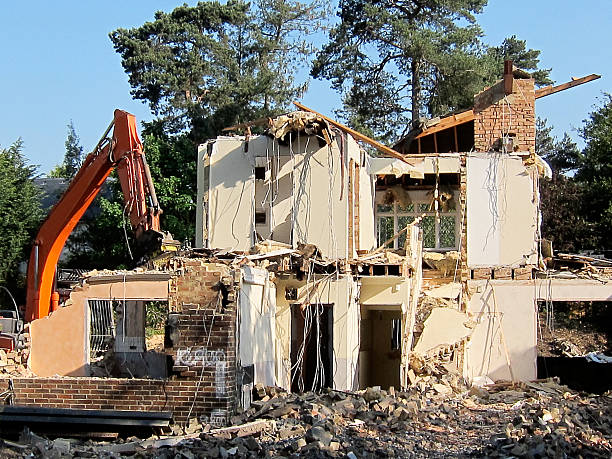
The Department of Town and Country Planning (DTCP) Haryana has moved against illegal constructions on agricultural land on the outskirts of Gurugram. DTCP demolished over 100 farmhouses built on 200 acres of agricultural land in various parts of the city in 2020.

The builders target areas like Sohna and Wazirpur to construct illegal farmhouses in the midst of the Covid-19 pandemic.

According to Haryana government policy, the minimum area for low-density farmhouse colonies is 25 acres, but many of these developers built farmhouses on smaller plots of land without permission.

The department is now planning to step up enforcement against illegal farmhouses and verify the documents of existing farmhouses in Sohna and other areas, cites RS Batth, the district town planner.

Batth claimed that while the officials were busy with Covid-related duties, some builders took advantage of the pandemic and the resulting lockdown to lay a network of internal roads, erect electric poles and construct boundary walls.

The builders also enticed potential buyers by portraying the project as a lucrative investment opportunity.

He added that the proliferation of illegal farmhouses, particularly in Sohna, is due to low land costs, the presence of resorts and farmhouses in the area, and the scenic beauty and abundance of greenery.

Nearly 80 illegal farmhouses were demolished earlier this month in Kiranki village near the Westin Sohna resort in Sohna, which were being developed in two 30-acre colonies each.

Image Source


Also read: Gurugram demolition drive: 3 illegal colonies razed

Also read: Jammu Municipal Corporation demolishes illegal construction

The Department of Town and Country Planning (DTCP) Haryana has moved against illegal constructions on agricultural land on the outskirts of Gurugram. DTCP demolished over 100 farmhouses built on 200 acres of agricultural land in various parts of the city in 2020. The builders target areas like Sohna and Wazirpur to construct illegal farmhouses in the midst of the Covid-19 pandemic. According to Haryana government policy, the minimum area for low-density farmhouse colonies is 25 acres, but many of these developers built farmhouses on smaller plots of land without permission. The department is now planning to step up enforcement against illegal farmhouses and verify the documents of existing farmhouses in Sohna and other areas, cites RS Batth, the district town planner. Batth claimed that while the officials were busy with Covid-related duties, some builders took advantage of the pandemic and the resulting lockdown to lay a network of internal roads, erect electric poles and construct boundary walls. The builders also enticed potential buyers by portraying the project as a lucrative investment opportunity. He added that the proliferation of illegal farmhouses, particularly in Sohna, is due to low land costs, the presence of resorts and farmhouses in the area, and the scenic beauty and abundance of greenery. Nearly 80 illegal farmhouses were demolished earlier this month in Kiranki village near the Westin Sohna resort in Sohna, which were being developed in two 30-acre colonies each. Image Source Also read: Gurugram demolition drive: 3 illegal colonies razed Also read: Jammu Municipal Corporation demolishes illegal construction

Next Story
Infrastructure Energy

Vedanta Aluminium Uses 1.57 bn Units of Green Energy in FY25

Vedanta Aluminium, India’s largest aluminium producer, recently reported consumption of 1.57 billion units of renewable energy in FY25, marking a significant milestone in its 2030 decarbonisation roadmap. The company also achieved an 8.96 per cent reduction in greenhouse gas (GHG) emissions intensity compared to FY21, reinforcing its leadership in India’s low-carbon manufacturing transition. During FY25, Vedanta Aluminium expanded its renewable energy portfolio through long-term power purchase agreements, strengthening its strategy to source nearly 1,500 MW of renewable power over the lon..

Next Story
Real Estate

Oberoi Group to Develop Luxury Resort at Makaibari Tea Estate

EIH Limited, the flagship company of The Oberoi Group, has announced the signing of a management agreement to develop an Oberoi luxury resort at the iconic Makaibari Tea Estate in Darjeeling. The project marks a key milestone in the Group’s long-term strategy of creating distinctive hospitality experiences in rare and environmentally significant locations. Established in 1859, Makaibari is one of the world’s oldest tea estates and is globally recognised for its Himalayan landscape, primary forests and exceptional biodiversity. Spread across 1,236 acres, the estate houses one of the world..

Next Story
Real Estate

GHV Infra Secures Rs 1.09 Bn EPC Order in Jamshedpur

GHV Infra Projects Ltd, a fast-growing EPC company in India’s infrastructure and construction sector, has recently secured a Rs 1.09 billion work order in Jamshedpur, Jharkhand. Awarded by a reputed group entity, the contract covers end-to-end civil construction, mechanical, electrical and plumbing (MEP) systems, along with high-quality finishing works for a large building development. The project will be executed over a 30-month period, with defined benchmarks for quality, safety and timely delivery. The order strengthens GHV Infra’s footprint in Jamshedpur, a key industrial hub known fo..

Advertisement

Subscribe to Our Newsletter

Get daily newsletters around different themes from Construction world.

STAY CONNECTED

Advertisement

Advertisement

Advertisement

Advertisement

Open In App