




+
Half of Bengaluru Properties Skip Annual Tax
Real Estate

Half of Bengaluru Properties Skip Annual Tax

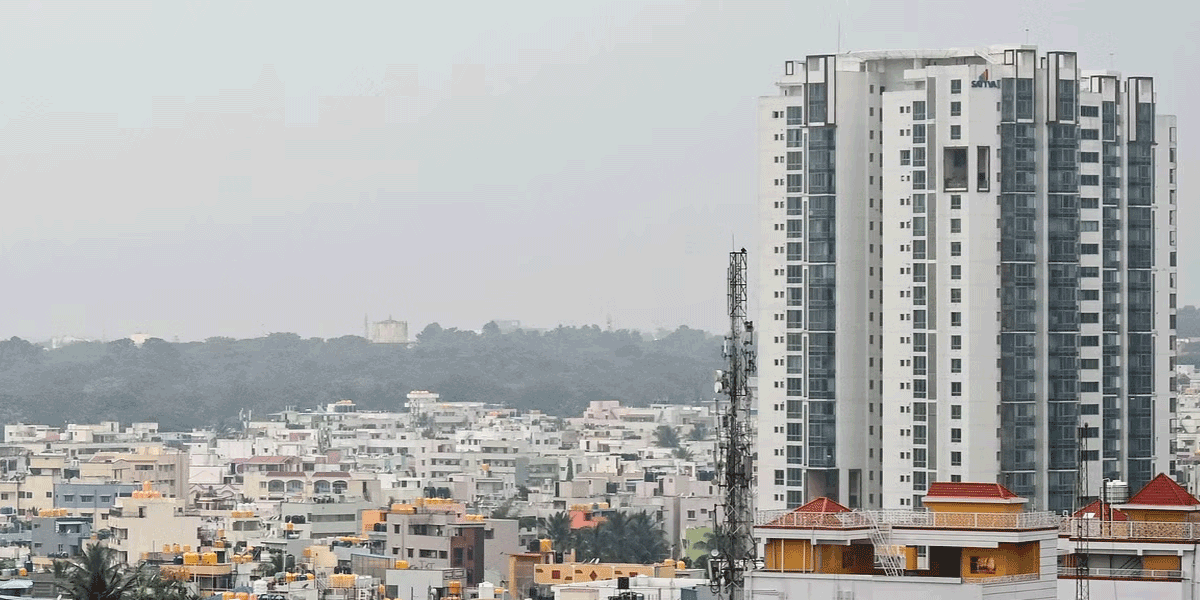
A concerning trend has emerged in Bengaluru, where one in two properties is reportedly not paying the required annual tax. The data indicates a significant lapse in property tax compliance, posing potential challenges for municipal revenue and city development projects. The non-payment trend raises questions about the effectiveness of tax collection mechanisms and the need for enhanced enforcement measures to ensure financial sustainability for urban development in Bengaluru.

As the city continues to grow and evolve, addressing the issue of non-compliance becomes crucial for maintaining the financial health of municipal bodies and sustaining urban infrastructure projects. The alarming statistics highlight the imperative for local authorities to streamline and strengthen the property tax collection process, ensuring that property owners fulfill their civic responsibilities.

The non-payment trend not only impacts municipal revenue but also affects the overall capacity of local bodies to provide essential services and maintain city infrastructure. It underscores the need for a comprehensive approach to address the root causes of tax evasion and to encourage a culture of responsible property ownership in Bengaluru.

Addressing the challenge of non-payment requires a strategic and coordinated effort between municipal authorities and property owners to foster a transparent and accountable system. The data serves as a call to action for Bengaluru's civic administration to reevaluate and enhance its property tax collection mechanisms to ensure sustainable urban development.

A concerning trend has emerged in Bengaluru, where one in two properties is reportedly not paying the required annual tax. The data indicates a significant lapse in property tax compliance, posing potential challenges for municipal revenue and city development projects. The non-payment trend raises questions about the effectiveness of tax collection mechanisms and the need for enhanced enforcement measures to ensure financial sustainability for urban development in Bengaluru. As the city continues to grow and evolve, addressing the issue of non-compliance becomes crucial for maintaining the financial health of municipal bodies and sustaining urban infrastructure projects. The alarming statistics highlight the imperative for local authorities to streamline and strengthen the property tax collection process, ensuring that property owners fulfill their civic responsibilities. The non-payment trend not only impacts municipal revenue but also affects the overall capacity of local bodies to provide essential services and maintain city infrastructure. It underscores the need for a comprehensive approach to address the root causes of tax evasion and to encourage a culture of responsible property ownership in Bengaluru. Addressing the challenge of non-payment requires a strategic and coordinated effort between municipal authorities and property owners to foster a transparent and accountable system. The data serves as a call to action for Bengaluru's civic administration to reevaluate and enhance its property tax collection mechanisms to ensure sustainable urban development.

Next Story
Infrastructure Urban

Implementation Status of Jal Jeevan Mission

Since August 2019 the Government has implemented Jal Jeevan Mission to provide assured potable water through household tap connections in rural India. At the start of the mission only 32.3 million (mn) rural households, representing 16.7 per cent, were reported to have tap water connections. States and union territories have reported that 125.8 mn additional rural households have since been provided with tap connections. As a result, of about 193.6 mn rural households roughly 158.2 mn, or 81.71 per cent, are reported to have tap water supply at home.\n\nThe State, district and village level st..

Next Story
Infrastructure Urban

Jal Jeevan Mission Reaches Eighty One Per Cent Rural Coverage

The Government reported substantial progress under the Jal Jeevan Mission, launched in August 2019 to provide tap water to every rural household. At launch only 32.3 million (mn) rural households had tap connections and states and Union territories reported provision of 125.8 mn additional households by March 2026. Consequently, out of about 193.6 mn rural households around 158.2 mn, or 81.71 per cent, are reported to have tap water at home. The Finance Minister announced extension of the mission until 2028 in the 2025-26 budget speech. The Swachh Bharat Mission Grameen, launched in October 20..

Next Story
Infrastructure Urban

Empowering Local Governance for Sustainable Rural Water Supply

The Ministry of Jal Shakti has aligned the Jal Jeevan Mission (JJM) with the 73rd Amendment to strengthen village level planning and community ownership of water supply. Gram Panchayats, village water and sanitation committees and Pani Samitis are to plan, implement, manage and maintain piped water systems, with gram sabha processes formalising handover and oversight. Implementation support agencies including non government organisations, community based organisations and self help groups have been empanelled to train local committees and promote women participation. Under JJM, the department ..

Advertisement

Subscribe to Our Newsletter

Get daily newsletters around different themes from Construction world.

STAY CONNECTED

Advertisement

Advertisement

Advertisement