Home Charging Meets 90 Per Cent of India's EV Demand
Real Estate

Home Charging Meets 90 Per Cent of India's EV Demand

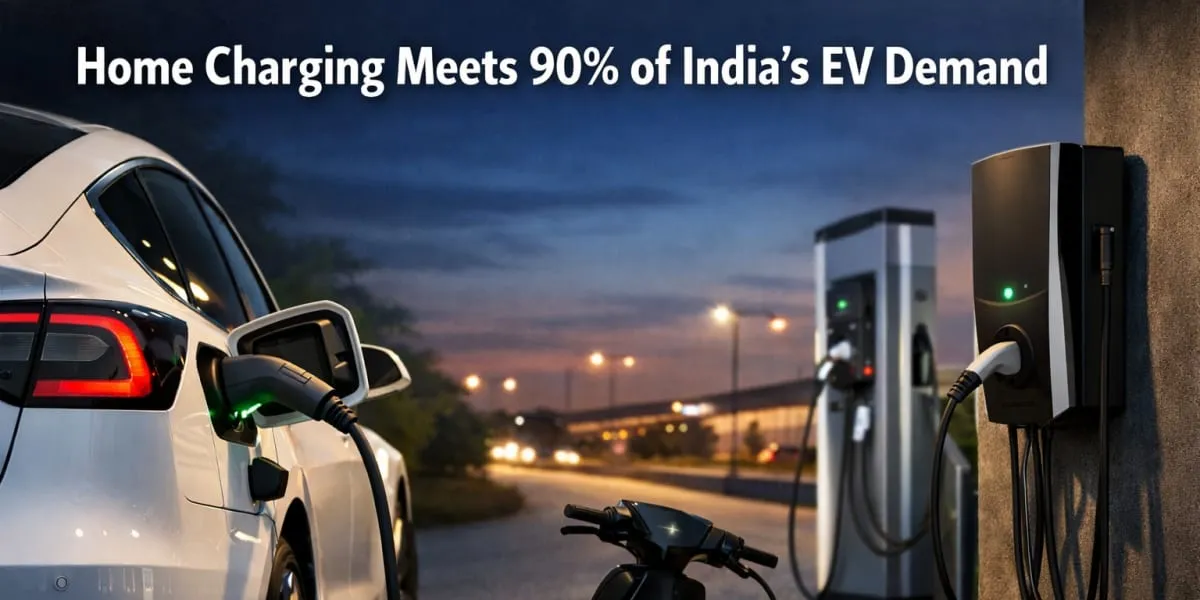
The study found that home charging meets 90 per cent of India's electric vehicle energy demand and that overnight residential charging remains the most practical and cost effective option for most users. It said two and three-wheelers dominate the country's EV market and that public charging infrastructure, while expanding rapidly, remains concentrated in major cities and along highways. The report added that public networks are unlikely to supplant residential charging for daily needs given current deployment patterns.

The researchers identified five barriers to residential charging: inadequate electrical infrastructure, limited parking and rental housing, fragmented approvals, low consumer awareness and the cost of upgrades. It found many users rely on household sockets, extension cords and shared connections instead of dedicated chargers because of these constraints, increasing electrical and fire safety risks, reducing reliability and potentially affecting battery performance.

To address these gaps the report recommended establishing a National Residential EV Readiness Framework (NRERF) to bring together existing standards, regulations and guidelines into a single implementation roadmap for residential charging. It proposed introducing dedicated indicators such as charger installations, EV sub-meter approvals, load enhancement requests and electrical readiness assessments to track preparedness alongside EV adoption. The authors also urged promotion of dedicated EV metering and certified charging equipment and the integration of EV-ready provisions into building bye-laws, redevelopment projects and affordable housing schemes.

The study called for standardised guidelines for charger placement across housing types, improved coordination between vehicle purchases, charger installation and utility approvals, and targeted financial support for electrical upgrades in older buildings, rental housing and low-income households. It noted that aligning residential infrastructure with rising vehicle adoption will be crucial as more households switch to electric mobility and that managed home charging is key for grid resilience and energy planning. The report projected that EV-related electricity consumption will rise from zero point two per cent of India's total electricity demand in 2024 to around six per cent by 2035.

"Join industry leaders at RAHSTA Expo, India's premier platform for roads, highways and traffic infrastructure. Register now to explore innovations, network with experts and shape the future of mobility."

The study found that home charging meets 90 per cent of India's electric vehicle energy demand and that overnight residential charging remains the most practical and cost effective option for most users. It said two and three-wheelers dominate the country's EV market and that public charging infrastructure, while expanding rapidly, remains concentrated in major cities and along highways. The report added that public networks are unlikely to supplant residential charging for daily needs given current deployment patterns. The researchers identified five barriers to residential charging: inadequate electrical infrastructure, limited parking and rental housing, fragmented approvals, low consumer awareness and the cost of upgrades. It found many users rely on household sockets, extension cords and shared connections instead of dedicated chargers because of these constraints, increasing electrical and fire safety risks, reducing reliability and potentially affecting battery performance. To address these gaps the report recommended establishing a National Residential EV Readiness Framework (NRERF) to bring together existing standards, regulations and guidelines into a single implementation roadmap for residential charging. It proposed introducing dedicated indicators such as charger installations, EV sub-meter approvals, load enhancement requests and electrical readiness assessments to track preparedness alongside EV adoption. The authors also urged promotion of dedicated EV metering and certified charging equipment and the integration of EV-ready provisions into building bye-laws, redevelopment projects and affordable housing schemes. The study called for standardised guidelines for charger placement across housing types, improved coordination between vehicle purchases, charger installation and utility approvals, and targeted financial support for electrical upgrades in older buildings, rental housing and low-income households. It noted that aligning residential infrastructure with rising vehicle adoption will be crucial as more households switch to electric mobility and that managed home charging is key for grid resilience and energy planning. The report projected that EV-related electricity consumption will rise from zero point two per cent of India's total electricity demand in 2024 to around six per cent by 2035.

Next Story
Infrastructure Urban

ABS Marine Sees CRISIL Credit Rating Upgrade

ABS Marine Services has secured an upgrade to its long term and short term credit ratings from CRISIL, reflecting improved profitability and revenue growth through long term contracts. CRISIL moved the long term rating from BBB+/Stable to A-/Stable and revised the short term rating from A2 to A2+. The action signals strengthened financial metrics and operational resilience. The company benefited from durable client relationships with firms such as ONGC and Schlumberger. The rating decision followed stronger cash flows and an enlarged bank loan facility, which increased from Rs 3,705 million (m..

Next Story
Infrastructure Transport

Project BRAHMANK Marks 16 Years Of Strategic Roads In Arunachal

Project BRAHMANK is marking 16 years of work to establish strategic road and bridge links across Arunachal Pradesh, maintaining and developing 811 kilometres of roads and nearly 86 bridges that range from small culverts to large steel and arch bridges. These transport links are described as critical for ensuring year-round movement of defence personnel, equipment and essential supplies while improving everyday travel for people in remote villages. The project balances national security requirements with regional development by focusing on reliable access in challenging terrain. Notable enginee..

Next Story
Infrastructure Transport

Longleng CSOs Give One Week Ultimatum Over Two-Lane Highway

Civil society organisations (CSOs) in Longleng district have demanded immediate restoration of the deteriorating Changtongya–Longleng two-lane road and sought a detailed status report on the stalled construction within one week. The demand followed a consultative meeting convened under the Phom Peoples' Council (PPC) to discuss welfare and development concerns. PPC president YB Angam Phom said prolonged non-maintenance had caused hardship to commuters and affected transportation, local commerce and the district's development. The meeting urged authorities to undertake immediate restoration a..

Advertisement

Subscribe to Our Newsletter

Get daily newsletters around different themes from Construction world.

STAY CONNECTED

Advertisement

Advertisement

Advertisement