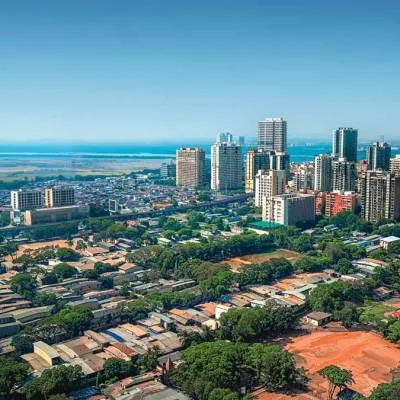
How Govt Vision is Powering Real Estate Growth in Dholera
Real Estate

How Govt Vision is Powering Real Estate Growth in Dholera

Dholera, a planned smart city in Gujarat, is quickly emerging as a prominent real estate destination in India. What was once a sparsely populated region is now part of one of the country’s most ambitious infrastructure projects. Located about 100 km from Ahmedabad, Dholera is being developed as the first and largest node of the Delhi-Mumbai Industrial Corridor (DMIC). The government’s focused vision, combined with strong infrastructure investments, is driving the real estate potential of this area. 

A Strategic Vision for a Smart City
The Government of India, along with the Gujarat State Government, has laid out a long-term vision for Dholera Special Investment Region (DSIR). It is designed to be a self-sustaining, greenfield industrial city with world-class infrastructure. The master plan includes smart governance, sustainable living, plug-and-play infrastructure, and seamless connectivity. With a total area of approximately 920 sq km and an activation area of 22.5 sq km in the first phase, Dholera is meant to attract global investors, manufacturers, and residents. 

This vision is translating into action, with multiple projects already underway. The Dholera Industrial City Development Limited (DICDL) is spearheading the execution. The city is being developed in phases to ensure controlled growth and long-term scalability. 

Massive Infrastructure Investment
The government has announced investments of Rs 3,000 crore in infrastructure in Dholera. These funds are being utilized to develop essential infrastructure such as roads, water supply systems, storm drainage, power distribution, and ICT networks. Additionally, a 250-meter-wide expressway is being built to directly connect Ahmedabad to Dholera, dramatically cutting travel time. 

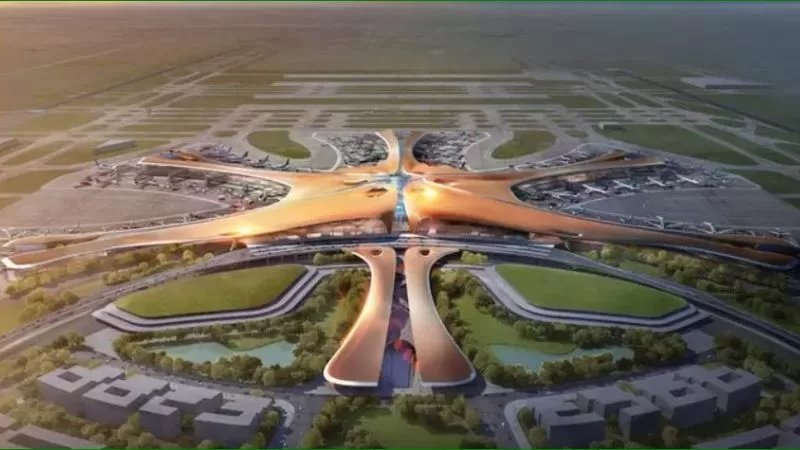
One of the biggest infrastructure highlights is the Dholera International Airport, currently under construction near Navagam village. With a budget of over Rs 1,300 crore, the airport will have two runways and is expected to handle up to 50 million passengers annually once fully developed. This airport alone is projected to significantly increase the area’s accessibility and attractiveness to global investors. 

Plug-and-Play Industrial Facilities 
Dholera’s appeal lies in its ready-to-move industrial facilities. Plots come with pre-installed utilities such as power, water, and internet. This plug-and-play model has already attracted large-scale interest from both Indian and foreign companies. The Gujarat government recently announced that over 30 MoUs were signed with industries looking to invest in the region, particularly in electronics, semiconductors, and renewable energy. 

Reliance Industries has expressed a strong interest in developing a large-scale renewable energy hub in Dholera, aligning with its broader push towards clean energy and sustainability. The proposed project is expected to play a key role in accelerating the region’s transition to green energy while attracting ancillary industries and infrastructure investment.
Similarly, the Tata Group is exploring plans to set up a lithium-ion battery manufacturing plant in Dholera, supporting its focus on electric mobility and clean energy solutions.
These developments have a cascading impact on the real estate sector, increasing demand for industrial and commercial spaces, along with housing for employees and support staff. 

Affordable Land and Early-Mover Advantage 
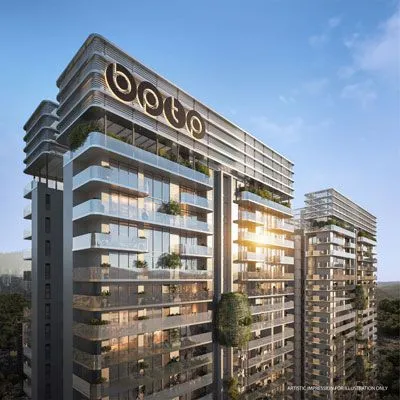
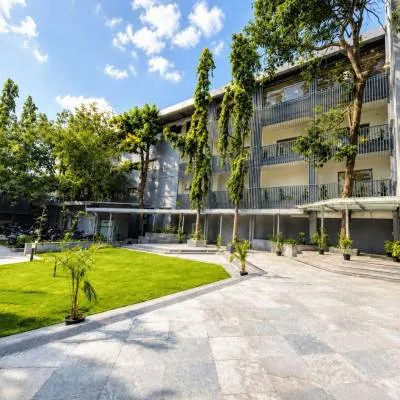
Compared to other industrial and urban centres, land in Dholera remains relatively affordable. This provides a strong incentive for developers, early investors, and homebuyers. As infrastructure matures, land prices are expected to appreciate. Many private developers have already launched residential and commercial projects aimed at professionals expected to move into the region in the next 5-10 years. 

Because the city is being planned from scratch, developers and planners are incorporating green spaces, smart grids, and sustainable mobility solutions from the beginning. This long-term approach is attracting people who are seeking better urban living experiences compared to existing overcrowded cities. 

Employment Generation and Economic Impact
The government projects that Dholera will create over 800,000 jobs in the long term. With several industrial corridors being linked to this region, and with the smart city infrastructure taking shape, the region is expected to attract both skilled and semi-skilled workers. 

Increased employment opportunities directly fuel demand for residential housing, retail spaces, hospitality, and education infrastructure. This ecosystem development is vital for sustained real estate growth. Schools, colleges, hospitals, and shopping complexes are already being planned as part of Dholera’s integrated development framework. 

Connectivity That Fuels Growth 
Apart from the Dholera Expressway and International Airport, the area is also set to benefit from a proposed metro rail linking Ahmedabad to Dholera. This will further enhance the accessibility of the city, making the daily commute more feasible for professionals and business travelers. 

Additionally, the region lies close to the Dahej and Pipavav ports, providing seamless access to maritime trade routes. This multi-modal connectivity makes Dholera ideal for manufacturing and export-driven business. 

Policy Support and Ease of Doing Business
Dholera benefits from policy-level support that simplifies land acquisition, approvals, and taxation. As part of the Gujarat Industrial Policy 2020, several incentives such as capital subsidies, interest assistance, and stamp duty reimbursements are offered to investors setting up operations in Dholera. 

This ease of doing business makes it easier for real estate developers to get approvals and for industries to begin operations quickly. The government’s single-window clearance system and active investor facilitation decks further streamline the process. 

Growing Interest from NRIs and Investors 
With a futuristic urban design and proximity to Gujarat’s economic hubs, Dholera is drawing interest from NRIs and institutional investors. NRIs are viewing Dholera as a high-potential long-term investment, owing to its strategic location and government-led development roadmap. Real estate consultancies report a rise in enquiries and land bookings from investors in the US, Canada, and the Middle East. Private equity firms and real estate funds have also started exploring opportunities in Dholera. This institutional interest helps build confidence and ensures that development stays on track. 

Conclusion 
Dholera is more than a real estate story; it is a reflection of how coordinated planning, infrastructure investment, and visionary governance can transform an underdeveloped region into a thriving urban and industrial hub. As infrastructure projects like the international airport and expressway near completion, and as more businesses move in, the area is poised for a major boom in both commercial and residential real estate. The government’s consistent policy support and focus on making Dholera a global investment destination ensure that its growth will be sustainable in the long term. For investors and developers alike, Dholera presents a rare opportunity to participate in the making of India’s next big city. 

The article is authored by Shuubham Garg, Founder and CEO of Garg Realty Group

Dholera, a planned smart city in Gujarat, is quickly emerging as a prominent real estate destination in India. What was once a sparsely populated region is now part of one of the country’s most ambitious infrastructure projects. Located about 100 km from Ahmedabad, Dholera is being developed as the first and largest node of the Delhi-Mumbai Industrial Corridor (DMIC). The government’s focused vision, combined with strong infrastructure investments, is driving the real estate potential of this area. A Strategic Vision for a Smart CityThe Government of India, along with the Gujarat State Government, has laid out a long-term vision for Dholera Special Investment Region (DSIR). It is designed to be a self-sustaining, greenfield industrial city with world-class infrastructure. The master plan includes smart governance, sustainable living, plug-and-play infrastructure, and seamless connectivity. With a total area of approximately 920 sq km and an activation area of 22.5 sq km in the first phase, Dholera is meant to attract global investors, manufacturers, and residents. This vision is translating into action, with multiple projects already underway. The Dholera Industrial City Development Limited (DICDL) is spearheading the execution. The city is being developed in phases to ensure controlled growth and long-term scalability. Massive Infrastructure InvestmentThe government has announced investments of Rs 3,000 crore in infrastructure in Dholera. These funds are being utilized to develop essential infrastructure such as roads, water supply systems, storm drainage, power distribution, and ICT networks. Additionally, a 250-meter-wide expressway is being built to directly connect Ahmedabad to Dholera, dramatically cutting travel time. One of the biggest infrastructure highlights is the Dholera International Airport, currently under construction near Navagam village. With a budget of over Rs 1,300 crore, the airport will have two runways and is expected to handle up to 50 million passengers annually once fully developed. This airport alone is projected to significantly increase the area’s accessibility and attractiveness to global investors. Plug-and-Play Industrial Facilities Dholera’s appeal lies in its ready-to-move industrial facilities. Plots come with pre-installed utilities such as power, water, and internet. This plug-and-play model has already attracted large-scale interest from both Indian and foreign companies. The Gujarat government recently announced that over 30 MoUs were signed with industries looking to invest in the region, particularly in electronics, semiconductors, and renewable energy. Reliance Industries has expressed a strong interest in developing a large-scale renewable energy hub in Dholera, aligning with its broader push towards clean energy and sustainability. The proposed project is expected to play a key role in accelerating the region’s transition to green energy while attracting ancillary industries and infrastructure investment.Similarly, the Tata Group is exploring plans to set up a lithium-ion battery manufacturing plant in Dholera, supporting its focus on electric mobility and clean energy solutions.These developments have a cascading impact on the real estate sector, increasing demand for industrial and commercial spaces, along with housing for employees and support staff. Affordable Land and Early-Mover Advantage Compared to other industrial and urban centres, land in Dholera remains relatively affordable. This provides a strong incentive for developers, early investors, and homebuyers. As infrastructure matures, land prices are expected to appreciate. Many private developers have already launched residential and commercial projects aimed at professionals expected to move into the region in the next 5-10 years. Because the city is being planned from scratch, developers and planners are incorporating green spaces, smart grids, and sustainable mobility solutions from the beginning. This long-term approach is attracting people who are seeking better urban living experiences compared to existing overcrowded cities. Employment Generation and Economic ImpactThe government projects that Dholera will create over 800,000 jobs in the long term. With several industrial corridors being linked to this region, and with the smart city infrastructure taking shape, the region is expected to attract both skilled and semi-skilled workers. Increased employment opportunities directly fuel demand for residential housing, retail spaces, hospitality, and education infrastructure. This ecosystem development is vital for sustained real estate growth. Schools, colleges, hospitals, and shopping complexes are already being planned as part of Dholera’s integrated development framework. Connectivity That Fuels Growth Apart from the Dholera Expressway and International Airport, the area is also set to benefit from a proposed metro rail linking Ahmedabad to Dholera. This will further enhance the accessibility of the city, making the daily commute more feasible for professionals and business travelers. Additionally, the region lies close to the Dahej and Pipavav ports, providing seamless access to maritime trade routes. This multi-modal connectivity makes Dholera ideal for manufacturing and export-driven business. Policy Support and Ease of Doing BusinessDholera benefits from policy-level support that simplifies land acquisition, approvals, and taxation. As part of the Gujarat Industrial Policy 2020, several incentives such as capital subsidies, interest assistance, and stamp duty reimbursements are offered to investors setting up operations in Dholera. This ease of doing business makes it easier for real estate developers to get approvals and for industries to begin operations quickly. The government’s single-window clearance system and active investor facilitation decks further streamline the process. Growing Interest from NRIs and Investors With a futuristic urban design and proximity to Gujarat’s economic hubs, Dholera is drawing interest from NRIs and institutional investors. NRIs are viewing Dholera as a high-potential long-term investment, owing to its strategic location and government-led development roadmap. Real estate consultancies report a rise in enquiries and land bookings from investors in the US, Canada, and the Middle East. Private equity firms and real estate funds have also started exploring opportunities in Dholera. This institutional interest helps build confidence and ensures that development stays on track. Conclusion Dholera is more than a real estate story; it is a reflection of how coordinated planning, infrastructure investment, and visionary governance can transform an underdeveloped region into a thriving urban and industrial hub. As infrastructure projects like the international airport and expressway near completion, and as more businesses move in, the area is poised for a major boom in both commercial and residential real estate. The government’s consistent policy support and focus on making Dholera a global investment destination ensure that its growth will be sustainable in the long term. For investors and developers alike, Dholera presents a rare opportunity to participate in the making of India’s next big city. The article is authored by Shuubham Garg, Founder and CEO of Garg Realty Group

Next Story
Infrastructure Transport

MMRDA advances 250 m on Orange Gate–Marine Drive tunnel

The Mumbai Metropolitan Region Development Authority (MMRDA) has completed 250 m of underground tunnelling for the Orange Gate–Marine Drive Urban Road Tunnel using India’s largest slurry shield tunnel boring machine (TBM) deployed for an urban road project.The project involves twin tunnels extending over 7 km beneath critical transport corridors, including Central Railway, Western Railway and Metro Line 3. The work requires high-precision engineering to navigate densely developed urban infrastructure.Once completed, the tunnel is expected to reduce travel time between Orange Gate and Marin..

Next Story
Infrastructure Urban

Hindustan Zinc Pays Rs 188.46 Billion in FY26

Hindustan Zinc contributed Rs 188.46 billion to the public exchequer in FY 2025-26, according to its 9th Tax Transparency Report. The contribution, equivalent to 46 per cent of the company’s revenue, included direct and indirect taxes, government royalties, dividends to the Government of India, withholding taxes and other statutory levies.The company’s five-year cumulative contribution to the exchequer stood at Rs 915.72 billion. In FY26, Hindustan Zinc reported revenue of Rs 408.44 billion, EBITDA of Rs 221.62 billion and profit after tax of Rs 138.32 billion. It also achieved its highest..

Next Story
Infrastructure Urban

World of Concrete India 2026 Opens in Mumbai

Informa Markets in India will host the 12th edition of World of Concrete India 2026 from 3–5 June 2026 at the Bombay Exhibition Centre, Mumbai. The specialised B2B exhibition will bring together manufacturers, suppliers, contractors, developers, architects, consultants, infrastructure companies, project leaders and government stakeholders.The event is expected to feature over 350 brands and more than 18,000 trade professionals. It will cover concrete and cement, dry mortar, precast technologies, formwork, construction chemicals, industrial and commercial flooring, scaffolding, safety solutio..

Advertisement

Subscribe to Our Newsletter

Get daily newsletters around different themes from Construction world.

STAY CONNECTED

Advertisement

Advertisement

Advertisement