+
Industrial warehousing, a key demand driver for foreign investors
Real Estate

Industrial warehousing, a key demand driver for foreign investors

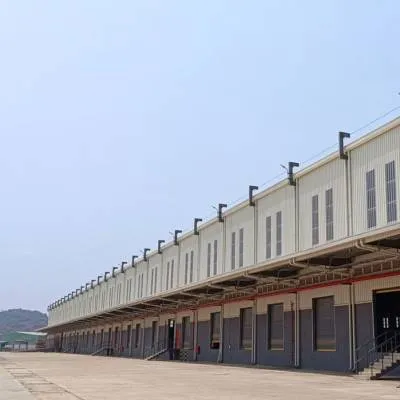
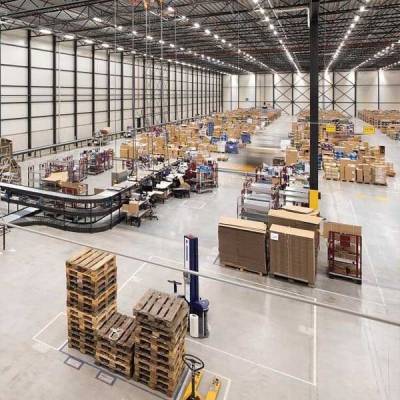
The warehouse industry of India is driven by superior logistics and warehousing systems. The key element of a warehouse influences the entire value chain starting from raw material to customer satisfaction. Logistics and industrial parks have lately seen the entry of many foreign investors. The advent of such a trend has taken place either by potential partnership with a local developer or by liaison with global warehousing operators. 

The growth has taken place with increasing demand from occupants who are mainly into manufacturing sector, 3PL and e-commerce. The implementation of GST, infrastructure status and such other conducive government reforms has enabled the sector in driving demand for large integrated warehousing parks. Rapid infrastructure development within the country has made the unit economics more favourable as it has unlocked more land for better prices. It has also made transport easier and faster modern logistics and industrial parks are built in order to help companies avoid the extra sweat by building light manufacturing and warehousing space infrastructure of Grade-A quality. Various factors like operational conveniences and cost efficiency influence the growing demand of Grade-A warehousing. 

The requirement has been observed to be more in metro cities and towns that are supported by presence of manufacturing hubs in the vicinity, access to transport network and exim facilities. There is also a rising consumption driven demand among urban population in the metropolitan areas. Currently, well-planned logistic parks are built with a commitment to offer superior experience and faster deliveries across major cities of India. Factors like strategic land positioning makes business more convenient. To meet global standards, the park operators like us keep eye on attention to detail and provide globally approved amenities like dormitories, round the clock canteen, first aid centres, 24 x 7 security coverage, an excellent fire fighting system, and ample parking space for trucks so the flow of the traffic remains unaffected and does not hamper workflow. Superior logistic parks like Embassy Industrial Parks even provide built-to-suit industrial parks where clients can have up to 2x expandability. Big clients land up doing repeat business with the park providers across markets. The current modern large-size logistics parks are either backed by capital invested from the global market or they are local associations with a global warehousing operators. 

Recent reports from analyst firms state that theindustrial and logistics segment has attracted US$ 500 million (about Rs 3,500 crore) investment since 2017, post the implementation of GST.Sovereign and pension funds love stable and perpetual cash flow and this is an asset class similar to commercial that provides predictable cash flow with growth. A survey conducted recently, showed 70 per cent of respondents indicating improvement in ease of doing business mainly on account of e-way billing which has removed a lot of bottlenecks in cargo storage and transport business. About 80 per cent of respondents felt that the taxation system improved, while 40 per cent respondents indicated that they will increase the number of warehouses in thisnew post-GST era. The position for warehousing will strengthen and estimated that leasing will be about 10-15 per cent higher this year at 25-30 million sq ft. compared to last year.Leasing of warehousing spaces went up by 31 per cent to over 13 million sq ft across eight major cities in the first half of 2019, driven mainly by demand from third party-logistic and e-commerce firms. E-commerce is where IT was in early 2000’s. India’s online retail is less than 4 per cent today so scope to go up is huge. Digital revolution is directly helping industrial space growth. With fundamental shifts across the industrial and logistic sector in last two years and increased demand for quality space, developers such as us, are more likely to build compliant large-sized spaces.

The warehouse industry of India is driven by superior logistics and warehousing systems. The key element of a warehouse influences the entire value chain starting from raw material to customer satisfaction. Logistics and industrial parks have lately seen the entry of many foreign investors. The advent of such a trend has taken place either by potential partnership with a local developer or by liaison with global warehousing operators. The growth has taken place with increasing demand from occupants who are mainly into manufacturing sector, 3PL and e-commerce. The implementation of GST, infrastructure status and such other conducive government reforms has enabled the sector in driving demand for large integrated warehousing parks. Rapid infrastructure development within the country has made the unit economics more favourable as it has unlocked more land for better prices. It has also made transport easier and faster modern logistics and industrial parks are built in order to help companies avoid the extra sweat by building light manufacturing and warehousing space infrastructure of Grade-A quality. Various factors like operational conveniences and cost efficiency influence the growing demand of Grade-A warehousing. The requirement has been observed to be more in metro cities and towns that are supported by presence of manufacturing hubs in the vicinity, access to transport network and exim facilities. There is also a rising consumption driven demand among urban population in the metropolitan areas. Currently, well-planned logistic parks are built with a commitment to offer superior experience and faster deliveries across major cities of India. Factors like strategic land positioning makes business more convenient. To meet global standards, the park operators like us keep eye on attention to detail and provide globally approved amenities like dormitories, round the clock canteen, first aid centres, 24 x 7 security coverage, an excellent fire fighting system, and ample parking space for trucks so the flow of the traffic remains unaffected and does not hamper workflow. Superior logistic parks like Embassy Industrial Parks even provide built-to-suit industrial parks where clients can have up to 2x expandability. Big clients land up doing repeat business with the park providers across markets. The current modern large-size logistics parks are either backed by capital invested from the global market or they are local associations with a global warehousing operators. Recent reports from analyst firms state that theindustrial and logistics segment has attracted US$ 500 million (about Rs 3,500 crore) investment since 2017, post the implementation of GST.Sovereign and pension funds love stable and perpetual cash flow and this is an asset class similar to commercial that provides predictable cash flow with growth. A survey conducted recently, showed 70 per cent of respondents indicating improvement in ease of doing business mainly on account of e-way billing which has removed a lot of bottlenecks in cargo storage and transport business. About 80 per cent of respondents felt that the taxation system improved, while 40 per cent respondents indicated that they will increase the number of warehouses in thisnew post-GST era. The position for warehousing will strengthen and estimated that leasing will be about 10-15 per cent higher this year at 25-30 million sq ft. compared to last year.Leasing of warehousing spaces went up by 31 per cent to over 13 million sq ft across eight major cities in the first half of 2019, driven mainly by demand from third party-logistic and e-commerce firms. E-commerce is where IT was in early 2000’s. India’s online retail is less than 4 per cent today so scope to go up is huge. Digital revolution is directly helping industrial space growth. With fundamental shifts across the industrial and logistic sector in last two years and increased demand for quality space, developers such as us, are more likely to build compliant large-sized spaces.

Next Story
Infrastructure Transport

MMRDA Installs 325-Tonne Steel Spans on Mumbai Metro Line 4

The Mumbai Metropolitan Region Development Authority (MMRDA) has achieved a key construction milestone on Metro Line 4 with the successful installation of three large steel spans at Bhandup West during overnight operations.The spans, together weighing 325 metric tonnes, were launched using eight heavy-duty cranes and 12 multi-axle vehicles. The operation required precise engineering and meticulous planning to minimise disruption in the densely populated suburban area.Due to effective inter-agency coordination, the work—originally scheduled across four nights—was completed within just two n..

Next Story
Infrastructure Transport

CMRL Targets March 2027 Opening for Vadapalani–Panagal Park

Chennai Metro Rail Limited (CMRL) is progressing as scheduled to open the Vadapalani–Panagal Park section of Phase II’s Corridor 4 by March 2027. The 3.5 km underground stretch is part of the 26.1 km Corridor 4 connecting Lighthouse with Poonamallee Bypass.Construction activities are advancing steadily, with tunnelling works between Vadapalani and Panagal Park already completed. Track-laying operations are expected to commence shortly. At Panagal Park station, structural works have reached the concourse and platform levels, while excavation continues at the lowest level.CMRL is also consid..

Next Story
Infrastructure Transport

Maha-Metro Invites Pune Metro Civil Maintenance Bids

Maharashtra Metro Rail Corporation Limited (Maha-Metro) has invited bids for the annual civil maintenance contract of the Pune Metro Rail Project. The tender, bearing ID and number P1-O&M-20/2025, is scheduled to close on 23 February 2026, with a pre-bid meeting slated for 10 February 2026. The earnest money deposit (EMD) for the contract is Rs 3,50,500, and the duration of the contract is one year.The scope of work includes annual civil maintenance of 28 elevated and underground stations, 28.079 km of elevated viaduct including steel bridges, 12.15 km of tunnels, and two depots under the ..

Advertisement

Subscribe to Our Newsletter

Get daily newsletters around different themes from Construction world.

STAY CONNECTED

Advertisement

Advertisement

Advertisement

Open In App