


+
JDA to sell 180 seized plots to develop colonies
Real Estate

JDA to sell 180 seized plots to develop colonies

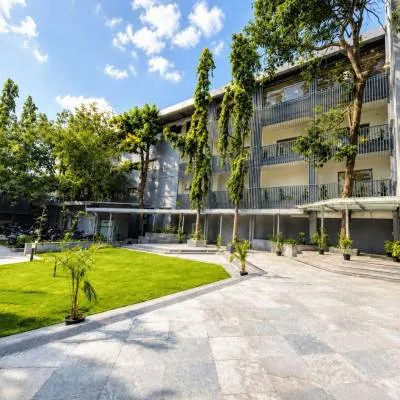
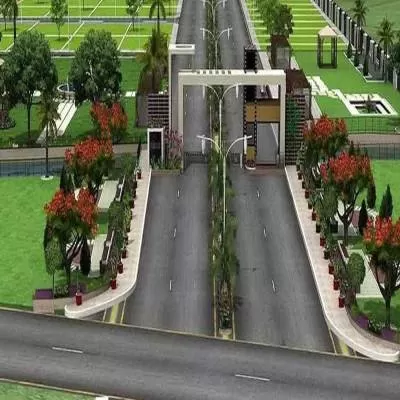
The Jaipur Development Authority (JDA) has seized 180 apartments in separate private colonies and housing cooperative schemes where developers did not develop facilities after getting township permission from the civic body. After selling these plots, the civic body will achieve the development work in these colonies.

The decision will help lakhs of people who were deprived of basic amenities comprising roads, sewerage, parks after buying plots from private developers. An official told the media that from every sanctioned scheme, 12.5% of the land is mortgaged by the developers. If the promoter fails to build the facility, the JDA has the power to sell the land and finish the development in approved colonies.

Since 2015, the civic body has prepared a list of 511 defaulted colonies. After selling plots to the individuals, developers never turn up, and buyers continue to live in under-developed colonies, as there is no other choice. With such drives, other developers will stick to the rules. Though JDA takes action against private developers, it is usually criticised for not conducting development in its colonies.

In the absence of demarcation and facilities, many people who have bought plots in colonies either developed or approved by (JDA) are unable to develop their homes. As per JDA records, there are 134 colonies sanctioned or developed after 2013. In these colonies, about 38,000 apartments have been developed including the economic weaker section (EWS) and lower-income group (LIG). Yet, even after seven years, most of the colonies wear a deserted look in the absence of amenities.

Image Source

Also read: Jaipur Development Authority to decide land use of greenfield airport

The Jaipur Development Authority (JDA) has seized 180 apartments in separate private colonies and housing cooperative schemes where developers did not develop facilities after getting township permission from the civic body. After selling these plots, the civic body will achieve the development work in these colonies. The decision will help lakhs of people who were deprived of basic amenities comprising roads, sewerage, parks after buying plots from private developers. An official told the media that from every sanctioned scheme, 12.5% of the land is mortgaged by the developers. If the promoter fails to build the facility, the JDA has the power to sell the land and finish the development in approved colonies. Since 2015, the civic body has prepared a list of 511 defaulted colonies. After selling plots to the individuals, developers never turn up, and buyers continue to live in under-developed colonies, as there is no other choice. With such drives, other developers will stick to the rules. Though JDA takes action against private developers, it is usually criticised for not conducting development in its colonies. In the absence of demarcation and facilities, many people who have bought plots in colonies either developed or approved by (JDA) are unable to develop their homes. As per JDA records, there are 134 colonies sanctioned or developed after 2013. In these colonies, about 38,000 apartments have been developed including the economic weaker section (EWS) and lower-income group (LIG). Yet, even after seven years, most of the colonies wear a deserted look in the absence of amenities. Image Source Also read: Jaipur Development Authority to decide land use of greenfield airport

Next Story
Infrastructure Urban

Implementation Status of Jal Jeevan Mission

Since August 2019 the Government has implemented Jal Jeevan Mission to provide assured potable water through household tap connections in rural India. At the start of the mission only 32.3 million (mn) rural households, representing 16.7 per cent, were reported to have tap water connections. States and union territories have reported that 125.8 mn additional rural households have since been provided with tap connections. As a result, of about 193.6 mn rural households roughly 158.2 mn, or 81.71 per cent, are reported to have tap water supply at home.\n\nThe State, district and village level st..

Next Story
Infrastructure Urban

Jal Jeevan Mission Reaches Eighty One Per Cent Rural Coverage

The Government reported substantial progress under the Jal Jeevan Mission, launched in August 2019 to provide tap water to every rural household. At launch only 32.3 million (mn) rural households had tap connections and states and Union territories reported provision of 125.8 mn additional households by March 2026. Consequently, out of about 193.6 mn rural households around 158.2 mn, or 81.71 per cent, are reported to have tap water at home. The Finance Minister announced extension of the mission until 2028 in the 2025-26 budget speech. The Swachh Bharat Mission Grameen, launched in October 20..

Next Story
Infrastructure Urban

Empowering Local Governance for Sustainable Rural Water Supply

The Ministry of Jal Shakti has aligned the Jal Jeevan Mission (JJM) with the 73rd Amendment to strengthen village level planning and community ownership of water supply. Gram Panchayats, village water and sanitation committees and Pani Samitis are to plan, implement, manage and maintain piped water systems, with gram sabha processes formalising handover and oversight. Implementation support agencies including non government organisations, community based organisations and self help groups have been empanelled to train local committees and promote women participation. Under JJM, the department ..

Advertisement

Subscribe to Our Newsletter

Get daily newsletters around different themes from Construction world.

STAY CONNECTED

Advertisement

Advertisement

Advertisement