Mhada Agrees to Take Up Cluster Redevelopment in South Mumbai
Real Estate

Mhada Agrees to Take Up Cluster Redevelopment in South Mumbai

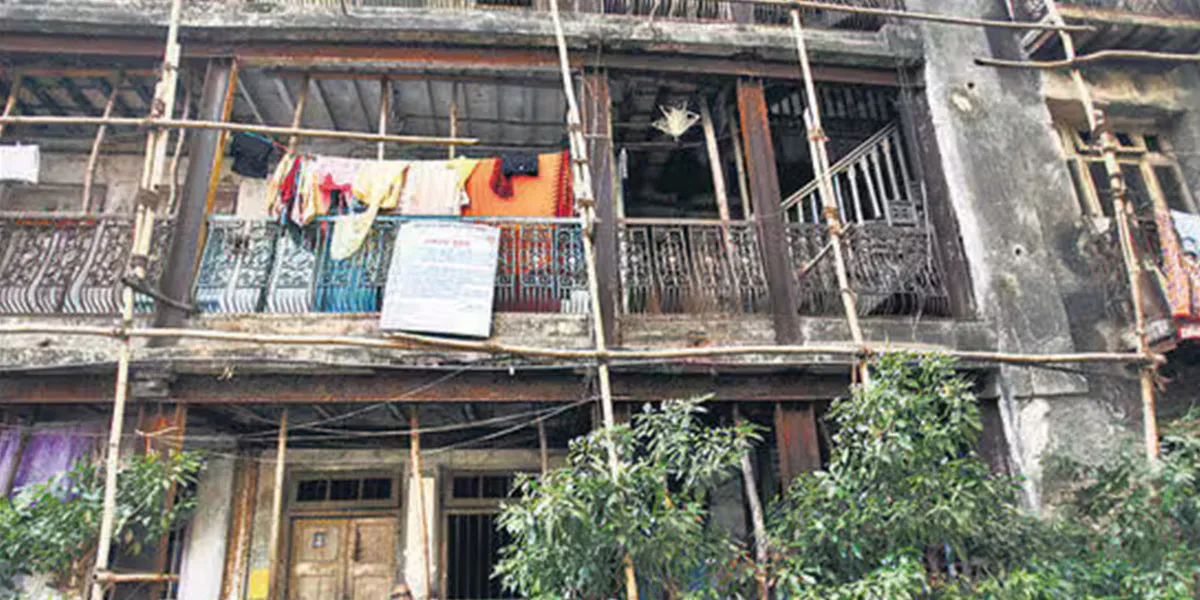
The long-stalled redevelopment of 388 old and dilapidated Mhada buildings in South Mumbai may finally progress, with the state housing authority agreeing to undertake the projects if housing societies approach it in groups. Efforts by these societies to attract private developers had repeatedly failed, prompting the Maharashtra Housing and Area Development Authority (Mhada) to intervene.

The primary reason for delay has been the small plot size of these buildings, making redevelopment commercially unviable for private builders. A lack of consensus among residents of various societies further complicated the process.

Around 27,373 families currently live in these deteriorating structures, located across neighbourhoods such as Colaba, Girgaon, Mumbadevi, Byculla, Sewri, Prabhadevi and Mahim. Each building typically houses 80–100 flats, each measuring 100–200 sq ft.

These buildings had originally been redeveloped by Mhada three to four decades ago, replacing nearly 900 old structures. They now require fresh redevelopment, but many stand on plots of 400–600 sq metres, considered too small to attract private investment. Attempts by some societies to combine plots also stalled due to disagreements.

The Mhada Sangharsh Kruti Samiti, representing the affected buildings, recently received written confirmation from the office of Praveen Darekar, head of the state’s Self-Redevelopment Authority, that Mhada will take up redevelopment if societies pass a collective resolution. “If a group of buildings comes together and resolves that Mhada should undertake a redevelopment project, Mhada will undertake that redevelopment project,” the letter states.

Eknath Rajapure, working president of the samiti, welcomed the decision, estimating that nearly a third of the buildings could benefit. He noted that previous attempts to appoint private developers had failed, and since the land belongs to Mhada, the agency’s willingness to take up cluster redevelopment offers crucial relief. He also urged the government to implement the proposed Mini-Cluster Redevelopment Policy in Mumbai, which would halve the minimum plot-size requirement from the current 4,000 sq ft.

However, another segment of Mhada buildings remains stuck. More than four years after amendments to the Maharashtra Housing and Area Development Act, 1976 empowered Mhada to acquire stalled cessed buildings, not a single project has been fully acquired or progressed, according to information revealed through a Right to Information request.

Since the introduction of Section 91(A) in July 2021, Mhada’s Mumbai Building Repairs & Reconstruction Board (MBRRB) issued takeover notices for around 90 stalled projects. It later moved to take over only 14, and eventually just seven projects received state approval.

“There is near-total paralysis in the acquisition system that was intended to rescue tenants trapped in legal and financial limbo,” said Jeetendra Ghadge, founder of the Young Whistleblowers Foundation. He criticised the slow pace, saying Mhada must fast-track acquisitions rather than extend time to developers.

“For thousands of tenants who have already lost their homes, hope is rapidly diminishing,” he added.

The long-stalled redevelopment of 388 old and dilapidated Mhada buildings in South Mumbai may finally progress, with the state housing authority agreeing to undertake the projects if housing societies approach it in groups. Efforts by these societies to attract private developers had repeatedly failed, prompting the Maharashtra Housing and Area Development Authority (Mhada) to intervene. The primary reason for delay has been the small plot size of these buildings, making redevelopment commercially unviable for private builders. A lack of consensus among residents of various societies further complicated the process. Around 27,373 families currently live in these deteriorating structures, located across neighbourhoods such as Colaba, Girgaon, Mumbadevi, Byculla, Sewri, Prabhadevi and Mahim. Each building typically houses 80–100 flats, each measuring 100–200 sq ft. These buildings had originally been redeveloped by Mhada three to four decades ago, replacing nearly 900 old structures. They now require fresh redevelopment, but many stand on plots of 400–600 sq metres, considered too small to attract private investment. Attempts by some societies to combine plots also stalled due to disagreements. The Mhada Sangharsh Kruti Samiti, representing the affected buildings, recently received written confirmation from the office of Praveen Darekar, head of the state’s Self-Redevelopment Authority, that Mhada will take up redevelopment if societies pass a collective resolution. “If a group of buildings comes together and resolves that Mhada should undertake a redevelopment project, Mhada will undertake that redevelopment project,” the letter states. Eknath Rajapure, working president of the samiti, welcomed the decision, estimating that nearly a third of the buildings could benefit. He noted that previous attempts to appoint private developers had failed, and since the land belongs to Mhada, the agency’s willingness to take up cluster redevelopment offers crucial relief. He also urged the government to implement the proposed Mini-Cluster Redevelopment Policy in Mumbai, which would halve the minimum plot-size requirement from the current 4,000 sq ft. However, another segment of Mhada buildings remains stuck. More than four years after amendments to the Maharashtra Housing and Area Development Act, 1976 empowered Mhada to acquire stalled cessed buildings, not a single project has been fully acquired or progressed, according to information revealed through a Right to Information request. Since the introduction of Section 91(A) in July 2021, Mhada’s Mumbai Building Repairs & Reconstruction Board (MBRRB) issued takeover notices for around 90 stalled projects. It later moved to take over only 14, and eventually just seven projects received state approval. “There is near-total paralysis in the acquisition system that was intended to rescue tenants trapped in legal and financial limbo,” said Jeetendra Ghadge, founder of the Young Whistleblowers Foundation. He criticised the slow pace, saying Mhada must fast-track acquisitions rather than extend time to developers. “For thousands of tenants who have already lost their homes, hope is rapidly diminishing,” he added.

Next Story
Equipment

Schwing Stetter India Unveils New Innovations at Excon 2025

Schwing Stetter India unveiled more than 20 new machines at Excon 2025, marking one of its most significant showcases and introducing several India-first technologies to the construction equipment sector. The company launched the country’s first 56-metre boom pump designed and manufactured in India, the first fully electric truck mixer, the first CNG mixer variant and the first hybrid boom pump. Executives said the launch portfolio was engineered to support India’s move toward faster, greener and more vertically oriented infrastructure through advanced engineering, clean-energy solutions a..

Next Story
Infrastructure Energy

SEPC Resolves Hindustan Copper Dispute, Wins Rs 725 Mn Order

Engineering, procurement and construction firm SEPC Ltd has recently settled a dispute with Hindustan Copper Ltd (HCL) and secured a mining infrastructure order valued at Rs 725 million from the state-owned company. SEPC informed the stock exchanges that it has executed a settlement deed with HCL, bringing closure to all inter-se claims and counterclaims arising from arbitration proceedings. As part of the settlement, SEPC will receive Rs 304.5 million as full and final payment, marking the resolution of all pending disputes between the two entities. The company also stated that Hindustan Co..

Next Story
Infrastructure Energy

20% Ethanol Blending Cuts India’s CO2 Emissions by 73.6 Mn Tonnes

Union Road Transport and Highways Minister Nitin Gadkari recently said that India has reduced carbon dioxide emissions by 73.6 million metric tonnes due to the adoption of 20 per cent ethanol blending in petrol. He made the statement while replying to supplementary questions during the Question Hour in the Lok Sabha. Describing ethanol as a green fuel, the minister said it plays a key role in reducing pollution while also supporting higher incomes for farmers. He underlined that ethanol blending contributes both to environmental sustainability and rural economic growth. Nitin Gadkari also po..

Advertisement

Subscribe to Our Newsletter

Get daily newsletters around different themes from Construction world.

STAY CONNECTED

Advertisement

Advertisement

Advertisement

Advertisement

Open In App