
HAVER & BOECKER Expands QUAT2RO AI Suite
Technology

HAVER & BOECKER Expands QUAT2RO AI Suite

"HAVER & BOECKER has expanded its QUAT2RO® AI product suite with the addition of QUAT2RO® BAGcheck and QUAT2RO® SEALcheck, strengthening automation capabilities for industrial packing and filling operations across the cement, building materials, food and chemical sectors.

The new AI-powered systems complement existing solutions — QUAT2RO® MATEXcheck and QUAT2RO® VALVEcheck — creating a comprehensive inspection and detection ecosystem for enclosed automated packing lines.

Enhancing Accuracy at Both Ends of the Line

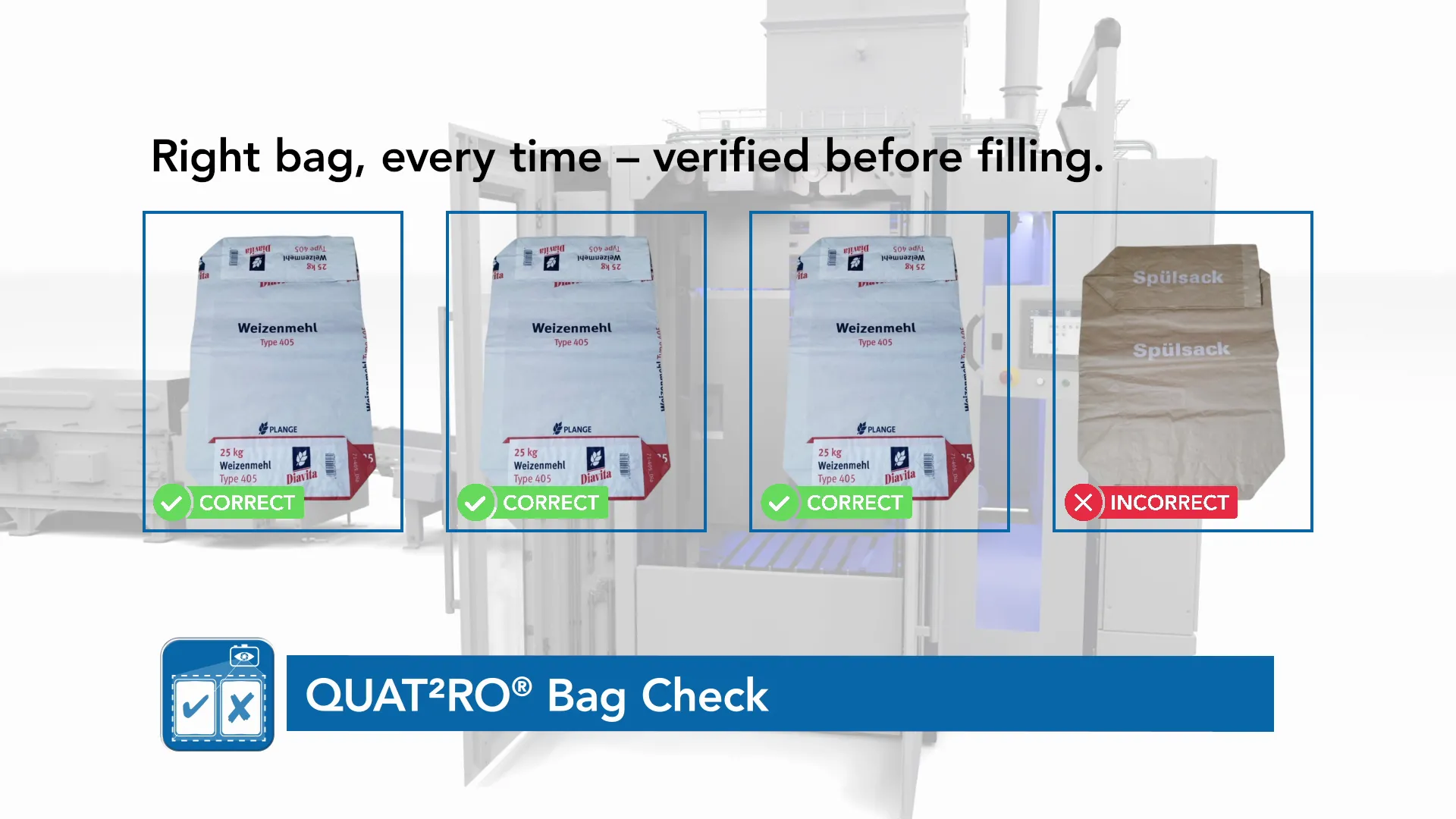
QUAT2RO® BAGcheck prevents incorrect bag usage by verifying the bag placed in the magazine before filling begins. Using image recognition technology, the system identifies bag types inside closed packing machines such as the INTEGRA® IV. If an incorrect bag is detected, the line halts, allowing operators to intervene before product is filled into the wrong packaging.

At the discharge end, QUAT2RO® SEALcheck monitors sealed valve bags as they exit the packing line. A camera system detects loose product or sealing issues on the conveyor and diverts unsealed or defective bags before palletising, reducing downstream quality risks.

AI During the Filling Process

During filling, QUAT2RO® VALVEcheck ensures that valve bags are properly positioned on filling spouts. Improperly opened bags are automatically rejected for manual rework, helping reduce downtime and product wastage.

QUAT2RO® MATEXcheck, introduced in 2024, monitors material discharge inside the filling machine using a high-speed camera system. Unlike earlier weight-based detection systems that could result in delays of up to two seconds — potentially causing product losses of up to 60 kg — MATEXcheck detects anomalies instantly and stops the process, significantly reducing waste and clean-up downtime. These systems can operate at filling speeds of up to 30 kg per second.

Integrated Monitoring with QUAT2RO Connect

All four AI systems can be integrated through QUAT2RO® Connect, enabling deeper data visibility and operational analytics across the packing line. The HMI dashboard provides performance insights to help identify bottlenecks and streamline processes. HAVER & BOECKER’s in-house AI specialists also monitor connected systems to support optimisation and troubleshooting.

Both QUAT2RO® Connect and the AI modules can be retrofitted into existing enclosed automated packing machines or specified as optional upgrades on new installations.

With this expansion, HAVER & BOECKER is reinforcing its push towards intelligent, self-learning packing systems that enhance efficiency, reduce material loss and strengthen quality assurance across industrial sectors."

HAVER & BOECKER has expanded its QUAT2RO® AI product suite with the addition of QUAT2RO® BAGcheck and QUAT2RO® SEALcheck, strengthening automation capabilities for industrial packing and filling operations across the cement, building materials, food and chemical sectors.The new AI-powered systems complement existing solutions — QUAT2RO® MATEXcheck and QUAT2RO® VALVEcheck — creating a comprehensive inspection and detection ecosystem for enclosed automated packing lines.Enhancing Accuracy at Both Ends of the LineQUAT2RO® BAGcheck prevents incorrect bag usage by verifying the bag placed in the magazine before filling begins. Using image recognition technology, the system identifies bag types inside closed packing machines such as the INTEGRA® IV. If an incorrect bag is detected, the line halts, allowing operators to intervene before product is filled into the wrong packaging.At the discharge end, QUAT2RO® SEALcheck monitors sealed valve bags as they exit the packing line. A camera system detects loose product or sealing issues on the conveyor and diverts unsealed or defective bags before palletising, reducing downstream quality risks.AI During the Filling ProcessDuring filling, QUAT2RO® VALVEcheck ensures that valve bags are properly positioned on filling spouts. Improperly opened bags are automatically rejected for manual rework, helping reduce downtime and product wastage.QUAT2RO® MATEXcheck, introduced in 2024, monitors material discharge inside the filling machine using a high-speed camera system. Unlike earlier weight-based detection systems that could result in delays of up to two seconds — potentially causing product losses of up to 60 kg — MATEXcheck detects anomalies instantly and stops the process, significantly reducing waste and clean-up downtime. These systems can operate at filling speeds of up to 30 kg per second.Integrated Monitoring with QUAT2RO ConnectAll four AI systems can be integrated through QUAT2RO® Connect, enabling deeper data visibility and operational analytics across the packing line. The HMI dashboard provides performance insights to help identify bottlenecks and streamline processes. HAVER & BOECKER’s in-house AI specialists also monitor connected systems to support optimisation and troubleshooting.Both QUAT2RO® Connect and the AI modules can be retrofitted into existing enclosed automated packing machines or specified as optional upgrades on new installations.With this expansion, HAVER & BOECKER is reinforcing its push towards intelligent, self-learning packing systems that enhance efficiency, reduce material loss and strengthen quality assurance across industrial sectors.

Next Story
Infrastructure Transport

MMRDA advances 250 m on Orange Gate–Marine Drive tunnel

The Mumbai Metropolitan Region Development Authority (MMRDA) has completed 250 m of underground tunnelling for the Orange Gate–Marine Drive Urban Road Tunnel using India’s largest slurry shield tunnel boring machine (TBM) deployed for an urban road project.The project involves twin tunnels extending over 7 km beneath critical transport corridors, including Central Railway, Western Railway and Metro Line 3. The work requires high-precision engineering to navigate densely developed urban infrastructure.Once completed, the tunnel is expected to reduce travel time between Orange Gate and Marin..

Next Story
Infrastructure Urban

Hindustan Zinc Pays Rs 188.46 Billion in FY26

Hindustan Zinc contributed Rs 188.46 billion to the public exchequer in FY 2025-26, according to its 9th Tax Transparency Report. The contribution, equivalent to 46 per cent of the company’s revenue, included direct and indirect taxes, government royalties, dividends to the Government of India, withholding taxes and other statutory levies.The company’s five-year cumulative contribution to the exchequer stood at Rs 915.72 billion. In FY26, Hindustan Zinc reported revenue of Rs 408.44 billion, EBITDA of Rs 221.62 billion and profit after tax of Rs 138.32 billion. It also achieved its highest..

Next Story
Infrastructure Urban

World of Concrete India 2026 Opens in Mumbai

Informa Markets in India will host the 12th edition of World of Concrete India 2026 from 3–5 June 2026 at the Bombay Exhibition Centre, Mumbai. The specialised B2B exhibition will bring together manufacturers, suppliers, contractors, developers, architects, consultants, infrastructure companies, project leaders and government stakeholders.The event is expected to feature over 350 brands and more than 18,000 trade professionals. It will cover concrete and cement, dry mortar, precast technologies, formwork, construction chemicals, industrial and commercial flooring, scaffolding, safety solutio..

Advertisement

Subscribe to Our Newsletter

Get daily newsletters around different themes from Construction world.

STAY CONNECTED

Advertisement

Advertisement

Advertisement

-->