



Mumbai Sees Highest March Registrations In 14 Years
Real Estate

Mumbai Sees Highest March Registrations In 14 Years

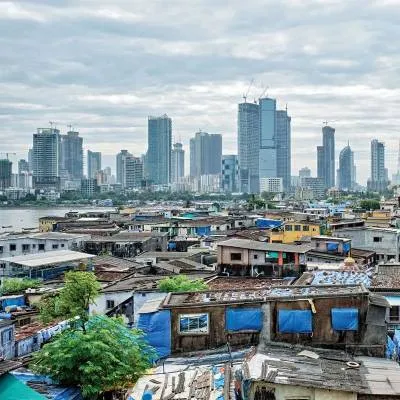
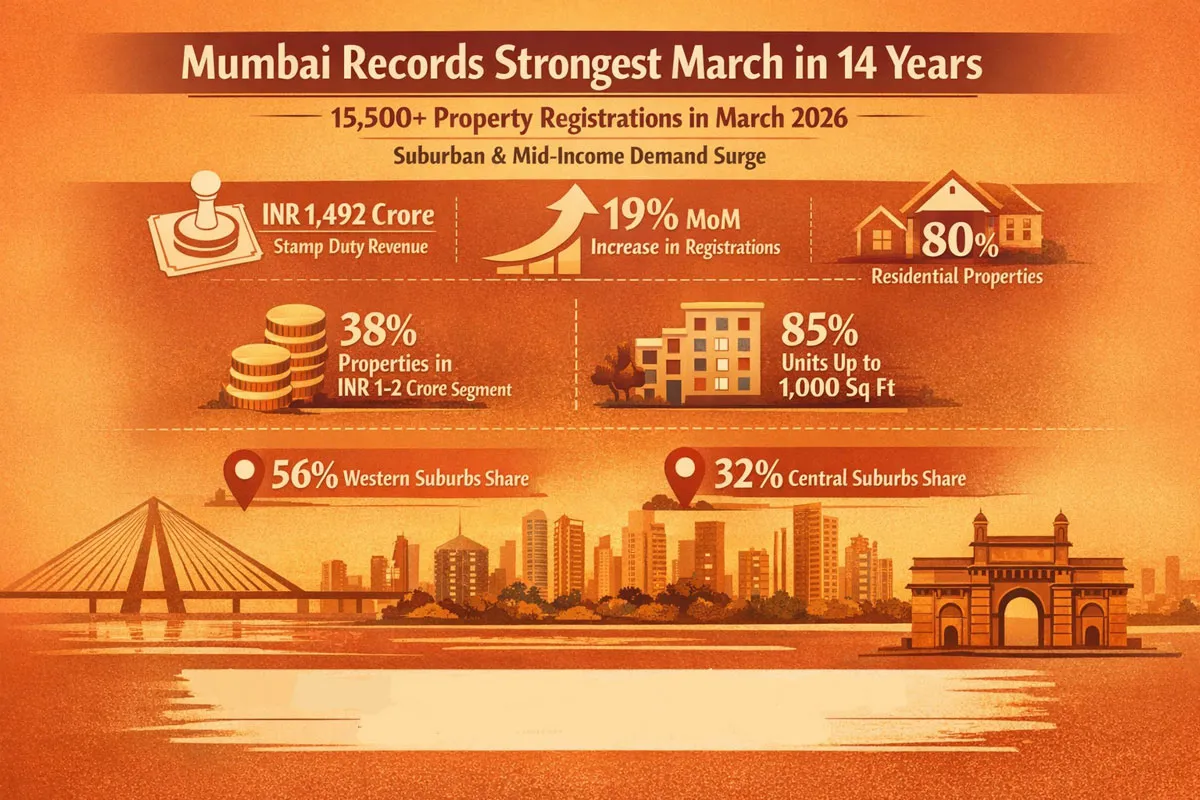
Mumbai’s residential market recorded 15,516 property registrations in March 2026, marking its strongest March performance in 14 years, as per data from Knight Frank India.
The surge translated into stamp duty collections exceeding Rs 14.92 billion, reflecting sustained buyer confidence. On a month-on-month basis, registrations rose 19 per cent over February 2026, while stamp duty collections increased 32 per cent, driven by financial year-end closures.
On a year-on-year basis, volumes remained stable against the high base of March 2025, while stamp duty collections declined marginally by 6 per cent, indicating a shift in ticket-size mix rather than demand slowdown.
Residential assets accounted for nearly 80 per cent of registrations, underscoring end-user demand. The Rs 1–2 crore segment gained share to 38 per cent from 32 per cent, while sub-Rs 1 crore properties declined from 46 per cent to 39 per cent. Higher-value segments remained stable, with Rs 2–5 crore at 17 per cent and Rs 5 crore-plus at 6 per cent.
Prashant Sharma, President, NAREDCO Maharashtra, said, “The robust performance of over 15,500 property registrations in March 2026 reflects the underlying strength of Mumbai’s housing demand, particularly driven by end-users. The steady shift towards the INR 1–2 crore segment indicates a clear aspiration-led upgrade among homebuyers, supported by stable economic conditions and improving affordability. Continued infrastructure push and policy stability will be critical in sustaining this momentum and ensuring supply keeps pace with evolving demand patterns.”
Ram Naik, Co-founder & CEO, The Guardians Real Estate Advisory, said, “The March 2026 registration numbers underline a structurally strong residential market, with demand being largely organic and end-user driven. The 19% month-on-month jump is particularly significant as it highlights a sense of urgency in decision-making toward the financial year-end. What stands out is the growing dominance of the mid-income segment, especially the INR 1–2 crore bracket, signalling that buyers are prioritising quality upgrades over entry-level purchases.”
Kamlesh Thakur, Co-Founder & Managing Director, Srishti Group, said, “The continued dominance of compact homes, especially in the 500–1,000 sq ft category, reaffirms Mumbai’s unique demand dynamics where efficiency and functionality remain key purchase drivers. At the same time, the marginal decline in sub-500 sq ft units indicates a gradual lifestyle upgrade among buyers. This evolution presents an opportunity for developers to design smarter, space-optimised homes that cater to both affordability and aspirational living.”
Shraddha Kedia-Agarwal, Director, Transcon Developers, said, “The marginal YoY growth in registrations, despite an already high base, is a strong indicator of market resilience. While stamp duty collections have seen a slight dip due to a shift in ticket size mix, the sustained transaction volumes highlight healthy absorption levels. The trend clearly points towards an upgrade cycle, where buyers are moving towards better quality homes within the mid-income and premium segments.”

Mumbai’s residential market recorded 15,516 property registrations in March 2026, marking its strongest March performance in 14 years, as per data from Knight Frank India.The surge translated into stamp duty collections exceeding Rs 14.92 billion, reflecting sustained buyer confidence. On a month-on-month basis, registrations rose 19 per cent over February 2026, while stamp duty collections increased 32 per cent, driven by financial year-end closures.On a year-on-year basis, volumes remained stable against the high base of March 2025, while stamp duty collections declined marginally by 6 per cent, indicating a shift in ticket-size mix rather than demand slowdown.Residential assets accounted for nearly 80 per cent of registrations, underscoring end-user demand. The Rs 1–2 crore segment gained share to 38 per cent from 32 per cent, while sub-Rs 1 crore properties declined from 46 per cent to 39 per cent. Higher-value segments remained stable, with Rs 2–5 crore at 17 per cent and Rs 5 crore-plus at 6 per cent.Prashant Sharma, President, NAREDCO Maharashtra, said, “The robust performance of over 15,500 property registrations in March 2026 reflects the underlying strength of Mumbai’s housing demand, particularly driven by end-users. The steady shift towards the INR 1–2 crore segment indicates a clear aspiration-led upgrade among homebuyers, supported by stable economic conditions and improving affordability. Continued infrastructure push and policy stability will be critical in sustaining this momentum and ensuring supply keeps pace with evolving demand patterns.”Ram Naik, Co-founder & CEO, The Guardians Real Estate Advisory, said, “The March 2026 registration numbers underline a structurally strong residential market, with demand being largely organic and end-user driven. The 19% month-on-month jump is particularly significant as it highlights a sense of urgency in decision-making toward the financial year-end. What stands out is the growing dominance of the mid-income segment, especially the INR 1–2 crore bracket, signalling that buyers are prioritising quality upgrades over entry-level purchases.”Kamlesh Thakur, Co-Founder & Managing Director, Srishti Group, said, “The continued dominance of compact homes, especially in the 500–1,000 sq ft category, reaffirms Mumbai’s unique demand dynamics where efficiency and functionality remain key purchase drivers. At the same time, the marginal decline in sub-500 sq ft units indicates a gradual lifestyle upgrade among buyers. This evolution presents an opportunity for developers to design smarter, space-optimised homes that cater to both affordability and aspirational living.”Shraddha Kedia-Agarwal, Director, Transcon Developers, said, “The marginal YoY growth in registrations, despite an already high base, is a strong indicator of market resilience. While stamp duty collections have seen a slight dip due to a shift in ticket size mix, the sustained transaction volumes highlight healthy absorption levels. The trend clearly points towards an upgrade cycle, where buyers are moving towards better quality homes within the mid-income and premium segments.”

Next Story
Real Estate

Bent Collective Unveils Sculptural Papillon Sofa

Bent Collective has introduced the Papillon Sofa, a sculptural seating piece that combines artistic design with everyday comfort. Defined by a fluid silhouette, the sofa features a gently curved backrest, asymmetrical form, rounded seating, a single rolled arm and sleek legs, creating a soft yet expressive presence for contemporary interiors. Upholstered in a soothing blue tone, the Papillon Sofa is designed to bring a sense of calm, movement and visual lightness to living spaces. Its organic form moves away from rigid lines, reflecting the brand’s focus on furniture that is both i..

Next Story
Infrastructure Urban

MHIEC Completes Relay Centre Project In Nagasaki

 Mitsubishi Heavy Industries Environmental & Chemical Engineering Co., Ltd. (MHIEC) has completed construction of the Nanbu Relay Center in Minamishimabara City for the Ken’ou-Kennan Clean Authority in Nagasaki Prefecture. The project includes the development of the new facility and the operation of three relay centres, including the existing Tobu and Seibu sites, under a contract awarded in 2024. The initiative is aimed at enabling the efficient transfer of combustible waste from multiple municipalities to the Ken’ou-Kennan Clean Center in Isahaya City, which is scheduled to co..

Next Story
Infrastructure Urban

Kala Ghoda Boutique Redefines Compact Retail Design

Located in Kala Ghoda, Noir Éclat, an 80 sq ft jewellery boutique by Mint Leaf Design, showcases how compact retail spaces can deliver a high-impact experience. Designed as a ‘jewel box’, the boutique blends Parisian-inspired aesthetics with a monochrome palette of black and white, highlighted by fuchsia accents that add a distinctive visual identity. The design leverages vertical space to overcome size constraints, featuring sculptural wall-mounted busts arranged in grids that transform product displays into artistic installations. Carefully planned lighting enhances depth and creates a..

Advertisement

Subscribe to Our Newsletter

Get daily newsletters around different themes from Construction world.

STAY CONNECTED

Advertisement

Advertisement

Advertisement