


Punawale Housing Project To Reshape Western Pune Growth
Real Estate

Punawale Housing Project To Reshape Western Pune Growth

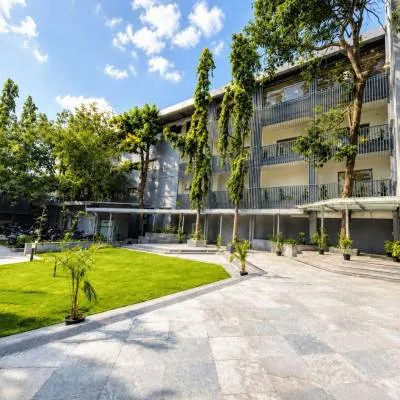
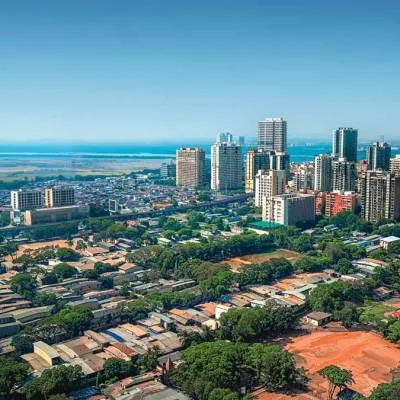
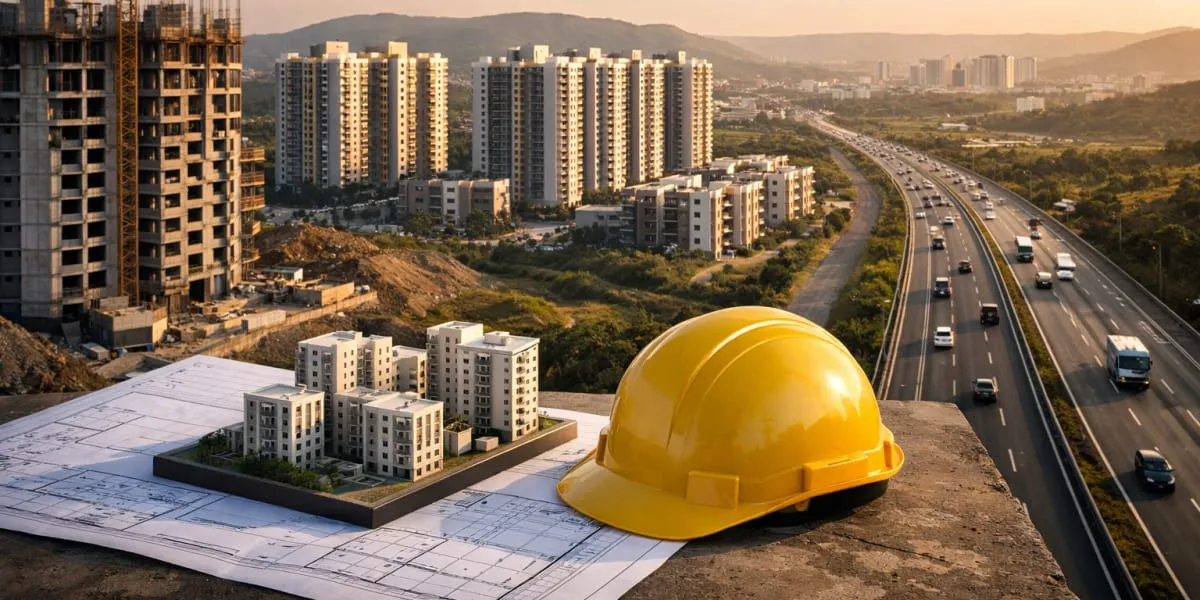
A large-scale housing project in Punawale, on Pune's western corridor, is set to add over 2,000 homes and reflects the city's continued expansion beyond its traditional core into emerging suburban clusters. The development will be delivered in phases on a parcel spanning double-digit acres and is positioned within the mid-to-premium segment, signalling sustained confidence in Pune's housing market. Improved access via the Mumbai–Bangalore Highway and link roads to Hinjawadi's IT corridor has made Punawale a preferred destination for professionals seeking relatively affordable alternatives to central Pune. Urban planners consider such peripheral growth to be reshaping how the city distributes population density and infrastructure demand.\n\nThe project highlights the increasing use of joint development agreements, under which developers partner with landowners to unlock large land parcels without outright acquisition, enabling faster execution while sharing financial risk. This model has become particularly relevant in cities where land fragmentation can slow development, and it allows developers to assemble contiguous development footprints that support integrated planning. At the same time, reliance on such arrangements requires robust governance to align stakeholder interests and ensure timely delivery.\n\nFrom a design and planning perspective, clustered residential developments allow for integrated amenities, open spaces and community infrastructure within a single footprint, but they also place pressure on external civic systems such as water supply, waste management and transport networks. Experts emphasise that future-ready projects must incorporate water-sensitive planning, energy efficiency and mobility integration to mitigate these pressures and to reduce long-term operational costs. Measures such as efficient building orientation, increased green cover and design strategies to reduce heat gain are being factored into project planning to improve environmental performance.\n\nMarket analysts note steady demand driven by first-time buyers and upwardly mobile households, with a preference for larger apartments that support family needs and work. The expansion in western Pune underlines the need for coordinated infrastructure planning, including improved transport and social infrastructure such as schools and healthcare. The long-term impact will depend on how private investment integrates with wider urban systems to ensure environmentally sustainable and inclusive growth.

A large-scale housing project in Punawale, on Pune's western corridor, is set to add over 2,000 homes and reflects the city's continued expansion beyond its traditional core into emerging suburban clusters. The development will be delivered in phases on a parcel spanning double-digit acres and is positioned within the mid-to-premium segment, signalling sustained confidence in Pune's housing market. Improved access via the Mumbai–Bangalore Highway and link roads to Hinjawadi's IT corridor has made Punawale a preferred destination for professionals seeking relatively affordable alternatives to central Pune. Urban planners consider such peripheral growth to be reshaping how the city distributes population density and infrastructure demand.\n\nThe project highlights the increasing use of joint development agreements, under which developers partner with landowners to unlock large land parcels without outright acquisition, enabling faster execution while sharing financial risk. This model has become particularly relevant in cities where land fragmentation can slow development, and it allows developers to assemble contiguous development footprints that support integrated planning. At the same time, reliance on such arrangements requires robust governance to align stakeholder interests and ensure timely delivery.\n\nFrom a design and planning perspective, clustered residential developments allow for integrated amenities, open spaces and community infrastructure within a single footprint, but they also place pressure on external civic systems such as water supply, waste management and transport networks. Experts emphasise that future-ready projects must incorporate water-sensitive planning, energy efficiency and mobility integration to mitigate these pressures and to reduce long-term operational costs. Measures such as efficient building orientation, increased green cover and design strategies to reduce heat gain are being factored into project planning to improve environmental performance.\n\nMarket analysts note steady demand driven by first-time buyers and upwardly mobile households, with a preference for larger apartments that support family needs and work. The expansion in western Pune underlines the need for coordinated infrastructure planning, including improved transport and social infrastructure such as schools and healthcare. The long-term impact will depend on how private investment integrates with wider urban systems to ensure environmentally sustainable and inclusive growth.

Next Story
Infrastructure Urban

Urgently Wanted: 2 Million Workers!

Construction, India’s second largest employer by industry, employs about 50 million workers but could additionally absorb another 40 million workers, according to estimates shared by the Construction Skill Development Council of India (CSDCI) in 2023. Within this, citing trade estimates, Rahul Bahl, Managing Director, Krishna Buildestates, says the shortage of trained, skilled workers is currently about 2 million, and is expected to rise to 5 million by 2030.Not only is the construction industry struggling to find workers but construction labour productivity in India significantly trails g..

Next Story
Real Estate

144 Years in the Making!

1. A century-spanning construction storyConstruction began in 1882, making the Sagrada Família one of the longest-running architectural projects in modern history. Today, the project is overseen by the Fundació Junta Constructora del Temple Expiatori de la Sagrada Família, with Chief Architect Jordi Faulí leading its final construction phases.2. The world’s tallest church towerhe Sagrada Família in Barcelona reached its final height of 172.5 m (566 ft) on February 20, 2026, with the installation of the cross atop the Tower of Jesus Christ, making it the tallest church in the world...To ..

Next Story
Infrastructure Transport

Scaling the Skies!

India’s aviation sector is entering a decisive phase – one where ambition is no longer defined by the number of airports being announced but by the system’s ability to deliver, sustain and monetise them.At the Infrastructure Today Airports Conclave held on March 12, 2026, at Courtyard by Marriott in Mumbai, a clear shift emerged: from building airports to building a viable aviation ecosystem. The event was supported by Silver Partner Pidilite, Innovation Partner Piramal Nextgen, Exhibit Partners Rockwool and esri India, and Business Intelligence Partner IMPACCT.Opening the discussion,&nb..

Advertisement

Subscribe to Our Newsletter

Get daily newsletters around different themes from Construction world.

STAY CONNECTED

Advertisement

Advertisement

Advertisement