ScreenCheck Partners BAS-IP to Enter GCC Residential Security Market
Real Estate

ScreenCheck Partners BAS-IP to Enter GCC Residential Security Market

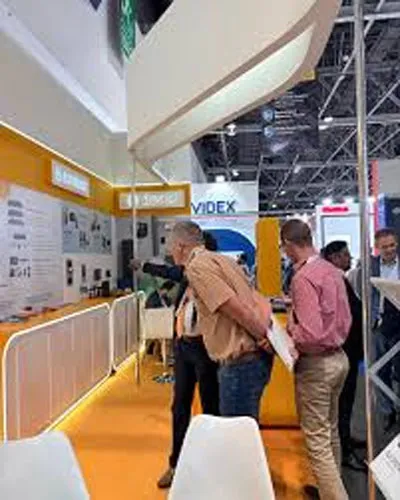
ScreenCheck, a subsidiary of the Centena Group and a provider of end-to-end identification and security solutions in the Middle East, has entered into a strategic partnership with global security technologies company BAS-IP to expand its footprint in the GCC residential security market.
The agreement, signed during Intersec 2026, aligns with ScreenCheck’s strategy to strengthen its presence in the fast-growing smart security and digital transformation space. The global market for connected security solutions is projected to reach $907.12 billion by 2032, registering a compound annual growth rate of 25.7 per cent between 2025 and 2032, driven by large-scale urban development, smart infrastructure investments and rising demand for integrated residential security ecosystems.
Commenting on the partnership, Olga Shamilova, Chief Executive Officer at BAS-IP, said the collaboration would support ScreenCheck’s expansion into residential security systems. She highlighted strong interest during Intersec 2026 in BAS-IP’s Open API, which enables seamless customisation and easy integration with existing building management systems. The company’s mobile-first application also attracted attention for its suitability across large multi-apartment developments and luxury private villas.
The partnership will address increasing demand from developers for connected home and community security solutions across apartments, gated communities and large residential projects. The offering will include integrated IP-based audio and video intercom systems combined with advanced access control technologies.
Faisal Mohamed, Chief Executive Officer of ScreenCheck, said the collaboration reflects the growing importance of security as cities expand and digital infrastructure becomes central to daily life. He added that the alliance will enable the distribution of integrated residential security and home automation solutions across one of the world’s fastest-growing property markets.
Through the partnership, ScreenCheck will deliver biometric identification, RFID solutions, AI-enabled surveillance and next-generation smart access control systems for residential developments, critical infrastructure and technology-driven enterprises. The collaboration positions ScreenCheck to play a key role in supporting the region’s smart city ambitions through intelligent, connected residential security ecosystems.

ScreenCheck, a subsidiary of the Centena Group and a provider of end-to-end identification and security solutions in the Middle East, has entered into a strategic partnership with global security technologies company BAS-IP to expand its footprint in the GCC residential security market.The agreement, signed during Intersec 2026, aligns with ScreenCheck’s strategy to strengthen its presence in the fast-growing smart security and digital transformation space. The global market for connected security solutions is projected to reach $907.12 billion by 2032, registering a compound annual growth rate of 25.7 per cent between 2025 and 2032, driven by large-scale urban development, smart infrastructure investments and rising demand for integrated residential security ecosystems.Commenting on the partnership, Olga Shamilova, Chief Executive Officer at BAS-IP, said the collaboration would support ScreenCheck’s expansion into residential security systems. She highlighted strong interest during Intersec 2026 in BAS-IP’s Open API, which enables seamless customisation and easy integration with existing building management systems. The company’s mobile-first application also attracted attention for its suitability across large multi-apartment developments and luxury private villas.The partnership will address increasing demand from developers for connected home and community security solutions across apartments, gated communities and large residential projects. The offering will include integrated IP-based audio and video intercom systems combined with advanced access control technologies.Faisal Mohamed, Chief Executive Officer of ScreenCheck, said the collaboration reflects the growing importance of security as cities expand and digital infrastructure becomes central to daily life. He added that the alliance will enable the distribution of integrated residential security and home automation solutions across one of the world’s fastest-growing property markets.Through the partnership, ScreenCheck will deliver biometric identification, RFID solutions, AI-enabled surveillance and next-generation smart access control systems for residential developments, critical infrastructure and technology-driven enterprises. The collaboration positions ScreenCheck to play a key role in supporting the region’s smart city ambitions through intelligent, connected residential security ecosystems.

Next Story
Infrastructure Transport

Tunnelling Begins for Thane, Borivali twin tunnel project

Tunnelling work has commenced for the 11.84-km Thane–Borivali Twin Tunnel, set to be India’s longest urban road tunnel, marking a key milestone in Mumbai’s infrastructure development.As per a post shared by Mumbai Metropolitan Region Development Authority on social media platform X, the tunnel boring machine (TBM) ‘Nayak’—the country’s largest single-shield hard rock TBM for an urban tunnel—was launched by Devendra Fadnavis on Tuesday. The event was attended by Eknath Shinde and Sunetra Pawar, among other dignitaries. A second TBM, ‘Arjuna’, is expected to be launched so..

Next Story
Infrastructure Transport

Large Format Store Planned At M G Road Metro Station

M G Road station in Bengaluru is set to host the city’s first large-format commercial and experience space, with planning led by Bangalore Metro Rail Corporation Limited. BMRCL has invited proposals to develop and operate a central business district destination at the Purple?Pink Line interchange. The plan positions the station as a commercial hub designed to serve a broad commuter base across the city. The proposal is part of a broader effort to activate transit nodes commercially. Tender documents set a minimum monthly rental of Rs 0.944 million (mn), inclusive of GST, for the large-format..

Next Story
Infrastructure Energy

Government Cancels Auction Of Eleven Critical Mineral Blocks

The government has cancelled the auction of 11 critical and strategic mineral blocks after receiving a poor investor response and failing to attract a sufficient number of qualified bidders. The decision represents a setback to plans to ramp up domestic exploration and production of critical minerals amid global supply chain disruptions and rising demand for materials used in clean energy and advanced technologies. The mines ministry issued an annulment notice setting out the reasons for the cancellations. The annulment notice indicated that the auction process for five mineral blocks was canc..

Advertisement

Subscribe to Our Newsletter

Get daily newsletters around different themes from Construction world.

STAY CONNECTED

Advertisement

Advertisement

Advertisement