State govt to take over Stalled Mumbai Redevelopment Projects
Real Estate

State govt to take over Stalled Mumbai Redevelopment Projects

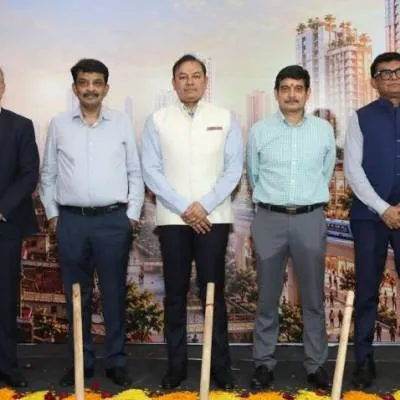
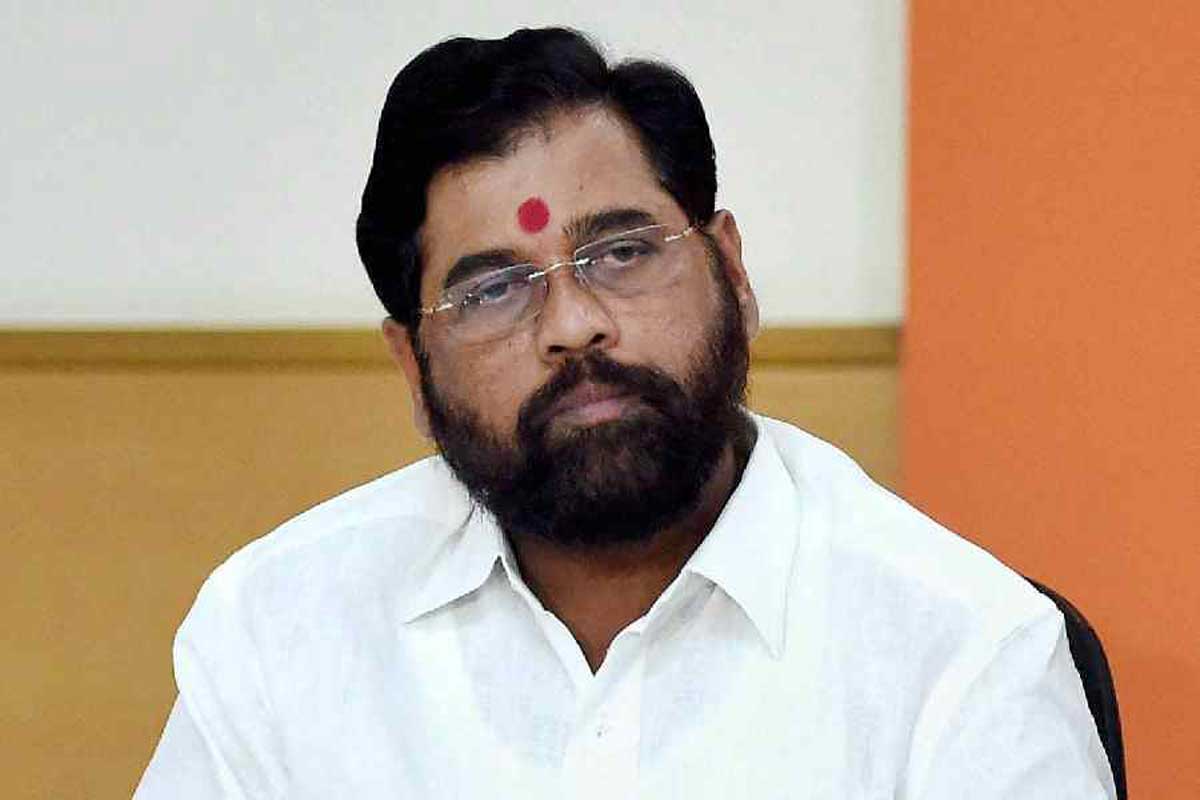
Chief Minister Eknath Shinde announced on Monday that the state government will intervene in stalled and abandoned redevelopment projects in Mumbai and oversee their execution with the assistance of financially robust government agencies. Speaking after launching the first phase of the cluster redevelopment scheme in Thane, Shinde described it as perhaps the largest redevelopment plan to be implemented in Asia.

"There are numerous projects in Mumbai that have been stagnant for decades, including those abandoned by developers who have shown no interest in completing them. Our government has made the decision to take charge of such projects with the help of well-funded agencies such as the BMC, MMRDA, Mhada, MSRDC, and Cidco, among others," stated Shinde.

He further explained that this initiative would greatly benefit residents, providing them access to their homes and enabling the return of those who have been forced to live in distant suburbs due to limited options in Mumbai.

Regarding the Thane cluster redevelopment project, Shinde emphasised that it would serve as a model for future schemes in the metropolitan region, including Mira-Bhayender, Kalyan-Dombivli, Ulhasnagar, and certain areas of Navi Mumbai.

Shinde revealed that the entire cluster project covers an expansive 1,500 hectares and encompasses 45 urban renewal plans. In the initial phase, 10,000 units will be constructed on government-owned land to ensure that residents can directly move into their homes without having to stay in temporary transit camps.

Meanwhile, the Shiv Sena UBT faction alleged that the cluster redevelopment plan was merely a political ploy to garner votes during elections. Shinde dismissed these claims, stating that the project's inauguration at this stage serves as a fitting response to skeptics.

Chief Minister Eknath Shinde announced on Monday that the state government will intervene in stalled and abandoned redevelopment projects in Mumbai and oversee their execution with the assistance of financially robust government agencies. Speaking after launching the first phase of the cluster redevelopment scheme in Thane, Shinde described it as perhaps the largest redevelopment plan to be implemented in Asia.There are numerous projects in Mumbai that have been stagnant for decades, including those abandoned by developers who have shown no interest in completing them. Our government has made the decision to take charge of such projects with the help of well-funded agencies such as the BMC, MMRDA, Mhada, MSRDC, and Cidco, among others, stated Shinde.He further explained that this initiative would greatly benefit residents, providing them access to their homes and enabling the return of those who have been forced to live in distant suburbs due to limited options in Mumbai.Regarding the Thane cluster redevelopment project, Shinde emphasised that it would serve as a model for future schemes in the metropolitan region, including Mira-Bhayender, Kalyan-Dombivli, Ulhasnagar, and certain areas of Navi Mumbai.Shinde revealed that the entire cluster project covers an expansive 1,500 hectares and encompasses 45 urban renewal plans. In the initial phase, 10,000 units will be constructed on government-owned land to ensure that residents can directly move into their homes without having to stay in temporary transit camps.Meanwhile, the Shiv Sena UBT faction alleged that the cluster redevelopment plan was merely a political ploy to garner votes during elections. Shinde dismissed these claims, stating that the project's inauguration at this stage serves as a fitting response to skeptics.

Next Story
Infrastructure Urban

Implementation Status of Jal Jeevan Mission

Since August 2019 the Government has implemented Jal Jeevan Mission to provide assured potable water through household tap connections in rural India. At the start of the mission only 32.3 million (mn) rural households, representing 16.7 per cent, were reported to have tap water connections. States and union territories have reported that 125.8 mn additional rural households have since been provided with tap connections. As a result, of about 193.6 mn rural households roughly 158.2 mn, or 81.71 per cent, are reported to have tap water supply at home.\n\nThe State, district and village level st..

Next Story
Infrastructure Urban

Jal Jeevan Mission Reaches Eighty One Per Cent Rural Coverage

The Government reported substantial progress under the Jal Jeevan Mission, launched in August 2019 to provide tap water to every rural household. At launch only 32.3 million (mn) rural households had tap connections and states and Union territories reported provision of 125.8 mn additional households by March 2026. Consequently, out of about 193.6 mn rural households around 158.2 mn, or 81.71 per cent, are reported to have tap water at home. The Finance Minister announced extension of the mission until 2028 in the 2025-26 budget speech. The Swachh Bharat Mission Grameen, launched in October 20..

Next Story
Infrastructure Urban

Empowering Local Governance for Sustainable Rural Water Supply

The Ministry of Jal Shakti has aligned the Jal Jeevan Mission (JJM) with the 73rd Amendment to strengthen village level planning and community ownership of water supply. Gram Panchayats, village water and sanitation committees and Pani Samitis are to plan, implement, manage and maintain piped water systems, with gram sabha processes formalising handover and oversight. Implementation support agencies including non government organisations, community based organisations and self help groups have been empanelled to train local committees and promote women participation. Under JJM, the department ..

Advertisement

Subscribe to Our Newsletter

Get daily newsletters around different themes from Construction world.

STAY CONNECTED

Advertisement

Advertisement

Advertisement