+
Town Planners Call for Regional, Transit-Oriented Planning Shift
Real Estate

Town Planners Call for Regional, Transit-Oriented Planning Shift

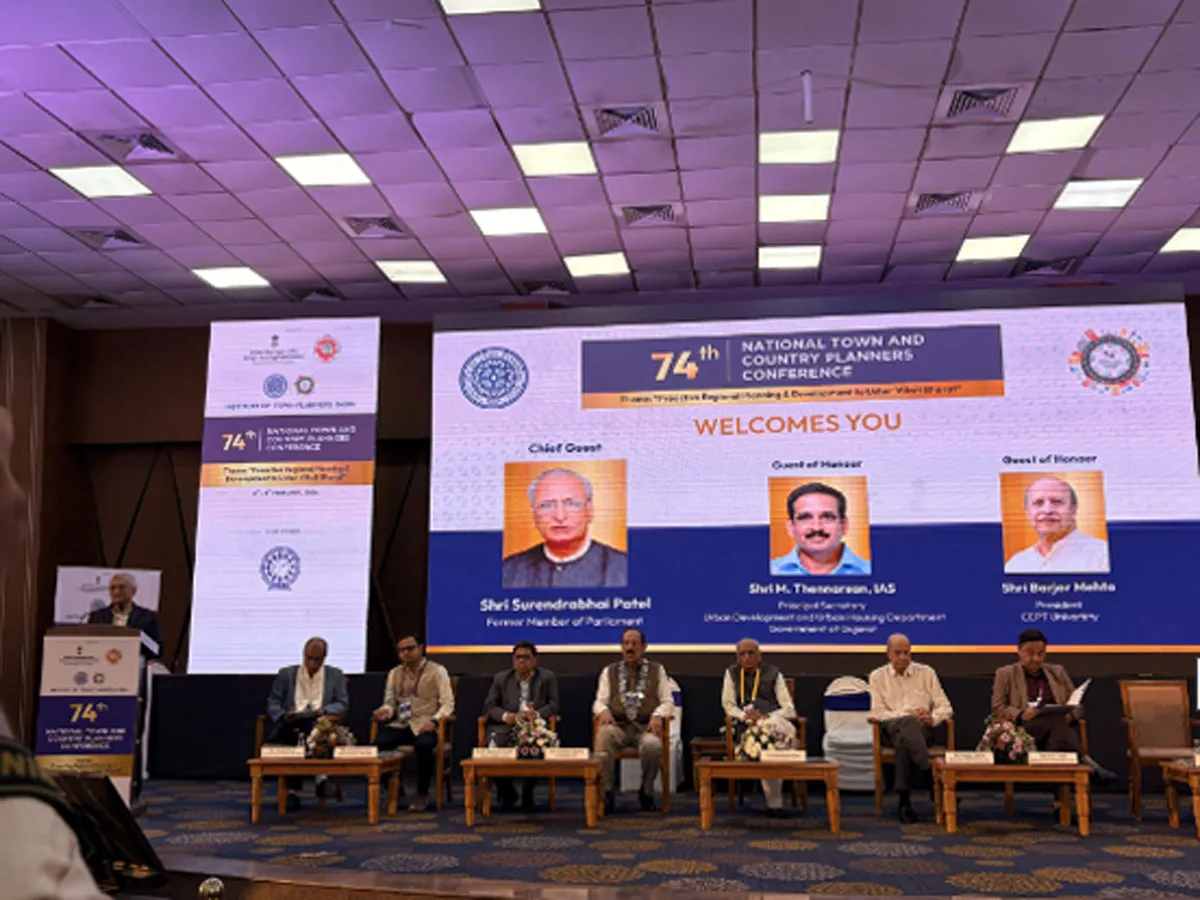
The 74th National Town and Country Planners Conference concluded with a strong call for a transition towards regional, transit-oriented and technology-enabled planning to address India’s rapidly evolving urban and economic challenges. Experts emphasised the role of metropolitan and city-region planning in enabling high productivity, inclusive growth and long-term resilience, drawing parallels with global city regions such as London, Singapore and Tokyo.
Participants noted that metropolitan regions can drive higher productivity growth when supported by robust institutional frameworks and long-term economic planning. The Mumbai Metropolitan Region was cited as an example where a shift in planning strategy and institutional approach is underway, with preparations for a city-region economic plan aligned to local, national and international priorities.
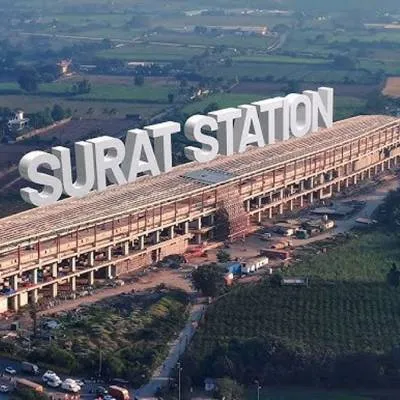
The conference highlighted initiatives undertaken by the Government of Gujarat for Sanand, Kalol, Savli, Hirasar and Bardoli, which are expected to ease urban pressure on nearby major cities in the near future. Delegates stressed that regional planning should be a core instrument in achieving the vision of Viksit Bharat by 2047, enabling integrated development of urban and rural settlements.
Megacity-region planning was identified as a key tool for defining settlement hierarchies, infrastructure networks, transport systems and service delivery. Existing land-use frameworks such as Rural Rapid Development Formulation (RRDF) planning and cluster development under the Rurban Mission were cited as useful references for metropolitan regional planning.
There was broad consensus on the role of artificial intelligence in city and regional planning, with delegates noting the need to strengthen data availability, integration and analytics. A phased approach was recommended, beginning with data integration and progressing towards modelling, scenario simulation, predictive analytics and policy-aligned decision-support systems.
The conference also called for a rethink in planning for large-scale events, urging planners to view such occasions as opportunities for long-term infrastructure creation, employment generation and institutional strengthening, rather than short-term projects. Participants emphasised moving away from static master plans towards a “living city” approach within a city-region economic planning framework, supported by more effective governance and participatory planning mechanisms.

The 74th National Town and Country Planners Conference concluded with a strong call for a transition towards regional, transit-oriented and technology-enabled planning to address India’s rapidly evolving urban and economic challenges. Experts emphasised the role of metropolitan and city-region planning in enabling high productivity, inclusive growth and long-term resilience, drawing parallels with global city regions such as London, Singapore and Tokyo.Participants noted that metropolitan regions can drive higher productivity growth when supported by robust institutional frameworks and long-term economic planning. The Mumbai Metropolitan Region was cited as an example where a shift in planning strategy and institutional approach is underway, with preparations for a city-region economic plan aligned to local, national and international priorities.The conference highlighted initiatives undertaken by the Government of Gujarat for Sanand, Kalol, Savli, Hirasar and Bardoli, which are expected to ease urban pressure on nearby major cities in the near future. Delegates stressed that regional planning should be a core instrument in achieving the vision of Viksit Bharat by 2047, enabling integrated development of urban and rural settlements.Megacity-region planning was identified as a key tool for defining settlement hierarchies, infrastructure networks, transport systems and service delivery. Existing land-use frameworks such as Rural Rapid Development Formulation (RRDF) planning and cluster development under the Rurban Mission were cited as useful references for metropolitan regional planning.There was broad consensus on the role of artificial intelligence in city and regional planning, with delegates noting the need to strengthen data availability, integration and analytics. A phased approach was recommended, beginning with data integration and progressing towards modelling, scenario simulation, predictive analytics and policy-aligned decision-support systems.The conference also called for a rethink in planning for large-scale events, urging planners to view such occasions as opportunities for long-term infrastructure creation, employment generation and institutional strengthening, rather than short-term projects. Participants emphasised moving away from static master plans towards a “living city” approach within a city-region economic planning framework, supported by more effective governance and participatory planning mechanisms.

Next Story
Infrastructure Urban

Covestro India Donates Rs 4.3 Mn for Cuddalore Sustainability

Covestro (India) has handed over Rs 4.3 million to the Cuddalore District Administration to support two community development initiatives focused on water conservation and solid waste management. The contribution aims to address key environmental and sanitation challenges in the district while strengthening local infrastructure.The handover took place at the District Collector’s Office on February 4, 2026, where Jeganathan Kanmani, Site Head, Covestro (India) Cuddalore, presented a demand draft to the District Collector. The funding includes Rs 2.3 million for the desilting of irrigation tan..

Next Story
Infrastructure Urban

Prozo Launches 1.5 Lakh sq ft Multi-client Fulfilment Hub in Haryana

Prozo, India’s fast-growing full-stack supply chain company, has launched a 1.5 lakh sq ft enterprise-grade multi-client fulfilment facility at Horizon Industrial Parks in Gurugram, Haryana. The newly inaugurated hub is Prozo’s largest multi-client warehouse in the country and marks its sixth such facility in Haryana and eleventh across North India, further strengthening its expanding network of over 50 fulfilment centres covering nearly 3 million sq ft.Designed as a model warehouse for North India, the facility combines high-spec infrastructure with Prozo’s proprietary technology stack ..

Next Story
Infrastructure Urban

Schaeffler Highlights Future-ready Aftermarket Solutions at ACMA 2026

Schaeffler India, a leading motion technology company, is participating in ACMA Automechanika 2026 in New Delhi, where it is showcasing a comprehensive and future-ready aftermarket portfolio designed to support the complete vehicle lifecycle. The company’s offerings cater to a wide spectrum of mobility segments, including two-wheelers, passenger vehicles with internal combustion engines (ICE), commercial vehicles, tractors, hybrids and electric vehicles (EVs).A key highlight of Schaeffler India’s presence at the event is the launch of a dedicated range of two-wheeler spare parts for the In..

Advertisement

Subscribe to Our Newsletter

Get daily newsletters around different themes from Construction world.

STAY CONNECTED

Advertisement

Advertisement

Advertisement

Open In App