+
We are actively planning projects for large communities with 500 to 1,000 units
Real Estate

We are actively planning projects for large communities with 500 to 1,000 units

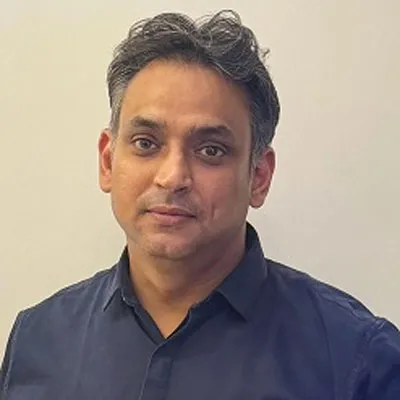
- Ramesh Bulchandani, Chairman, KMB Estates
Since its establishment in 1988, KMB Estates, part of KMB Group, has made steady inroads in the real-estate sector with a predominant presence in southern and western India. While launching a new luxury residential project in Bengaluru, Ramesh Bulchandani, Chairman, KMB Estates, says, ´Real estate is all about understanding the needs of the micro market and positioning projects accordingly.´ Talking about the company´s green ethos, interactive website and expansion plans, Bulchandani elaborates upon trends in the sector in an interview to CW.

You have expanded your portfolio towards hospitality and retail.
In the Indian real-estate market, the retail segment is very challenging and requires close scrutiny of the micro market. Proper planning and sharp focus are the only ways to be successful in retail. The hospitality sector, likewise, requires an in-depth study of the micro market. Owing to such intensive planning requirement in both sectors, they can be termed a risky and not always viable option. But my belief is that we serve the needs of a certain lifestyle. So, after selecting a micro market, development has to be undertaken based upon the needs of that market configuration, which has multiple users within a geographical area. Managing the needs of multiple users is complex, but this allows us the perfect opportunity to showcase our management skills.

What is the sector-wise contribution of projects and what will your focus be in coming years?
At present, our projects comprise 60 per cent housing, 20 per cent hospitality and 20 per cent commercial. We will continue our focus on the residential market. The problem of piling up of inventory is owing to the disparity between the price and the expectations of the given micro market. Anchoring a good residential property with a suitable commercial and hospitality zone makes the property far more preferable. Finding the right category and segment is very important. We do not engage in the numbers game and look forward to providing quality projects. We wish to develop what people want rather than sell what we make.

What challenges does the sector currently face?
The indiscriminate taxes levied on the sector have made it cumbersome to do business for clients, as the cost of the project is usually transferred to them. Over 40 per cent of the cost of a project is taxes, forcing the affordability factor and demand to head in opposite direction. The scenario is rough as every tax authority treats the real-estate sector as a cash cow while, generally speaking, other sectors are let off lightly. Sourcing raw materials has also become a challenge to the extent that the rising cost of cement is almost unbelievable, even though the cost of fuel has come down by 50 per cent. There is a need to insure the sector against cartelisation of cement producers.

What are the possible solutions?
Planning early and moving fast are the best ways to beat rising costs. Typically 11 to 15 months are required after planning to develop a project. The scale is not a factor, as maximum resources should be devoted, so that the time period is viable for every block of a project. Execution and planning are also important, as a delay can raise the cost by roughly 10-20 per cent of the whole project.

Please elaborate upon on your present and upcoming projects.
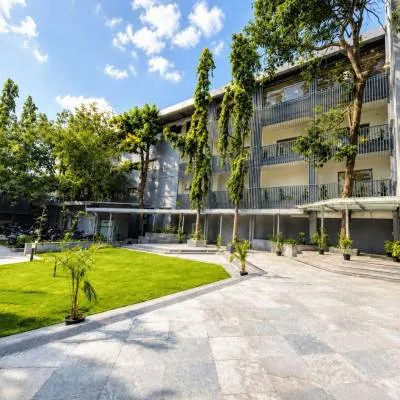
We have just launched La Palazzo, a luxury residential property in Koramangala, Bengaluru, and have started bookings for this premium mixed-use development. We will aim to expand the brand and have already identified land for the next two La Pallazo projects. One project will be in Bengaluru itself while the other is expected to come up in Mumbai. We are also planning to introduce ´conscious living´, a lifestyle-related product for consumers who believe ´less is more´. It pertains to the area of the apartment, which would be around 1,100 to 1,800 sq ft. We are also actively planning projects for large communities, with 500 to 1,000 units. The projects will be starting out in the peripheral areas of Bengaluru.

What are your expansion plans?
We feel the future is in mixed-use projects and so all our proposed projects will be mixed-use in nature. They are complex to execute and are not always everyone´s preference. This provides us an opportunity to showcase our skill-sets and expertise while presenting a niche area for us to operate in.

Please share the green practices implemented in your projects.
Being eco-friendly is our focus right from the planning and designing stage. With proper planning, investments and costs can be reduced. But we go one step further from green and follow our mantra of ´thinking blue´. All our projects are designed to be zero-discharge buildings with the construction of a water treatment plant that treats water in various stages to be used for landscaping and other purposes. We save in planning, sourcing and design while spending on amenities that would provide long-term operational cost benefits. Value realization received is the dividend on the investment in good practices, as it has a positive impact on the net bottom-line.

How is buyer preference tracked and how does it affect the viability of projects?
Time is a major factor, as every micro market has its own behaviour that is not homogeneous even for a whole city. Over a period of time, with the change in infrastructure, the market behaves differently. Analysing consumer requirements and patterns is simplistic; it is complex to anticipate the market´s future using just infrastructure development. Careful scrutiny is undertaken to analyse any proposal before a decision is taken.

As a developer, what is the investment for a project?
We use A-grade contractors; even for our latest project we have used Capacite, which is an offshoot of Pratiba Engineering. We outsource our contract on a turnkey basis, and also sub-contractual work. We are asset-light in the sense that we invest only in land and building, including licensing, designing and other requirements.

A lot of developers are taking the online realty route to market their projects and boost sales. What is your view of this trend?
We have a very active and transparent website that has all the information a customer requires. We provide online support and have our digital rights management (DRM) on cloud, for an instant response to leads. So, as far as technology is concerned, we already have an online presence. The online realty sector requires a complete regulatory framework before it is feasible for our presence.

What is your vision?
We use our knowledge base and engineering skills to find innovative solutions that bring value proposition for our customers. Identifying properties ahead of their market time, utilizing design facets and technology to save costs, and implementing eco-friendly practices set us apart from the rest.

KMB Estates
Year of Establishment: 1986
Top Management (Promoters): Ramesh Bulchandani, Chairman
No. of Employees: 50+
Centre of Operation: Bengaluru
Ongoing Projects: La Palazzo Outer Koramangala
Upcoming Projects: La Palazzo Whitefield
Completed Projects: Shyam Niwas, Nirmal Estates, Nirmal RMV
To share your building experience, write in at feedback@ASAPPmedia.com

- Ramesh Bulchandani, Chairman, KMB Estates Since its establishment in 1988, KMB Estates, part of KMB Group, has made steady inroads in the real-estate sector with a predominant presence in southern and western India. While launching a new luxury residential project in Bengaluru, Ramesh Bulchandani, Chairman, KMB Estates, says, ´Real estate is all about understanding the needs of the micro market and positioning projects accordingly.´ Talking about the company´s green ethos, interactive website and expansion plans, Bulchandani elaborates upon trends in the sector in an interview to CW. You have expanded your portfolio towards hospitality and retail. In the Indian real-estate market, the retail segment is very challenging and requires close scrutiny of the micro market. Proper planning and sharp focus are the only ways to be successful in retail. The hospitality sector, likewise, requires an in-depth study of the micro market. Owing to such intensive planning requirement in both sectors, they can be termed a risky and not always viable option. But my belief is that we serve the needs of a certain lifestyle. So, after selecting a micro market, development has to be undertaken based upon the needs of that market configuration, which has multiple users within a geographical area. Managing the needs of multiple users is complex, but this allows us the perfect opportunity to showcase our management skills. What is the sector-wise contribution of projects and what will your focus be in coming years? At present, our projects comprise 60 per cent housing, 20 per cent hospitality and 20 per cent commercial. We will continue our focus on the residential market. The problem of piling up of inventory is owing to the disparity between the price and the expectations of the given micro market. Anchoring a good residential property with a suitable commercial and hospitality zone makes the property far more preferable. Finding the right category and segment is very important. We do not engage in the numbers game and look forward to providing quality projects. We wish to develop what people want rather than sell what we make. What challenges does the sector currently face? The indiscriminate taxes levied on the sector have made it cumbersome to do business for clients, as the cost of the project is usually transferred to them. Over 40 per cent of the cost of a project is taxes, forcing the affordability factor and demand to head in opposite direction. The scenario is rough as every tax authority treats the real-estate sector as a cash cow while, generally speaking, other sectors are let off lightly. Sourcing raw materials has also become a challenge to the extent that the rising cost of cement is almost unbelievable, even though the cost of fuel has come down by 50 per cent. There is a need to insure the sector against cartelisation of cement producers. What are the possible solutions? Planning early and moving fast are the best ways to beat rising costs. Typically 11 to 15 months are required after planning to develop a project. The scale is not a factor, as maximum resources should be devoted, so that the time period is viable for every block of a project. Execution and planning are also important, as a delay can raise the cost by roughly 10-20 per cent of the whole project. Please elaborate upon on your present and upcoming projects. We have just launched La Palazzo, a luxury residential property in Koramangala, Bengaluru, and have started bookings for this premium mixed-use development. We will aim to expand the brand and have already identified land for the next two La Pallazo projects. One project will be in Bengaluru itself while the other is expected to come up in Mumbai. We are also planning to introduce ´conscious living´, a lifestyle-related product for consumers who believe ´less is more´. It pertains to the area of the apartment, which would be around 1,100 to 1,800 sq ft. We are also actively planning projects for large communities, with 500 to 1,000 units. The projects will be starting out in the peripheral areas of Bengaluru. What are your expansion plans? We feel the future is in mixed-use projects and so all our proposed projects will be mixed-use in nature. They are complex to execute and are not always everyone´s preference. This provides us an opportunity to showcase our skill-sets and expertise while presenting a niche area for us to operate in. Please share the green practices implemented in your projects. Being eco-friendly is our focus right from the planning and designing stage. With proper planning, investments and costs can be reduced. But we go one step further from green and follow our mantra of ´thinking blue´. All our projects are designed to be zero-discharge buildings with the construction of a water treatment plant that treats water in various stages to be used for landscaping and other purposes. We save in planning, sourcing and design while spending on amenities that would provide long-term operational cost benefits. Value realization received is the dividend on the investment in good practices, as it has a positive impact on the net bottom-line. How is buyer preference tracked and how does it affect the viability of projects? Time is a major factor, as every micro market has its own behaviour that is not homogeneous even for a whole city. Over a period of time, with the change in infrastructure, the market behaves differently. Analysing consumer requirements and patterns is simplistic; it is complex to anticipate the market´s future using just infrastructure development. Careful scrutiny is undertaken to analyse any proposal before a decision is taken. As a developer, what is the investment for a project? We use A-grade contractors; even for our latest project we have used Capacite, which is an offshoot of Pratiba Engineering. We outsource our contract on a turnkey basis, and also sub-contractual work. We are asset-light in the sense that we invest only in land and building, including licensing, designing and other requirements. A lot of developers are taking the online realty route to market their projects and boost sales. What is your view of this trend? We have a very active and transparent website that has all the information a customer requires. We provide online support and have our digital rights management (DRM) on cloud, for an instant response to leads. So, as far as technology is concerned, we already have an online presence. The online realty sector requires a complete regulatory framework before it is feasible for our presence. What is your vision? We use our knowledge base and engineering skills to find innovative solutions that bring value proposition for our customers. Identifying properties ahead of their market time, utilizing design facets and technology to save costs, and implementing eco-friendly practices set us apart from the rest. KMB Estates Year of Establishment: 1986 Top Management (Promoters): Ramesh Bulchandani, Chairman No. of Employees: 50+ Centre of Operation: Bengaluru Ongoing Projects: La Palazzo Outer Koramangala Upcoming Projects: La Palazzo Whitefield Completed Projects: Shyam Niwas, Nirmal Estates, Nirmal RMV To share your building experience, write in at feedback@ASAPPmedia.com

Next Story
Real Estate

IGBC Green Karnataka Summit 2026 Highlights State’s Green Leadership

The CII Indian Green Building Council (IGBC) hosted the first IGBC Green Karnataka Summit 2026 in Bengaluru, bringing together government leaders, urban planners, developers, architects and industry stakeholders to deliberate on “Advancing Sustainability vis-à-vis Climate Resilience in Urban Built Karnataka”.Karnataka currently has 1,539 registered green building projects accounting for a cumulative 1.13 billion sq ft of certified green building footprint, ranking third in India by number of buildings adopting IGBC Green Building Ratings. The summit reinforced a collective shift from inte..

Next Story
Infrastructure Transport

MIC Electronics Bags First PAPIS Order from RCF Kapurthala

MIC Electronics has received a Letter of Acceptance (LoA) from Rail Coach Factory (RCF), Kapurthala, for its first order in the Passenger Announcement and Passenger Information System (PAPIS) segment, marking a new addition to the company’s railway electronics portfolio.The order was awarded following successful evaluation of the company’s bid by the competent authority. MIC Electronics said the scope of work will be executed in line with the agreed rate structure, delivery schedules, inspection requirements, warranty provisions and other standard terms and conditions prescribed by RCF.Com..

Next Story
Infrastructure Urban

Prozo Opens 1.5 Lakh Sq Ft Multi-Client Fulfilment Hub

Prozo has launched its largest multi-client fulfilment hub, a 1.5 lakh sq ft enterprise-grade facility at Horizon Industrial Parks, Gurugram, Haryana, strengthening its expanding national warehousing network. The new site is Prozo’s sixth multi-client facility in Haryana and eleventh in Northern India, within a network of over 50 fulfilment centres spanning 3 million sq ft.Designed as a model warehouse for North India, the facility combines high-specification infrastructure with Prozo’s proprietary technology stack to support complex and high-volume operations for enterprise, retail and D2..

Advertisement

Subscribe to Our Newsletter

Get daily newsletters around different themes from Construction world.

STAY CONNECTED

Advertisement

Advertisement

Advertisement

Open In App