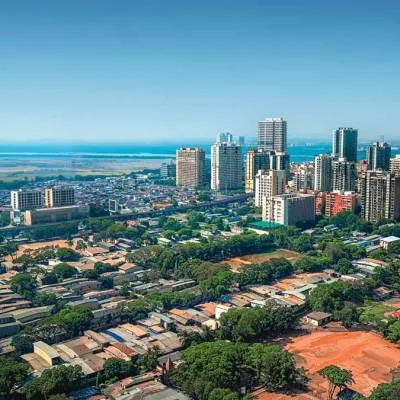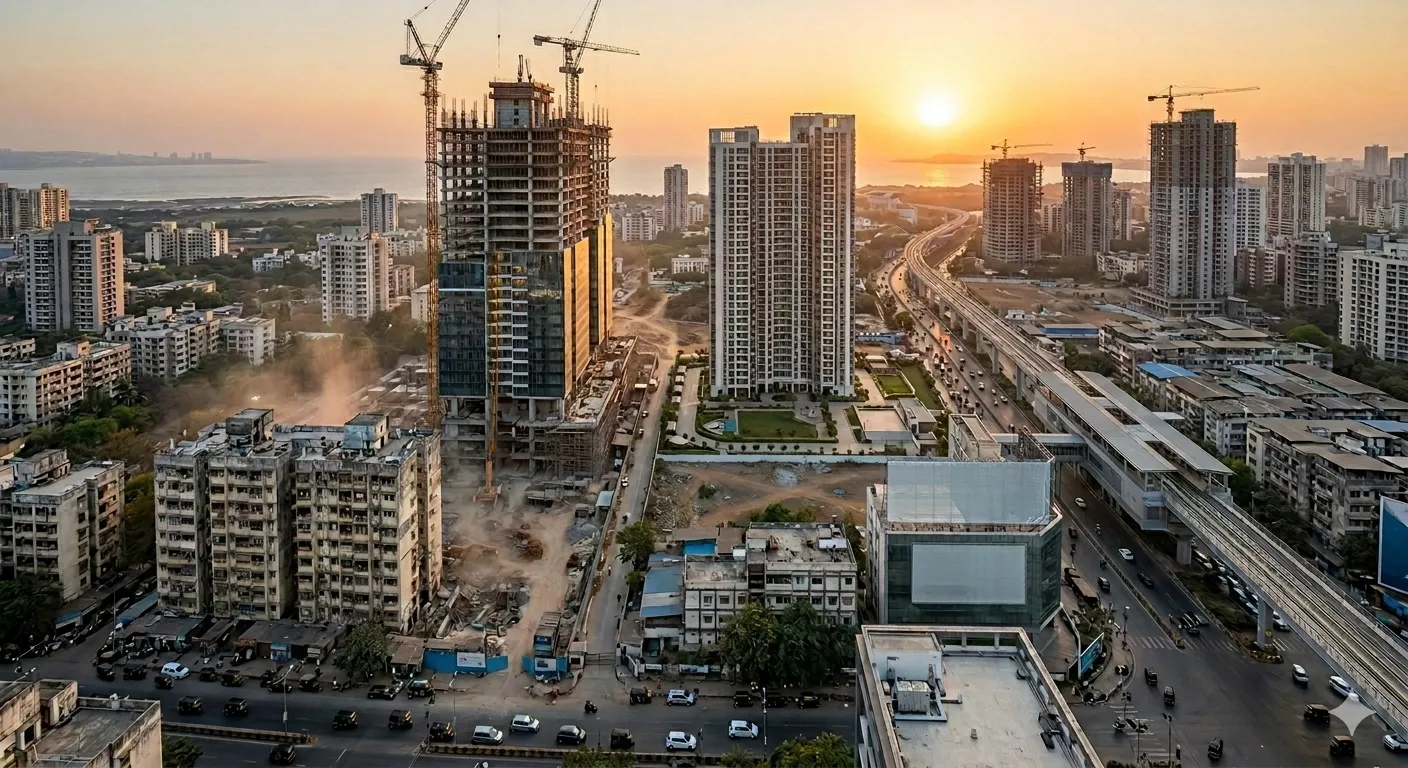

Mumbai’s western suburbs are emerging as the centre of the city’s redevelopment boom as ageing residential societies, land scarcity and infrastructure upgrades reshape the urban landscape. Areas including Santacruz, Andheri, Goregaon, Kandivali and Dahisar are witnessing significant transformation, with older housing stock making way for modern residential developments. Redevelopment has become a major driver of urban growth, supported by strong housing demand, connectivity and established social infrastructure.
Industry estimates indicate that Mumbai could see over 44,000 new homes worth nearly Rs 1.3 trillion through redevelopment-led projects in the coming years. According to Knight Frank India, more than 900 housing societies across the city have signed redevelopment agreements since 2020, with a substantial share concentrated in the western suburbs.
Alongside housing society redevelopment, slum rehabilitation continues to reshape suburban clusters. Reports suggest that over 2,500 slum rehabilitation projects have been completed across Mumbai over the past three decades, benefiting nearly 2.83 lakh families and expanding the city’s formal housing stock.
Developers increasingly view redevelopment as more than reconstruction, positioning it as a process of urban restructuring that integrates housing, infrastructure and community rehabilitation.
Mr. Rohan Brahmdev Shukla, Director and Chief Civil Officer, DGS Group, said, “Redevelopment in Mumbai, especially across the western suburbs and within the slum rehabilitation segment, is about transforming communities through better housing and stronger infrastructure. Many of these areas have evolved organically over decades and are now being shaped through structured urban planning. The opportunity is significant, and while execution requires close coordination between authorities, residents and developers, it is also unlocking large-scale, positive and meaningful urban transformation.”
The western suburbs have also emerged as commercially attractive redevelopment markets due to sustained end-user demand and limited fresh land supply. Projects in established residential locations continue to draw buyer interest by offering upgraded homes within mature neighbourhood ecosystems.
Ms. Shraddha Kedia Agarwal, Director, Transcon Developers, observed, “The redevelopment story in Mumbai’s western suburbs is no longer only about replacing old buildings; it is about creating integrated urban communities with better infrastructure, open spaces and long-term livability. Homebuyers today prefer established locations because they combine connectivity with mature social infrastructure. This is making redevelopment projects increasingly viable despite the execution challenges.”
The sector is also seeing greater emphasis on improving approvals, policy support and execution efficiency. Industry experts believe faster clearances, streamlined regulations and stronger stakeholder coordination could further accelerate redevelopment momentum.
A spokesperson from Chandak Group said, “Mumbai’s western suburbs have become one of the strongest redevelopment corridors in the city because the underlying demand fundamentals remain extremely robust. Whether it is ageing societies or slum rehabilitation projects, redevelopment is now essential to optimise urban land usage while improving overall living standards. The sector is becoming more organised and execution-focused, but long-term scalability will depend heavily on faster clearances and better policy coordination.”
Mr. Dhruman Shah, Promoter, Ariha Group, said, “Strong redevelopment momentum is being driven by established infrastructure, excellent connectivity and sustained housing demand. With ageing buildings across areas such as Andheri, Goregaon and Kandivali increasingly requiring renewal, redevelopment is enabling more efficient land use while delivering better-designed homes and improved community living standards across these micro-markets.”
As Mumbai grapples with land scarcity, infrastructure pressures and rising population density, redevelopment across the western suburbs is increasingly shaping the city’s growth trajectory by renewing ageing neighbourhoods and strengthening urban infrastructure.