World's tallest engineering marvel: 182-m Statue of Unity inaugurated
Technology

World's tallest engineering marvel: 182-m Statue of Unity inaugurated

Prime Minister Narendra Modi recently inaugurated the world's tallest statue at 182-m (597 ft) located in Gujarat, India. The steel, concrete and brass-clad statue is almost double the height of the Statue of Liberty in the US.

Built as a tribute to Sardar Vallabhbhai Patel - famously known as the 'The Iron Man of India' - the Statue of Unity is an engineering marvel completed in a record 33 months. The 20,000-sq m project is located at Kevadia Town in Gujarat near the Sardar Sarovar dam.

Larsen & Toubro being the EPC contractor for the project, SN Subrahmanyan, CEO and Managing Director, L&T, said, 'Apart from being a symbol of national pride and integration, this is a tribute to India's engineering skills and project management abilities. We are proud to be associated with building the world's tallest statue, which is a fitting homage to the Iron Man of India.'

MV Satish, Whole Time Director & Executive Vice President-Buildings, Minerals & Metals, L&T, said, 'Right from concept through the entire process of developing the design, the features and characteristics of the statue, the engineering, project planning, logistics, cost controls, were all managed extremely efficiently and reflects a triumph of teamwork.'

The Statue of Unity complex comprises an exhibition centre at its base, a memorial garden, a designer bridge connecting Sadhu Island with the mainland along the Narmada River, an internal roadway of 5 km length, improvements to the existing roads, bridges, culverts connecting the area of Sadhu Island. It also hosts an administrative complex and a star rated hotel (Shrestha Bharat Bhavan) and a conference centre. The structure has two vertical cores, each housing a high-speed passenger elevator. The vertical cores support the steel frames to which about 6,500 bronze panels are clad. A viewing gallery at the level at the chest at 135 m (443 ft), can accommodate up to 200 visitors at one go and affords a breath-taking view of the Sardar Sarovar dam and its environs.

The project has made use of 210,000 cu m of concrete, 70,000 MT of cement and 18,500 MT of reinforced steel; 6,500 MT structural steel has been used to form the support structure, while 1,700 MT bronze panels (6,500 nos) forms the outermost layer. The statue can withstand wind speeds of up to 180 km per hour and survive earthquakes measuring up to 6.5 on the Richter Scale.

See project video at: 

Prime Minister Narendra Modi recently inaugurated the world's tallest statue at 182-m (597 ft) located in Gujarat, India. The steel, concrete and brass-clad statue is almost double the height of the Statue of Liberty in the US. Built as a tribute to Sardar Vallabhbhai Patel - famously known as the 'The Iron Man of India' - the Statue of Unity is an engineering marvel completed in a record 33 months. The 20,000-sq m project is located at Kevadia Town in Gujarat near the Sardar Sarovar dam. Larsen & Toubro being the EPC contractor for the project, SN Subrahmanyan, CEO and Managing Director, L&T, said, 'Apart from being a symbol of national pride and integration, this is a tribute to India's engineering skills and project management abilities. We are proud to be associated with building the world's tallest statue, which is a fitting homage to the Iron Man of India.' MV Satish, Whole Time Director & Executive Vice President-Buildings, Minerals & Metals, L&T, said, 'Right from concept through the entire process of developing the design, the features and characteristics of the statue, the engineering, project planning, logistics, cost controls, were all managed extremely efficiently and reflects a triumph of teamwork.' The Statue of Unity complex comprises an exhibition centre at its base, a memorial garden, a designer bridge connecting Sadhu Island with the mainland along the Narmada River, an internal roadway of 5 km length, improvements to the existing roads, bridges, culverts connecting the area of Sadhu Island. It also hosts an administrative complex and a star rated hotel (Shrestha Bharat Bhavan) and a conference centre. The structure has two vertical cores, each housing a high-speed passenger elevator. The vertical cores support the steel frames to which about 6,500 bronze panels are clad. A viewing gallery at the level at the chest at 135 m (443 ft), can accommodate up to 200 visitors at one go and affords a breath-taking view of the Sardar Sarovar dam and its environs. The project has made use of 210,000 cu m of concrete, 70,000 MT of cement and 18,500 MT of reinforced steel; 6,500 MT structural steel has been used to form the support structure, while 1,700 MT bronze panels (6,500 nos) forms the outermost layer. The statue can withstand wind speeds of up to 180 km per hour and survive earthquakes measuring up to 6.5 on the Richter Scale. See project video at: 

Next Story
Infrastructure Transport

Dhalbhumgarh Airport Faces 150-km Rule Hurdle

The issue has resurfaced following a recent statement by Union Civil Aviation Minister Ram Mohan Naidu, who said that under existing aviation policy, a new greenfield airport is generally not permitted within an aerial distance of 150 kilometres of an operational civilian airport. He added, however, that if a formal proposal is submitted, its impact on the existing airport can be examined and relaxations may be considered on a case-by-case basis. While the clarification has revived some hope for Dhalbhumgarh, it has also underlined the scale of the technical challenge facing the project. Unde..
Next Story
Infrastructure Transport

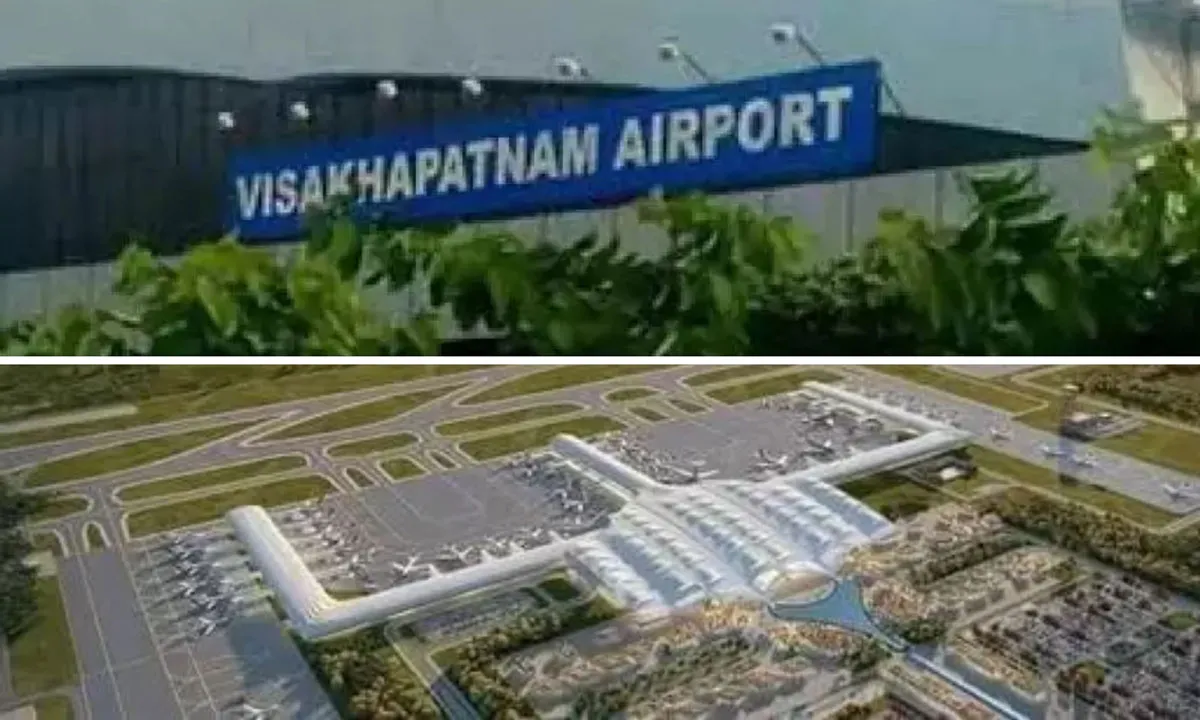
Stakeholders Seek Parallel Ops For Vizag Airports

With road and metro rail links to Bhogapuram still several years away, stakeholders in north Andhra Pradesh have renewed demands to continue civil operations at INS Dega even after the commissioning of Bhogapuram International Airport. The new airport is expected to begin commercial operations from June. Officials said close to 80 per cent of the airport infrastructure at Bhogapuram, including the terminal building and internal approach roads, has already been completed. However, inadequate external connectivity remains a key concern. Making a case for parallel operations, Andhra Pradesh Air ..
Next Story
Infrastructure Transport

Govt To Roll Out V2V Tech To Cut Road Crashes

In an effort to curb road accidents, particularly in low-visibility conditions such as dense fog, the government is set to roll out vehicle-to-vehicle (V2V) communication technology that will allow cars to exchange real-time data and alert drivers to potential dangers. The announcement was made by Union Road Transport and Highways Minister Nitin Gadkari after the 43rd meeting of the Transport Development Council. The technology involves installing an on-board unit (OBU) in vehicles, enabling wireless data exchange between nearby cars. This will allow vehicles to share information such as spee..

Advertisement

Subscribe to Our Newsletter

Get daily newsletters around different themes from Construction world.

STAY CONNECTED

Advertisement

Advertisement

Advertisement

Advertisement

Open In App