


+
Capital-A, SanchiConnect Invest Rs 27 cr in Startups
Technology

Capital-A, SanchiConnect Invest Rs 27 cr in Startups

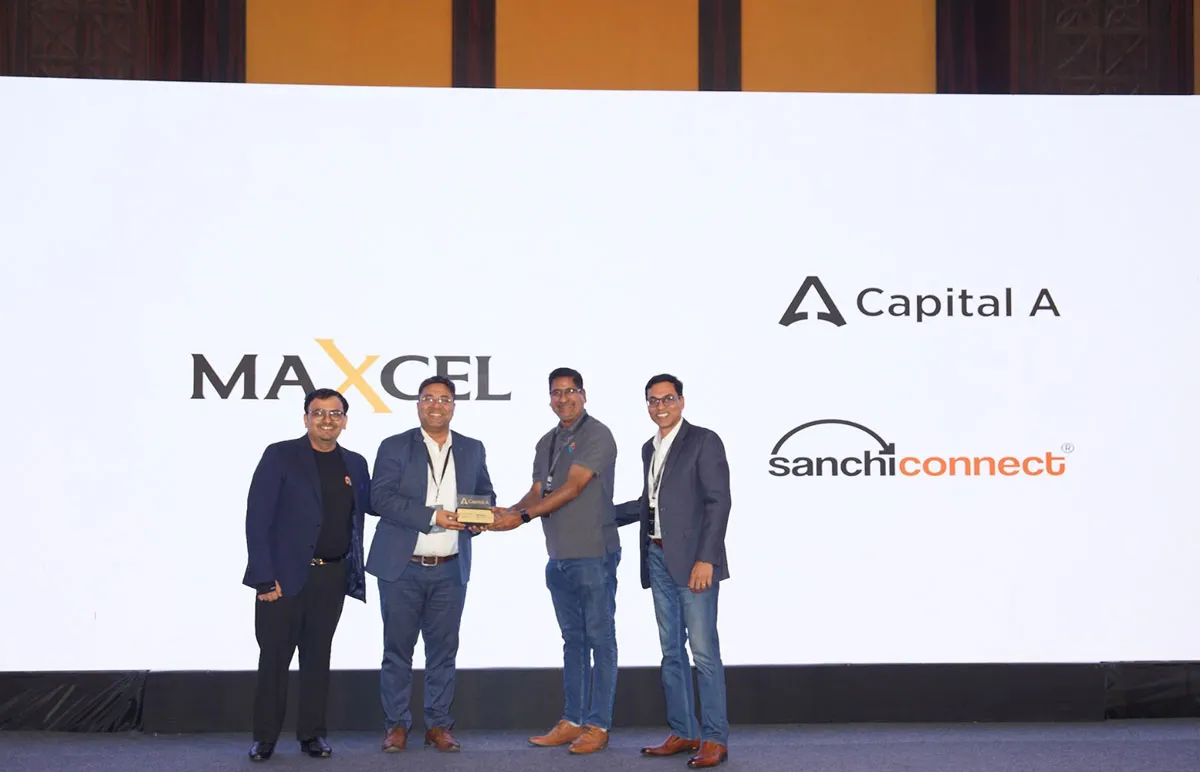
Capital-A, a manufacturing-focused venture capital fund, along with SanchiConnect, has announced an investment of Rs 27 crore in three startups under its manufacturing accelerator programme, MaXcel. The selection followed a nationwide evaluation of over 2,000 startups.

India has more than 3,000 deeptech startups and has attracted over USD 10 billion in cumulative funding over the past decade, according to industry estimates. However, capital-intensive manufacturing ventures remain at a relatively early stage. Manufacturing contributes around 16–17 per cent to India’s GDP and is targeted to reach 25 per cent under national policy objectives.

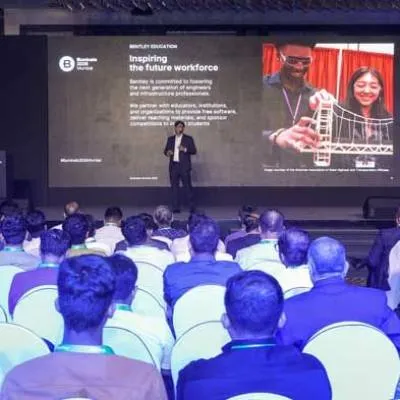
The three startups selected are Enerzi, focused on clean hydrogen systems; Misochain, developing flight-critical aerospace components; and Quintrans, building electromagnetic linear motion systems for industrial automation. They were formally inducted during the MaXcel Liftoff event in Bengaluru, attended by founders, investors and industry leaders.

MaXcel was created to address structural funding gaps faced by early-stage manufacturing founders operating in sectors such as energy transition, aerospace, industrial hardware, electronics and semiconductors. These ventures typically require longer development cycles, capital-intensive pilots and real-world validation before achieving commercial scale.

Capital-A and SanchiConnect conducted on-ground roadshows across Bengaluru, Pune, Ahmedabad, Kochi and Coimbatore to assess engineering capabilities and deployment readiness within operational environments. From over 2,000 applications, three startups were shortlisted based on technical depth, scalability and commercial potential.

Enerzi is developing microwave plasma-based methane-to-hydrogen conversion systems aimed at enabling lower-emission hydrogen production with engineered carbon co-products. Misochain is building indigenous aerospace components alongside in-house testing and certification capabilities to strengthen domestic supply chains. Quintrans is designing direct-drive electromagnetic linear motion systems to enhance precision and reliability in industrial automation and robotics.

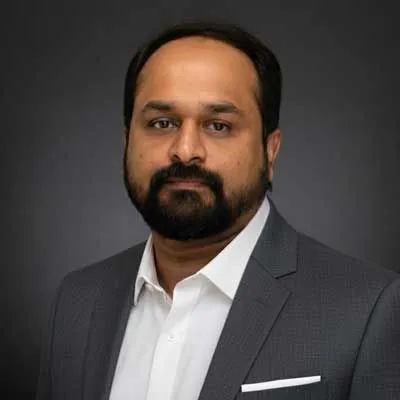
Ankit Kedia, Founder and Lead Investor, Capital-A, stated that MaXcel was built on the conviction that early-stage industrial innovation requires patient capital and rigorous technical evaluation to support the transition from research to deployable systems.

Sunil K Shekhawat, Founder and CEO, SanchiConnect, highlighted the need for stronger collaboration between researchers, founders, investors and industry stakeholders to scale deeptech manufacturing innovations.

MaXcel forms part of Capital-A’s ongoing deployment of its Rs 400 crore Fund II, focused on manufacturing, climate and industrial technology, combining capital infusion with ecosystem access and operational guidance to institutionalise early-stage deeptech support in India.

Capital-A, a manufacturing-focused venture capital fund, along with SanchiConnect, has announced an investment of Rs 27 crore in three startups under its manufacturing accelerator programme, MaXcel. The selection followed a nationwide evaluation of over 2,000 startups. India has more than 3,000 deeptech startups and has attracted over USD 10 billion in cumulative funding over the past decade, according to industry estimates. However, capital-intensive manufacturing ventures remain at a relatively early stage. Manufacturing contributes around 16–17 per cent to India’s GDP and is targeted to reach 25 per cent under national policy objectives. The three startups selected are Enerzi, focused on clean hydrogen systems; Misochain, developing flight-critical aerospace components; and Quintrans, building electromagnetic linear motion systems for industrial automation. They were formally inducted during the MaXcel Liftoff event in Bengaluru, attended by founders, investors and industry leaders. MaXcel was created to address structural funding gaps faced by early-stage manufacturing founders operating in sectors such as energy transition, aerospace, industrial hardware, electronics and semiconductors. These ventures typically require longer development cycles, capital-intensive pilots and real-world validation before achieving commercial scale. Capital-A and SanchiConnect conducted on-ground roadshows across Bengaluru, Pune, Ahmedabad, Kochi and Coimbatore to assess engineering capabilities and deployment readiness within operational environments. From over 2,000 applications, three startups were shortlisted based on technical depth, scalability and commercial potential. Enerzi is developing microwave plasma-based methane-to-hydrogen conversion systems aimed at enabling lower-emission hydrogen production with engineered carbon co-products. Misochain is building indigenous aerospace components alongside in-house testing and certification capabilities to strengthen domestic supply chains. Quintrans is designing direct-drive electromagnetic linear motion systems to enhance precision and reliability in industrial automation and robotics. Ankit Kedia, Founder and Lead Investor, Capital-A, stated that MaXcel was built on the conviction that early-stage industrial innovation requires patient capital and rigorous technical evaluation to support the transition from research to deployable systems. Sunil K Shekhawat, Founder and CEO, SanchiConnect, highlighted the need for stronger collaboration between researchers, founders, investors and industry stakeholders to scale deeptech manufacturing innovations. MaXcel forms part of Capital-A’s ongoing deployment of its Rs 400 crore Fund II, focused on manufacturing, climate and industrial technology, combining capital infusion with ecosystem access and operational guidance to institutionalise early-stage deeptech support in India.

Next Story
Infrastructure Urban

Implementation Status of Jal Jeevan Mission

Since August 2019 the Government has implemented Jal Jeevan Mission to provide assured potable water through household tap connections in rural India. At the start of the mission only 32.3 million (mn) rural households, representing 16.7 per cent, were reported to have tap water connections. States and union territories have reported that 125.8 mn additional rural households have since been provided with tap connections. As a result, of about 193.6 mn rural households roughly 158.2 mn, or 81.71 per cent, are reported to have tap water supply at home.\n\nThe State, district and village level st..

Next Story
Infrastructure Urban

Jal Jeevan Mission Reaches Eighty One Per Cent Rural Coverage

The Government reported substantial progress under the Jal Jeevan Mission, launched in August 2019 to provide tap water to every rural household. At launch only 32.3 million (mn) rural households had tap connections and states and Union territories reported provision of 125.8 mn additional households by March 2026. Consequently, out of about 193.6 mn rural households around 158.2 mn, or 81.71 per cent, are reported to have tap water at home. The Finance Minister announced extension of the mission until 2028 in the 2025-26 budget speech. The Swachh Bharat Mission Grameen, launched in October 20..

Next Story
Infrastructure Urban

Empowering Local Governance for Sustainable Rural Water Supply

The Ministry of Jal Shakti has aligned the Jal Jeevan Mission (JJM) with the 73rd Amendment to strengthen village level planning and community ownership of water supply. Gram Panchayats, village water and sanitation committees and Pani Samitis are to plan, implement, manage and maintain piped water systems, with gram sabha processes formalising handover and oversight. Implementation support agencies including non government organisations, community based organisations and self help groups have been empanelled to train local committees and promote women participation. Under JJM, the department ..

Advertisement

Subscribe to Our Newsletter

Get daily newsletters around different themes from Construction world.

STAY CONNECTED

Advertisement

Advertisement

Advertisement