+
DGCA Chief Inaugurates Garuda Aerospace Drone Battery Facility
Technology

DGCA Chief Inaugurates Garuda Aerospace Drone Battery Facility

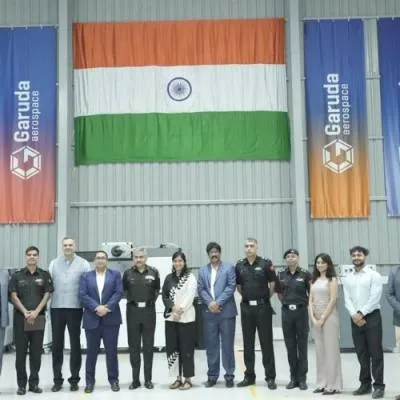
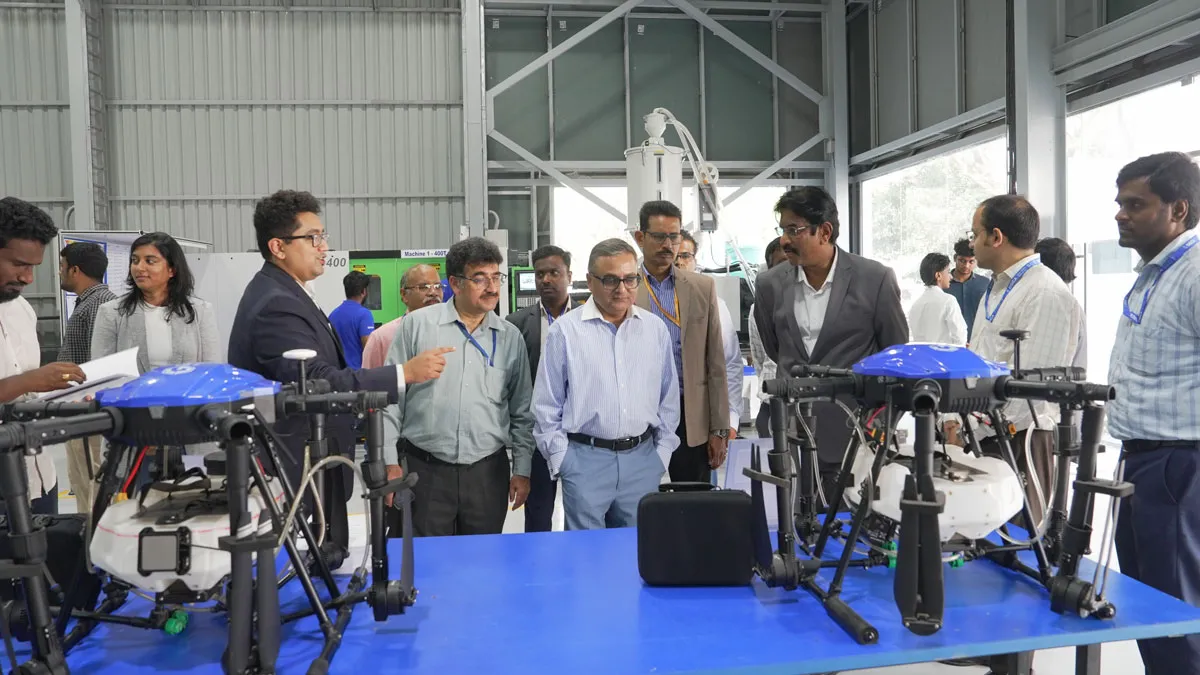
Directorate General of Civil Aviation Director General Faiz Ahmed Kidwai inaugurated a new drone battery manufacturing facility at Garuda Aerospace’s operations centre in Chennai, marking a key milestone in the company’s efforts to strengthen India’s indigenous drone ecosystem. The inauguration follows the recent launch of Garuda Aerospace’s defence drone facility and was held in association with the Bharat Drone Udaan initiative and the Bharat Drone Association.

During the visit, Kidwai also inaugurated a new academic block at Garuda Aerospace’s DGCA-approved Remote Pilot Training Organisation (RPTO). The expanded infrastructure is aimed at increasing training capacity and strengthening curriculum delivery to meet rising demand for certified drone pilots across sectors such as agriculture, infrastructure, defence, disaster management and logistics. He also unveiled the Garuda Bharat Drone Udaan Impact Book, which outlines the company’s journey, milestones and contributions to the development of India’s drone ecosystem.

Speaking at the event, Agnishwar Jayaprakash, Founder and Director, Garuda Aerospace, said the company has evolved over the past decade into one of India’s largest drone manufacturers, with over 3,000 drones produced and more than 2,500 pilots trained. He highlighted the role of progressive government policies, including subsidy schemes and production-linked incentives, in supporting indigenous manufacturing and wider drone adoption.

Addressing the gathering, Kidwai said Garuda Aerospace is among the few companies manufacturing a wide range of drones for applications spanning defence, agriculture and industry. He noted that the company’s focus on in-country production of critical components reflects a deeper level of indigenisation and that trained drone pilots would play a crucial role as applications expand rapidly.

The launch of the battery manufacturing facility alongside the new academic block represents a step towards building an integrated, self-reliant drone ecosystem encompassing manufacturing, training and deployment to support India’s growing drone economy.

Directorate General of Civil Aviation Director General Faiz Ahmed Kidwai inaugurated a new drone battery manufacturing facility at Garuda Aerospace’s operations centre in Chennai, marking a key milestone in the company’s efforts to strengthen India’s indigenous drone ecosystem. The inauguration follows the recent launch of Garuda Aerospace’s defence drone facility and was held in association with the Bharat Drone Udaan initiative and the Bharat Drone Association.During the visit, Kidwai also inaugurated a new academic block at Garuda Aerospace’s DGCA-approved Remote Pilot Training Organisation (RPTO). The expanded infrastructure is aimed at increasing training capacity and strengthening curriculum delivery to meet rising demand for certified drone pilots across sectors such as agriculture, infrastructure, defence, disaster management and logistics. He also unveiled the Garuda Bharat Drone Udaan Impact Book, which outlines the company’s journey, milestones and contributions to the development of India’s drone ecosystem.Speaking at the event, Agnishwar Jayaprakash, Founder and Director, Garuda Aerospace, said the company has evolved over the past decade into one of India’s largest drone manufacturers, with over 3,000 drones produced and more than 2,500 pilots trained. He highlighted the role of progressive government policies, including subsidy schemes and production-linked incentives, in supporting indigenous manufacturing and wider drone adoption.Addressing the gathering, Kidwai said Garuda Aerospace is among the few companies manufacturing a wide range of drones for applications spanning defence, agriculture and industry. He noted that the company’s focus on in-country production of critical components reflects a deeper level of indigenisation and that trained drone pilots would play a crucial role as applications expand rapidly.The launch of the battery manufacturing facility alongside the new academic block represents a step towards building an integrated, self-reliant drone ecosystem encompassing manufacturing, training and deployment to support India’s growing drone economy.

Next Story
Infrastructure Transport

Second Mountain Tunnel Breakthrough in Palghar Advances High Speed Rail

The Mumbai-Ahmedabad high speed rail (MAHSR) project reached a milestone with the breakthrough of a mountain tunnel in Palghar, Maharashtra. Mountain tunnel MT-six measures 454 metres long and 14.4 metres wide and will accommodate up and down tracks. The breakthrough follows MT-five near Saphale on second January 2026 and the MT-six excavation was completed from both ends using the New Austrian Tunnelling Method. The ministry reported that the tunnelling was completed within 12 months. The New Austrian Tunnelling Method is favoured for its flexibility in complex geology and irregular tunnel s..

Next Story
Infrastructure Transport

Modi Government Pushes Atmanirbhar Container Drive With BCSL MoU

The Union Government advanced a plan to create an integrated, domestically anchored container ecosystem with the signing of a Memorandum of Understanding to establish the Bharat Container Shipping Line (BCSL). The MoU was signed by key agencies including the Shipping Corporation of India and Container Corporation of India alongside major port authorities and Sagarmala Finance Corporation Limited under the Ministry of Ports, Shipping and Waterways, in the presence of senior ministers. The initiative aligns with the Container Manufacturing Assistance Scheme announced in the Union Budget 2026–2..

Next Story
Infrastructure Urban

Ministry Reports Gains In Mobility For Marginalised Communities

The Ministry of Social Justice and Empowerment is implementing skill development, education and rehabilitation schemes to promote socio-economic mobility and sustainable livelihoods for marginalised and disadvantaged communities across the country. Programmes target Scheduled Castes, Other Backward Classes, Economically Weaker Sections, De-notified Tribes and Safai Karamcharis through specialised implementing corporations and empanelled training institutes. Pradhan Mantri Dakshata Aur Kushalta Sampann Hitgrahi Yojana, or PM-DAKSH, provided skill training and placement support through the Nati..

Advertisement

Subscribe to Our Newsletter

Get daily newsletters around different themes from Construction world.

STAY CONNECTED

Advertisement

Advertisement

Advertisement

Open In App